
U.N. radio journalist detained in South Sudan’s Lakes State
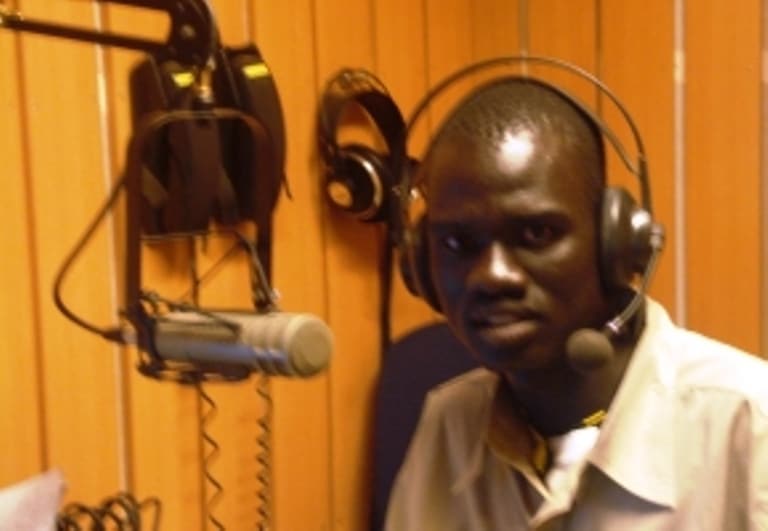
May 11; 2025 ‘JUBA) – South Sudanese security operatives are holding a United Nations radio journalist in Lakes State, his family said, expressing fears for his health and of potential mistreatment.
Multiple sources, including family members, said Manyang Mayom was detained in Mabor-duong, a remote village in Rumbek East. Mayom, a reporter for the U.N.-owned Radio Miraya FM, has been unreachable since Friday, and his family said they were concerned his health could be deteriorating.
Sudan Tribune was unable to establish whether the detention was connected to his media activities or personal matters. Friends and relatives said they saw military officers, reportedly acting on superiors’ directives, seizing phones at a local checkpoint in Rumbek East. They said the officers later searched Mayom’s car, confiscating a computer and cameras. It remains unclear if the seized items were personal or official equipment.
Daniel Laat Kon, a local resident, said he had confirmed Mayom was arrested on the orders of the state governor, Rin Tueny Mabor Deng.
William Koji, the Lakes State minister for information, declined to comment on the reasons for the arrest or whether family members would be allowed to visit Mayom.
An official in the governor’s office, who asked not to be named, told Sudan Tribune he did not believe Mayom’s detention was related to his journalistic work but could be connected to personal relations in his village.
“First, I am not aware of the presence of Manyang Mayom here in Rumbek. I do not know he has come. I have no information about that. I know he is in Kuajok in Warrap State where he works for Radio Miraya,” the official said.
“However, I assure you that if it is about freedom of the press and media, it will be handled in accordance with the law,” he added, declining further comment.
Another state government official, speaking separately and on condition of anonymity, told Sudan Tribune that the state “does not have any policy related to the arrest or detention of journalists,” and that it has “independent police agencies and judicial authorities” that operate with “high professionalism and complete independence.”
However, Mabor Meen, a relative of the journalist, told Sudan Tribune on Sunday that Mayom, a native of Rumbek East, has been detained without access for family members.
“As you know he is a journalist, and he carries with him his equipment. A recorder and camera, as you know, are like a gun for a soldier or a shop for a trader. He was in possession of this equipment when I last saw him, and this could be the problem with the authorities,” Meen said.
Mayom previously worked as the director of the state radio in Lakes State and has reported for many news organizations in the country. He currently works for the United Nations Mission in South Sudan with Radio Miraya in Kuajok, Warrap State.
“When he applies for leave, he returns home to stay with his family and relatives… Manyang Mayom came from Kuajok and went to his village in Rumbek East and yesterday I was told by his wife he was arrested. I tried calling his telephone contact numbers…and they were not connecting,” said Mabior Daniel, another Rumbek town resident, in a separate interview.
Daniel said he did not know the circumstances of the journalist’s arrest at the military detention facility.
Authorities in South Sudan have often had uneasy relations with journalists and civil society members. Some government officials and security operatives have accused journalists and human rights defenders of being unpatriotic or foreign agents – charges they deny, attributing such perceptions to a lack of understanding of their work. Many journalists and activists argue that authorities use repression to stifle media freedom and other fundamental human rights to avoid accountability.
Detention of journalists is not new in South Sudan. Media organizations and human rights groups have documented numerous abuses against media personnel, including arrests, threats, torture, and killings, before, during, and after the country’s independence in 2011.
The situation was exacerbated by conflicts in 2013 and 2016, leading to the enactment of stringent laws. Controversial Sections 54 and 55 of the National Security Service Act permit arrests without a warrant. Since their enactment, media and human rights organizations have documented many cases of arbitrary detention by National Security Services, where detainees are often allegedly subjected to torture and ill-treatment, sometimes held incommunicado.
The security agency has also reportedly used its resources to build networks across East Africa to reach those who have sought refuge in neighbouring countries.
Two prominent cases highlighted concerns over repressive laws: on Feb. 4, 2023, Morris Mabior Awikjok Bak was allegedly kidnapped in Nairobi and forcibly returned to South Sudan, where he was detained at the Blue House, the National Security Service headquarters in Juba. In 2017, Dong Samuel Luak and Aggrey Ezbon Idri forcibly disappeared in Nairobi, Kenya, and were reportedly later killed in South Sudan.