
UK rejects “double standards” over Sudan as conflict marks 1,000 days
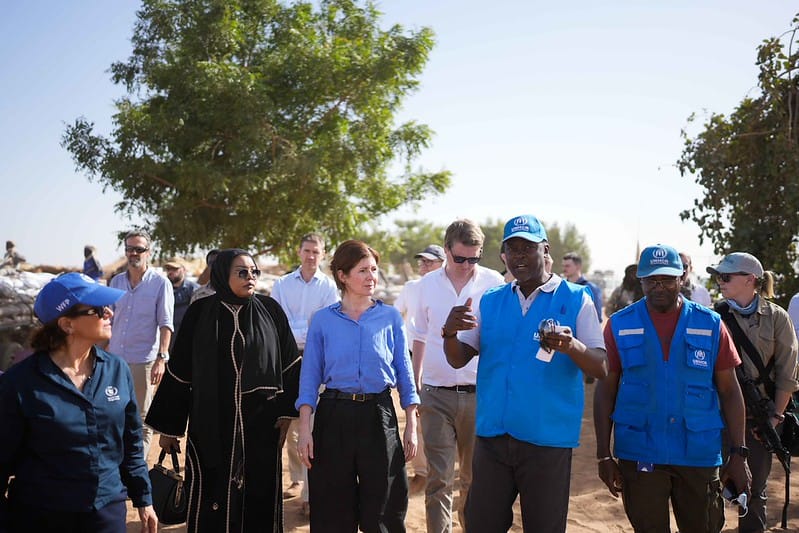
January 8, 2026 (LONDON) – British Minister of State for International Development and Africa, Baroness Chapman of Darlington, described the 1,000-day milestone of the conflict in Sudan as a “grim milestone” of unimaginable suffering, pledging that the United Kingdom would not look away as famine spreads across the country.
In an exclusive interview with Sudan Tribune marking the sombre anniversary, Baroness Chapman highlighted the “unspeakable brutalities” faced by women and children and noted that 30 million people now require lifesaving aid. With 12 million people uprooted, Sudan has become the site of the world’s largest displacement crisis.
Addressing accusations of “double standards” and claims that Western nations have deprioritized Sudan compared to other global crises, the Minister was firm in her defence of the UK’s record.
“It’s not for us to respond for the international community as a whole, but what I will say is that for the UK, this is just not true,” she stated. “We’ve intensified action on accountability. The Foreign Secretary has made Sudan a foreign policy priority for this Government.”
Highlighting the United Kingdom’s role as the “penholder” for Sudan at the United Nations, Baroness Chapman noted that Britain spearheaded the strongest Security Council resolution to date regarding El Fasher, focusing specifically on civilian protection.
“Since the conflict began, we’ve worked to pass eight resolutions. That’s not silence; that’s binding action,” she said.
On the humanitarian front, Chapman confirmed that the UK is delivering £146 million in aid this year, aimed at reaching over 800,000 people with food, water, and healthcare. However, she warned that no amount of aid could end a “man-made famine” while violence continues unchecked.
She reiterated that the UK remains committed to a dual approach of relief and justice, “sanctioning those implicated in mass killings and sexual violence, while increasing humanitarian funding.”
The Minister also emphasized the UK’s strategy for building civilian capacity and supporting independent media, which have been systematically targeted during the war. “The work of journalists is key,” she remarked, explaining that the UK is helping Sudanese reporters use satellite imagery and social media to document atrocities.
“The courageous organisations and individuals we support have used this work to expose the atrocities in El Fasher, crimes that those responsible mustn’t be allowed to keep hidden,” she underscored.
Beyond documentation, the UK is supporting efforts to combat the “hidden battle” of disinformation and AI-generated manipulation online. Baroness Chapman noted that this vital work helps Sudanese media “spot and fight” the hate speech that frequently fuels further violence on the ground.
Regarding the diplomatic process, the UK is pressing for a three-month humanitarian truce led by the United States. Chapman emphasized the need for “complementarity” between various mediation tracks, including the AU-IGAD-UN Trilateral Mechanism and the US-led Quad, despite ongoing regional tensions.
The Minister also shared insights from her visit to refugee camps in Chad, such as Adre and Goudrane, noting that supporting refugees closer to their homes is vital to prevent perilous onward journeys.
She concluded by reaffirming that Sudan remains central to UK foreign policy, promising that the UK would continue to fight for a civilian-led future and for justice “until the guns fall silent.”
Below is the full version of the interview:
Today is a grim milestone. It marks one thousand days of unimaginable suffering in Sudan, with the war still raging on. Thousands have been killed. 30 million people need lifesaving aid, famine is spreading, and women and children bear the heaviest burden of unspeakable brutalities. The Sudan conflict has caused the world’s largest displacement crisis, with 12 million people uprooted, driven far from their homes, and millions at risk of starvation.
The UK will not look away. We are doing everything we can, politically and diplomatically, to end the fighting, alleviate the suffering and bring accountability for the atrocities committed. Through our leadership at the United Nations, at the Security Council and in the Human Rights’ Council, we are spearheading efforts to protect civilians, secure humanitarian access and ensure crimes do not go unanswered.
And alongside the urgent campaigning to silence the guns, we are taking concrete action in holding those waging this war to account and providing immediate, critical support to those who need it most.
In December, we sanctioned four senior RSF commanders for atrocities, and we are delivering £146 million in aid this year alone so that food, water, health, and protection can reach those in greatest need.
But no amount of aid can end a man‑made famine while the violence continues unchecked. That’s why, in every conversation and in every forum, we are pressing for agreement to the US-led call for a three‑month humanitarian truce and working with partners in the region, in the United Nations, and in the African Union, to drive a ceasefire and a civilian‑led future for Sudan.
Our message today is simple: Sudan will not be forgotten. The UK will keep fighting for peace until the guns fall silent, to end the dreadful suffering and for justice for the Sudanese people.
On Britain’s role in the mediation process. How do you envision the UK playing a substantive role in ending the conflict when it currently appears to be relegated to a supporting or observer role, rather than an active participant in the primary mediation mechanisms?
Make no mistake, Sudan is a critical priority for this Government, and we are working to bring this war to an end. We are pushing urgently for a ceasefire, working with those in the region and pushing the warring parties to agree to the US-led call for an immediate humanitarian truce, and to allow such desperately needed aid in.
Sudan deserves a better future, and we are working tirelessly with our partners across the globe, at the UN and through our money, our diplomacy and our sanctions, to make it so. That is our leadership.
On the contradiction between the Trilateral Mechanism and the Quad.
The British government has voiced support for the AU-IGAD-UN Trilateral Mechanism, yet there is an apparent friction between this regional process and the US-led Quad. Given that the Sudanese government rejects the Quad due to the UAE’s participation, how does the UK intend to synchronize these two tracks as discussed in your September meeting with the African Union?
Urgently bringing an end to the conflict in Sudan is our priority, plain and simple. We desperately need international efforts to be complementary, not competing.
Doing diplomacy to end the worst humanitarian crisis this century isn’t easy, and it won’t be without disagreement, but we are making every effort to engage. Because millions of Sudanese lives depend on it. That’s why last year, we brought the world together in London to agree on a shared way forward, so that despite our differences, we are all focused on the same outcome: an end to the war and a Sudanese-owned, civilian-led future.
On the accusations of “double standards”. Western nations have faced heavy criticism for what some call a double standard: a perceived silence regarding current war crimes and atrocities in Sudan compared to the vigorous condemnation of similar acts committed by the same actors in 2003. How do you respond to the accusation that the international community has deprioritized Sudanese lives?
It’s not for us to respond for the international community as a whole, but what I will say is that for the UK, this is just not true. We’ve intensified action on accountability. The Foreign Secretary has made Sudan a foreign policy priority for this Government. The UK led and passed the strongest UN Security Council Resolution on El Fasher, which focused squarely on protecting civilians and opening humanitarian routes. Since the conflict began, we’ve worked to pass eight resolutions. That’s not silence; that’s binding action.
The Sudanese people need an approach which is focused both on relief and justice, which is why we’re sanctioning those implicated in mass killings and sexual violence, while increasing humanitarian funding.
As for the international community, we continue to work with partners as we did during the London Sudan conference where we mobilised over £800 million for Sudan and reaffirmed principles rejecting external interference and parallel authorities.
On the limitations of “regional solutions”.
While prioritizing regional institutions is a standard diplomatic pillar, the AU-IGAD and the Quad remain deeply polarized over Sudan. Can the UK justify a hands-off approach under the guise of “regional solutions” when the British taxpayer is footing the bill for humanitarian aid and the UK is directly impacted by resulting migration flows?
Regional ownership is critical to legitimacy and to ensuring a stable, long-term solution for Sudan, which is our Government’s priority.
The UK does not have a hands-off approach – we’ve sanctioned those behind some of the most appalling violence, we’ve provided critical aid for those forced to flee and we’ve continued to push for international engagement in every conceivable fora.
That is why we brought the world to London, using the UK’s convening power and influence to ensure this was front and centre of global engagement when we co‑hosted the London Sudan Conference with the African Union and European Union. Addressing the conflict in Sudan is a priority for our shared humanity as well as our shared security. That’s why we are providing humanitarian support to those in Sudan and its neighbouring states where over 4 million Sudanese refugees have sought refuge, having fled their towns and villages. Last year, I saw this support for myself in Chad, which is providing a lifeline to refugees in so many refugee camps – in Adre, Fourchana, and Goudrane.
By supporting refugees closer to their home, we reduce the risks of Sudanese refugees being forced to make perilous onward journeys and reduce the risks of vulnerability to extremist groups and criminal networks to thrive.
On the viability of the Quad initiative.
Given the growing tensions between Saudi Arabia and the United Arab Emirates over conflicting interests in the region, do you believe the US-led Quad initiative remains a viable vehicle for peace, or is it time for a fundamental review of that mechanism?
Any potential pathway to peace should be pursued until this awful war is brought to an end.
As agreed at the London Sudan Conference in April of last year, peace efforts need coherence and complementarity.
Our Security Council statement made in December commended intensive US mediation through the Quad (UAE, Saudi, US and Egypt) mechanism, while urging all with influence to push the parties toward a humanitarian pause and political process.
On building civilian capacity and independent media. Speaking at the House of Commons, the Foreign Secretary, Yvette Cooper, recently mentioned plans to build civilian capacity in Sudan. Could you elaborate on this strategy? Specifically, since Sudan’s independent media have been systematically destroyed during this conflict, does the UK plan to include the restoration of media institutions as a core component of this capacity-building?
We are working very closely with civilians and civil society in Sudan to ensure that when this war ends – which it will – we can move to a civilian-led Government that will serve the people of Sudan.
The work of journalists is key to that. The UK is helping brave Sudanese journalists and human rights defenders document the atrocities taking place around them – without this, there can be no accountability. We’re supporting journalists to use satellite imagery and social media to investigate and verify attacks against civilians. The courageous organisations and individuals we support have used this work to expose the atrocities in El Fasher – crimes those responsible musn’t be allowed to keep hidden.
And to help prevent atrocities, we’re helping journalists fight back against disinformation, AI-generated manipulation and hate speech-driven violence that is appearing all over social media. Horrifying videos which otherwise lead to horrifying actions. Just this week, the Thomson Foundation, supported by the UK, released a report showing how disinformation has fuelled atrocities in Sudan. Through this vital work, we’re helping Sudanese media and journalists spot and fight the hidden battle raging in online spaces.
On the Penholder Role: “As the designated ‘penholder’ for Sudan at the UN Security Council, the UK has significant influence over the international legal response. Why has this influence not yet translated into a more robust enforcement of the arms embargo or targeted sanctions against the warring generals?”
Global resolve is needed to stop this war. As penholder, we secured agreement when we passed the strongest UN resolution condemning the horrors of El-Fasher and worked across the Council to renew the Darfur sanctions and arms embargo.
All countries must comply with the arms embargo, and we’ve pushed hard for enforcement. But others have blocked further progress to stem the awful flows of weapons which are fuelling this war. International agreement is difficult, but we are not giving up – we are building coalitions for stronger action. And we are using every tool – the UK’s own arms embargo is Sudan-wide, and we are stepping up our targeted sanctions against those responsible for the violence.
We are committed to using our pen, our voice, and our national tools to bring the world together for stronger, more robust action.
On the “Forgotten War” Narrative: Former Foreign Secretary David Lammy previously stated that Sudan would be a top priority. However, in the face of the crises in Ukraine and Gaza, there is a perception that Sudan has become a ‘forgotten war.’ What specific metrics can you provide to prove that Sudan remains at the top of the UK’s foreign policy agenda?”
It may be true that Sudan doesn’t get the news coverage that some other conflicts do – that’s a decision for the media.But I can promise you that the UK has not forgotten Sudan, and never will. It is a personal priority for me and our Foreign Secretary. We’re working for peace, to alleviate suffering, and to prevent atrocities.
Take aid – against a challenging wider backdrop, and with many competing demands around the world, we have made sure that vital supplies continue to get to those affected by the war in volume at pace.
This year, we’re providing over £146 million in aid, helping more than 800,000 people. That’s feeding children, that’s providing shelter and that’s fighting diseases. And our Prime Minister has pledged to protect this support, keeping the UK among the top donors to Sudan.
We’ve sanctioned RSF commanders and supported evidence gathering through Sudan Witness, making clear the world is watching and people will be held accountable for their actions. We will keep Sudan clearly on the global agenda. Through the United Nations we are ensuring not just the UK, but the world condemns the horrifying atrocities and press