
Sudanese refugees in Ethiopia face hunger, administrative hurdles amid funding gaps
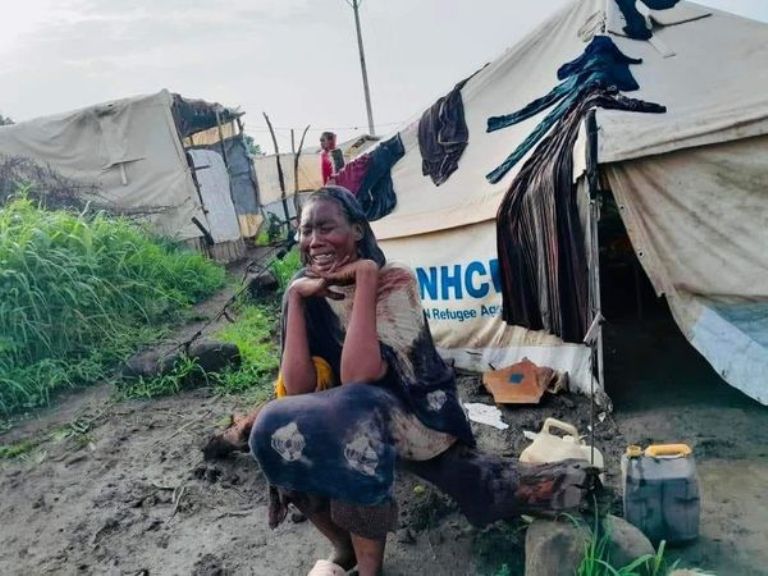
January 19 2026 (BENISHANGUL) – Ethiopian lands have transformed into a “dream of survival” for millions of Sudanese fleeing war, but the reality they have encountered is a new pincer movement of hunger and deteriorating security, alongside harsh administrative measures.
As Africa’s second-largest refugee-hosting country, Ethiopia faces an unprecedented challenge. By the end of 2025, the humanitarian response reached the brink of collapse amid international warnings of a “silent catastrophe” worsening under the weight of political friction and a lack of resources.
A series of misfortunes have befallen Sudanese refugees in Ethiopia, influenced by official statements from Sudanese government officials. Following a controversial statement by former Foreign Minister Ali Yusuf in 2024, in which he suggested Sudan stood with Egypt regarding the option of “open war” if Renaissance Dam negotiations failed, Ethiopian authorities immediately cancelled visa renewal fee exemptions.
Since then, authorities have stepped up enforcement by imposing a fine of up to $10 per day of delay, while the monthly visa renewal fee remains $100, payable exclusively in hard currency. This is an amount most of those fleeing the war are unable to provide.
Faced with a miserable reality, security threats, and the failure of international organizations to provide protection, thousands of refugees in August 2024 took the desperate decision to embark on a long march from the Olala Forest camps in the Amhara region toward the Sudanese border.
Refugee Abdulaziz Ahmed, 24, told Sudan Tribune that the lack of protection forced thousands to undertake one of the longest land asylum marches in modern history. That journey witnessed deaths and injuries due to hunger and exhaustion, in a tragedy described as one of the greatest disasters of the war that began on April 15, 2023. Instead of being accommodated, those returning to the city of Gedaref faced arrests carried out by Sudanese “security cells.”
The Ethiopian capital, Addis Ababa, has been no more merciful. In an incident that shook the Sudanese community between late November and early December 2025, a Sudanese youth died from acute hunger and blood deficiency. The case stunned doctors, who discovered he had survived for several days on water alone because he could not afford food. This tragedy sparked a wave of anger toward the Sudanese embassy and accusations of negligence. A friend of the deceased said hunger killed his friend, who fled war seeking life, only to stumble into death.
The city of Assosa serves as the hub for refugees entering through the Kurmuk crossing, but its camps, such as Kumer 5 and Aura, are 150% over capacity. Ahmed Ali “Al-Jaali” told Sudan Tribune that while bullets do not make noise here, silent crises are gnawing at their bodies. He added that refugees found themselves in rainforests inside torn tents that turn into swamps with the rain, where six out of every 10 children contract malaria, alongside the danger of local militias practicing killing and kidnapping for ransom in the Olala and Kumer areas.
An official source at the Ethiopian Refugee and Returnee Service (RRS) said the country remains committed to international agreements and provides services in coordination with the United Nations. The source denied that any arrests had occurred due to visa fines for registered refugees. The official noted that the challenge lies with “urban refugees” who enter via airports without regularizing their status as refugees, making them subject to immigration laws and fines. He stressed that the government has adopted an open policy to integrate them into the economy and education despite the significant burdens.
Sudanese families are currently adopting “negative strategies” to survive, including skipping meals and selling assets. Sudan Tribune observed three children suffering from acute malnutrition in a house where they were hosted by an Ethiopian citizen; two Sudanese journalists took it upon themselves to transport them to the hospital for treatment. A Sudanese journalist, who requested anonymity, criticized the absence of the embassy’s role, noting that its staff drives a large fleet of cars while families live on a pittance.
In December 2025, the World Food Programme (WFP) and the UN Refugee Agency (UNHCR) issued a final cry for help. Due to a funding shortage exceeding 70%, food rations were reduced to only 40%, providing less than 1,000 calories per day. Teyiba Hassan, Director General of the Ethiopian Refugee and Returnee Service, warned that basic services could cease within weeks, while UN Country Representative Ndiaye said a critical moment has been reached that will determine whether the response will collapse or endure.