
IGAD envoy: Sudan crisis internationalized; Berlin conference to mobilize aid and de-escalate
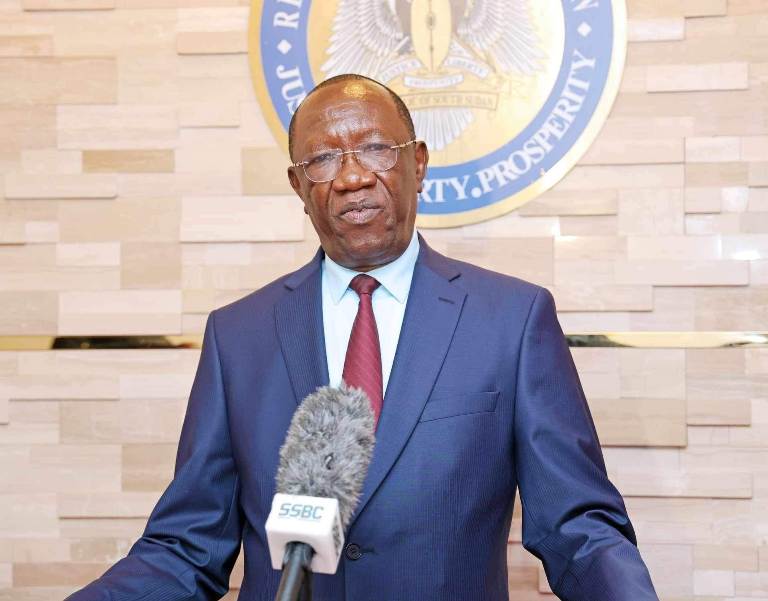
April 12, 2026 (ADDIS ABABA) – The five-member mechanism overseeing the civilian track of the Berlin conference stated on Sunday that the Sudanese crisis has transcended its borders and become internationalized, affecting the global community, particularly regarding international humanitarian law.
The quintet—comprising the African Union, United Nations, European Union, Arab League, and the Intergovernmental Authority on Development (IGAD)—is working to find a resolution to the ongoing conflict between the Sudanese army and the Rapid Support Forces (RSF).
IGAD Envoy for Sudan Lawrence Korbandy told Sudan Tribune that the Berlin conference is taking place as the international community is preoccupied with tensions in the Gulf, Iran, and Israel. This has marginalized the Sudan crisis despite it being the primary conflict in Africa with negative repercussions for the continent and the world.
Korbandy emphasized that the Berlin conference is part of a series of international meetings aimed at discussing the humanitarian situation and mobilizing political support for the primary goal of de-escalation.
“The Sudanese authorities have their own reasons for not participating, which we cannot comment on,” Korbandy said. “However, because the crisis has been internationalized and affects the world, especially on the humanitarian front, the conference’s main path will be how mobilizing aid can contribute to de-escalation as the catastrophe grows.”
He noted that humanitarian work cannot be entirely separated from politics, as war is inherently political. He stressed the need to find a formula to minimize “extreme politicization” that prolongs the conflict.
The envoy highlighted that a meeting was held in Addis Ababa prior to the Berlin conference to discuss the humanitarian agenda and the path to ending the war. He called for the unification of various initiatives, warning that fragmented efforts waste time in a country facing daily military operations and a dire civilian impact.
Korbandy argued that the crisis must ultimately be resolved internally. “If those inside are not keen on solving their problems, what can those outside do?” he asked, urging Sudanese parties to prioritize the national interest and international actors to set aside immediate agendas.
He revealed that the IGAD office in Khartoum will soon resume operations. He defended the organization against accusations of bias, asserting that IGAD is an honest and neutral mediator with a long history of conflict resolution.
“The IGAD office in Khartoum will return to work shortly,” Korbandy stated. “It should be clear that IGAD did not freeze Sudan’s membership; Sudan froze its own membership and recently returned.”
Regarding reports of a potential international push for “safe corridors” or independent monitoring mechanisms, Korbandy said it is premature but noted that the international community is legally obligated to deliver aid to those affected if parties remain defiant.
The envoy also suggested that the 2022 Framework Agreement has been overtaken by events. He warned that the continuation of the war could lead to the fragmentation or total collapse of the state, resulting in “several banana republics,” a scenario he said IGAD and the Sudanese people strongly oppose.
Korbandy concluded by stating that the organization treats all civilian factions equally, encouraging them to unify their ranks to prevent social and political division.