
Sudan reviews U.S. peace proposal, holds reservations on political talks
July 10, 2025 (KHARTOUM) – The Sudanese government has officially received a peace proposal from the United States outlining five key pillars to resolve the ongoing conflict, though it maintains reservations over political dialogue and security arrangements.
The U.S. initiative stipulates the signing of a humanitarian truce, the launch of a political process, the achievement of a comprehensive ceasefire, and the initiation of reconstruction and recovery.
Sudan has not rejected the proposal, and there is significant consensus between the U.S. plan and the response sent by the Sudanese foreign minister on June 25.
Under the specific terms of the American proposal, an immediate nationwide 90-day humanitarian truce would be declared to facilitate aid delivery, protect civilians, and establish a coordination committee to oversee its implementation.
The plan also calls for the creation of a United Nations mechanism, with participation by the African Union and the Arab League, to oversee limited military withdrawals and deploy international observers to monitor compliance while respecting Sudanese sovereignty.
The U.S. framework envisions using the initial truce to negotiate a permanent ceasefire and launch an inclusive, civilian-led Sudanese national dialogue to guide a transitional period toward elected civilian rule.
To support long-term stability, the proposal details plans for economic stabilization, reviving local agricultural production, and creating a dedicated fund to rebuild infrastructure under the supervision of a transitional civilian government.
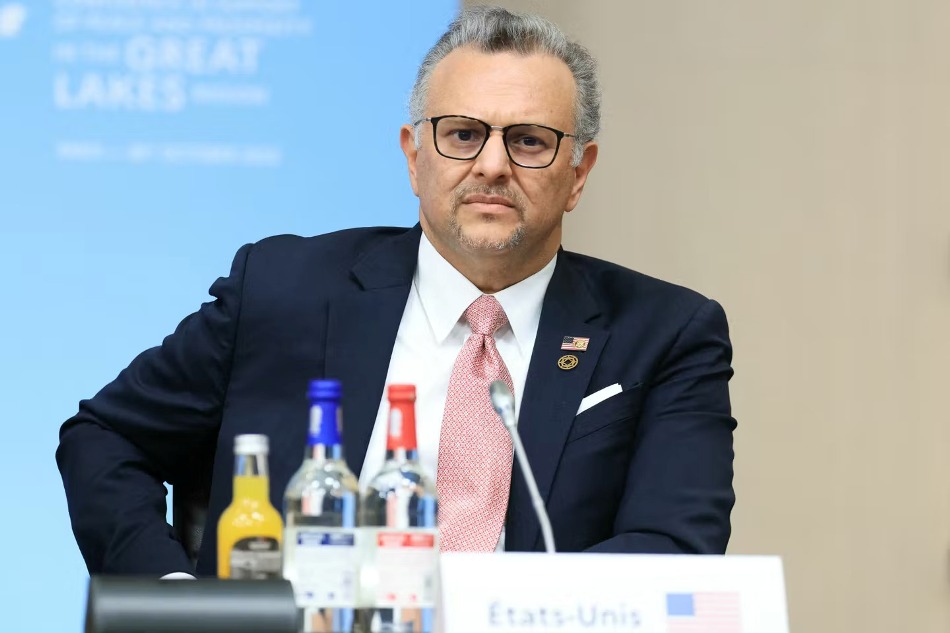
The current diplomatic development followed a June 21 meeting in Cairo between Shams al-Din Kabbashi, deputy commander-in-chief of the Sudanese army and Sovereign Council member, and Massad Boulos, the senior U.S. envoy for African affairs.
The meeting, held at the request of the U.S. envoy, took place with the knowledge of Sudan’s ambassador and military attaché in Cairo, though neither participated. Kabbashi later returned to brief the Sovereign Council Chairman, Abdel Fattah al-Burhan, and his deputy, Malik Agar, on the talks.
Despite broad agreement on the overarching pillars, local media reports indicate that two main points of contention remain between Khartoum and Washington.
The first dispute involves the framework for the political dialogue. The Sudanese government insists that talks must take place inside Sudan and include all political factions without exception.
The U.S. proposal, however, explicitly excludes the National Congress Party, the former ruling party of ousted President Omar al-Bashir, and specifies that the process must remain free from violent extremist groups linked to the Muslim Brotherhood, as well as militias and individuals who have committed atrocities.
The second disagreement centres on security arrangements and military pullbacks. The U.S. proposal advocates for a phased, partial withdrawal of forces across several regions, prioritizing North Darfur and North Kordofan under the UN mechanism.
The Sudanese government rejects a staggered approach, demanding instead a comprehensive withdrawal of the paramilitary Rapid Support Forces from all territories they seized after May 11, 2023, a period that saw a major expansion of the group’s territorial control across several states.