
Sudan’s Burhan pledges to implement dialogue outcomes, doubts UN arms embargo expansion
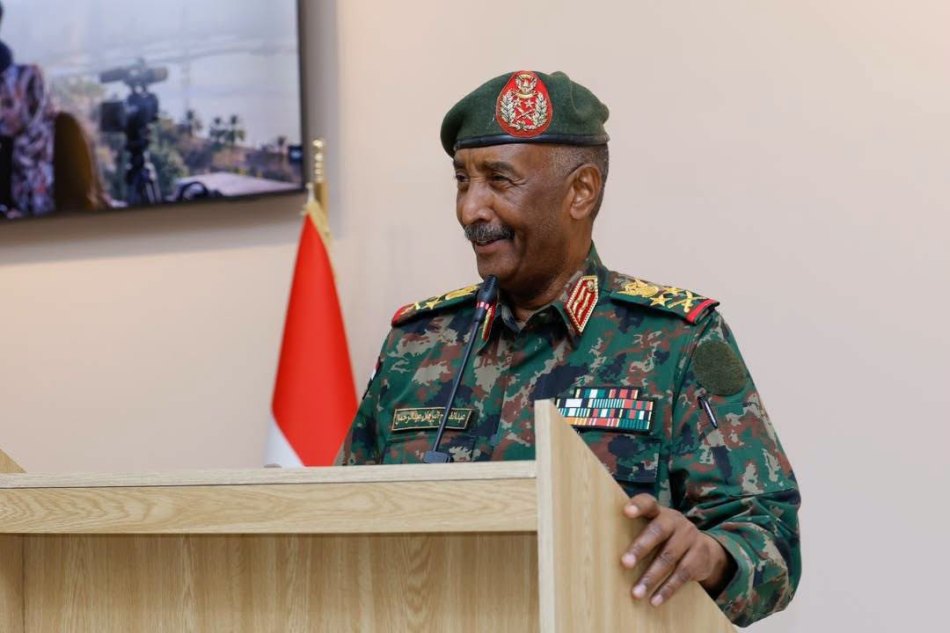
September 10, 2026 (KHARTOUM) – Sudan’s military leader Abdel Fattah al-Burhan pledged on Thursday to implement the outcomes of an upcoming internal dialogue, while downplaying the likelihood that the UN Security Council will expand an arms embargo beyond Darfur.
A Sudanese committee recently launched consultations to prepare for the talks inside the country. The government has offered immunity guarantees to participants facing criminal charges linked to their political stances.
Speaking to reporters at the military general command in Khartoum, Burhan said the state remains committed to enacting any dialogue recommendations that serve the public interest.
Those taking part are seeking to build the Sudanese state on foundations of justice and equality, he added.
Burhan also formally received the recommendations of a Sudanese media forum held in Khartoum from September 7 to 9, which drew domestic and diaspora journalists, promising to implement their proposals.
Addressing international diplomatic efforts, Burhan cast doubt on a U.S.-drafted UN Security Council resolution aimed at expanding the Darfur arms embargo to cover the entire country.
“The resolution will not pass in the Security Council in its American form,” Burhan said, adding that sufficient arrangements have been made should it be approved.
The Security Council is scheduled to vote on Friday on extending the existing Darfur arms embargo during a morning session in New York.
A vote was initially expected on Thursday on extending the Darfur sanctions, alongside the U.S. proposal for a nationwide embargo, a move Russia has openly opposed.
Burhan said the United States declined a government invitation to visit Sudan to assess conditions on the ground, renewing his call for Washington to see the reality firsthand.
Turning to domestic matters, Burhan criticized the performance of the executive cabinet, stating it has become detached from citizens’ daily struggles and hinting that the military might intervene to tackle the deteriorating economic crisis.
He reiterated that no armed faction would be allowed to secure political gains through violence, insisting that “there will be no militia within the state once the war ends.”
Defending his takeover on October 25, 2021, when the military dissolved the government of former Prime Minister Abdalla Hamdok, Burhan said the move was not a coup but a correction to the revolution’s path.
He argued that Hamdok’s administration failed at state-building and sought to empower political parties at the expense of official institutions, claiming Hamdok had initially agreed to dissolve the cabinet.
Burhan also accused figures from the Forces for Freedom and Change—naming Mariam al-Sadiq al-Mahdi, Khalid Omer Yousif, and Babikir Faisal—of proposing an alternative political agreement to the Framework Agreement designed to secure executive control for a decade, a plan he said he rejected.
Reflecting on the war’s initial months, Burhan described that period as brutal, recounting how key military sites fell, leaving only the Armoured Corps holding ground in Khartoum while troops trapped at the general command relied on airdrops for food and medicine.
He ruled out any future political or military role for the paramilitary Rapid Support Forces, citing widespread atrocities committed against civilians.