
Sudan’s hunger crisis is a wake-up call and a final window for peace
SUDAN: A WAKE-UP CALL FOR THE WORLD
Early warning regarding potential famine in Darfur and Kordofan
Adeeb Yousif BhD
adeebyousif4@gmail.com

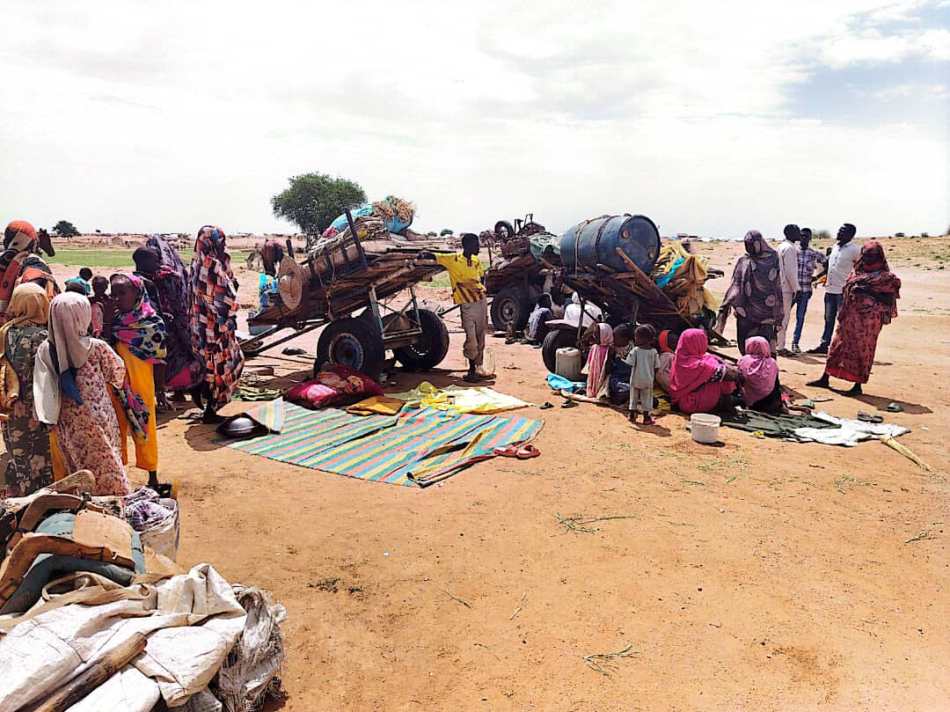
Vast areas of Darfur, Kordofan and Blue Nile are experiencing escalating food insecurity due to rainfall deficits and declining agricultural and pastoral production, compounded by the ongoing war in Sudan. The conflict has caused mass displacement, disrupted markets and supply routes and destroyed or reduced household income sources and livelihoods, making it increasingly difficult for families to access food.
These conditions are being compounded by a poor agricultural season, dwindling food stocks, rising prices, roadblocks and severe liquidity constraints. If they persist, hunger and malnutrition could intensify and potentially develop into famine-like conditions in the hardest-hit areas, particularly among children, women, displaced persons and communities that depend heavily on agriculture and pastoralism. The situation therefore requires strengthened early-warning systems and continuous monitoring of food security, nutrition, rainfall, markets, livestock conditions and population movements. Most importantly, early action is needed before the situation deteriorates to a point at which humanitarian needs become overwhelming and difficult to contain.
Voices from Affected Communities
“I wasn’t asking for much… I just wanted my child to live. I watched him grow weaker day by day, until he could no longer cry or ask for food. I would hold him in my arms, hoping to find something to satisfy his hunger, but we had nothing. Today, my child is gone because of malnutrition. He passed away right before my eyes, and I was powerless to save him.” — A mother from Al-Malha, North Darfur
“I never imagined a day would come when I would stand helpless as my wife died before my eyes. She was pregnant and needed food, medical care and a blood transfusion, yet she was suffering from malnutrition and severe anaemia. I tried to do everything in my power, but the circumstances were beyond our control, and we could not find the means to save her. My wife passed away, carrying a child who never saw the light of day. I feel as though I lost two people in a single day: my wife and the baby I was eagerly awaiting. I appeal to anyone who can reach Golo and Jebel Marra: do not leave pregnant women and the sick to face hunger and blood shortages alone. What happened to my wife must not happen to another woman.” — A husband in Golo, Jebel Marra
“I am a primary school teacher and a mother of five. My youngest child did not die from gunfire-despite the siege on the city of El Fasher at the time-but rather from malnutrition and hunger. Dying of hunger is far more painful than dying by a weapon; children and people are suffering from hunger to the point of death.” — A teacher from Tawila
“This situation is critical-not only for humans but also for animals. The lack of rain has affected the vegetation that our cows and sheep feed on and they have begun to die.”— A pastoralist from Buram
Food Shortage and Famine: What Is the Difference?
A food shortage refers to an insufficient supply of food to meet the needs of a population in a particular area. It can result from low production, poor rainfall, war, displacement, rising prices or disruptions to markets and supply routes.
Famine, by contrast, is an extreme humanitarian crisis in which many people in a specific area cannot access sufficient, safe, and nutritious food over an extended period, resulting in sharply increased hunger, acute malnutrition, and mortality. Famine therefore entails more than food shortages or high prices; it represents an extreme stage of food insecurity, often driven by a combination of war, displacement, drought, market collapse and restricted humanitarian access.
The progression can be understood as follows:
Food shortages or high prices → severe food insecurity → severe malnutrition → famine-like conditions → famine.
For Darfur and Kordofan, early warning must not wait for a formal declaration of famine. Indicators such as agricultural failure, livestock deaths, rising grain prices, declining food stocks, displacement and increasing malnutrition should be treated as warnings requiring intervention before the situation reaches the famine stage.
Early Indicators of Deteriorating Food Security and Potential Famine
Field observations and surveys indicate alarming signs of deteriorating food security in several areas of Darfur and Kordofan. A combination of insufficient rainfall, worsening insecurity, disrupted agricultural and pastoral activities, and obstacles to humanitarian access is driving this deterioration.
The signs are particularly visible in Al-Malha (North Darfur), Jebel Marra, Buram (South Darfur) and Tawila (North Darfur).
- Food shortages: Reduced availability of and increasing difficulty in accessing basic food items, particularly for displaced people and other vulnerable households.
- Rainfall deficits: Poor rainfall threatens the agricultural season and increases the likelihood of significantly reduced crop yields and food availability in the coming months.
- Deteriorating pastoral conditions: Water and pasture shortages threaten livestock, potentially causing animal deaths and forcing herders to travel long distances to find water and fodder.
- Security deterioration: Ongoing conflict and insecurity restrict the movement of civilians, farmers and herders while disrupting markets, supply routes and humanitarian access.
- Impact on displaced persons and host communities: Displaced populations and host communities bear a disproportionate burden because of limited income opportunities and heavy reliance on humanitarian assistance.
Expected Impact if Current Conditions Persist
- Rising rates of malnutrition, particularly among children and pregnant or lactating women.
- Increased mortality associated with hunger and disease.
- Loss of livestock and livelihoods among pastoralist households.
- Declining agricultural production across recent and current seasons.
- Additional displacement in search of food, water and pasture.
- Rising food prices, cash shortages and increasing difficulty delivering supplies to affected areas.
- Greater competition over scarce resources, potentially triggering new tensions and community conflicts.
- Environmental degradation is caused by increasing pressure on water sources, pasture and vegetation.
Summary of Field Interviews Regarding Food Shortages and Malnutrition
Interviews conducted in several conflict-affected areas of Darfur reveal alarming signs of deteriorating food security. The impact is particularly severe among children, infants, pregnant and lactating women and older persons. The following observations summarize the information provided from the respective areas.
Al-Malha – North Darfur
Available information indicates a marked shortage of basic food items and increasing difficulty for households to secure adequate food because of deteriorating security, rising prices and declining purchasing power. The effects are particularly visible among children and pregnant and lactating women as families struggle to maintain a diverse, nutritious diet. Inadequate health and nutrition services further constrain timely detection and treatment of malnutrition. Strengthened food and nutrition monitoring is urgently needed as food and income sources continue to decline.
Jebel Marra
The Jebel Marra region faces severe humanitarian and food-security pressures associated with conflict, displacement, restricted access to agricultural land and markets, and limited access to essential services. Interviews indicate that declining agricultural production, restricted movement, limited market access and cash shortages have reduced both the quantity and quality of food available to households. Children, infants, pregnant and lactating women and older persons are particularly vulnerable. The remoteness of some communities from health facilities also complicates the management of severe malnutrition.
Buram – South Darfur
In Buram and surrounding areas, food shortages are a major concern, driven by insecurity, declining agricultural production and the high cost of food. Many households struggle to meet daily food needs, increasing the risk of malnutrition, particularly among children and pregnant and lactating women. Limited resources may force families to reduce the number of meals they eat or rely on cheaper, less diverse foods, further increasing nutritional risks.
Tawila – North Darfur
Tawila has been significantly affected by displacement and the conflict originating in El Fasher. It now hosts displaced populations, many of whom depend on humanitarian assistance and limited income sources. Interviews indicate that food provision is a primary priority for displaced households because of limited purchasing power. Women, children and older persons are among those most severely affected. Risks intensify during the rainy season when movement and access to markets and health services become more difficult, underscoring the need to link food assistance with health, nutrition, shelter, water and sanitation support.
Kabkabiya– North Darfur
Interviews from Kabkabiya and surrounding areas indicate increasing pressure on food security due to declining agricultural production, rising commodity prices and the effects of war on household income sources. The presence of displaced people alongside host communities places additional pressure on food resources and essential services. There is a particular need to monitor children’s nutritional status, support pregnant and lactating women, strengthen preventive and therapeutic nutrition programmes and support agricultural production and local livelihoods.
Al-Tina
Communities affected by repeated waves of displacement face recurring loss of income sources, assets, and productive capacity, increasing dependence on humanitarian assistance. Displaced households with young children, pregnant and lactating women, or older persons are particularly vulnerable to malnutrition. Frequent displacement and household instability can also disrupt regular access to food and healthcare.
Methodological note: These observations are a qualitative summary of interviews and field information. They should not be treated as a substitute for standardized nutritional surveys or formal famine classification. Determining levels of acute malnutrition or food insecurity requires quantitative, systematic and independently verifiable data.
Liquidity Shortage and Rising Prices
Markets across several regions of Sudan are experiencing significant cash shortages, making it difficult for citizens to purchase necessities, particularly in areas affected by conflict and displacement. The cost of financial transfers and transactions through the “Bankak” mobile banking service has reportedly reached 25%–35% in some areas, further increasing the financial burden on households and reducing the effective value of funds received.
At the same time, food and essential commodity prices continue to rise, eroding household purchasing power and making it increasingly difficult for displaced and impoverished families to meet their basic needs. The combination of cash shortages, high transfer costs, and rising prices is an additional driver of food insecurity and malnutrition and requires urgent attention.
Food Prices in Selected Parts of Darfur and Key Regional Hubs
| Commodity | Unit | Khartoum | Kordofan | Nyala | Tawila | Korma | Abu Said | Golo | Um Dukhun | Buram | Furbaranga | Adila |
| Millet | Sack | 450000 | 550000 | 500000 | 180000 | 480000 | 520000 | 300000 | 400000 | 480000 | 560000 | 490000 |
| Sorghum | Sack | 400000 | 270000 | 500000 | 120000 | 350000 | 520000 | 250000 | 290000 | 320000 | 380000 | 290000 |
| Lentils | Kg | 6000 | 10000 | 12000 | 12000 | 15000 | 12000 | 5500 | 6500 | 8500 | 4500 | 5000 |
| Cooking Oil | Litre | 15000 | 12000 | 7000 | 10000 | 7000 | 20000 | 10000 | 13000 | 7000 | 14000 | 8000 |
| Meat | Kg | 45000 | 40000 | 23000 | N/A | 22250 | 50000 –
65000 |
12000 | 14000 | 11000 | 10000 | 11000 |
| Onions | Local Unit | 15000 | 10000 | 100000 | 250000 | 10000 | 16000 | 6500 | 7500 | 10500 | 4500 | 8500 |
| Sugar | Kg/Unit | 6000 | 7000 | 6500 | 430000 | 6500 | 10000 | 7000 | 4500 | 5500 | 4000 | 5200 |
| Rice | Kg/Unit | 8000 | 10000 | 12000 | 350000 | 15000 | 15000 | 15000 | 17000 | 18000 | 12000 | 16000 |
| Salt | Kg/Unit | 15000 | 4000 | 4000 | 70000 | 5000 | 4000 | 3000 | 5000 | 4000 | 2000 | 2100 |
| Water | Barrel | 6000 | 12000 | 7000 | 10000 | 5000 | 15000 | 3000 | 4500 | 2000 | 3500 | 4000 |
Notes: Regional price estimates support realistic, location-specific budgeting. Prices vary due to market access, seasonality, supply channels, transport constraints and individual household terms (barter or local credit networks). Actual costs will be verified dynamically against prevailing local context during program rollout.
Unit Guide: Grain products (Millet, Sorghum) are tracked by the Sack; Cooking Oil by the Litre; Water by the Barrel. Standard items (Lentils, Meat) are quoted per Kg.
Famine in Sudan: From Humanitarian Tragedy to a Window for Peace
Sudan faces a critical humanitarian juncture. Hunger threatens not only individual lives but also the survival and cohesion of communities, while increasing the risks of displacement, conflict and social disintegration. Through the lens of Ripeness Theory in conflict resolution, parties may reach a point at which they recognize that continuing a conflict offers diminishing gains while its costs become increasingly unsustainable. In Sudan, the humanitarian crisis-including the threat of famine-could create an opportunity for the parties to seek a humanitarian and political way out.
Famine must never be used as a weapon or a means of exerting pressure on civilians. Instead, the worsening humanitarian situation should reinforce the moral and political imperative to halt hostilities, open humanitarian corridors, facilitate food and medical assistance and use humanitarian arrangements as a bridge toward meaningful political dialogue.
The central message is therefore that humanitarian action and peacebuilding should reinforce one another: saving lives can create space for dialogue, restore dignity and help communities move away from cycles of violence.
Message to the parties to the conflict in Sudan:
- Save lives first: stop hostilities, open humanitarian corridors and make the humanitarian response a bridge toward peace.
- Saving a child from starvation, protecting a mother and assisting a displaced family can be a first step toward protecting Sudan as a whole.
- Peace is not merely a political agreement; it must also secure people’s fundamental rights to food, safety, dignity and life.
The Contemporary History of Famine in Sudan
Sudan has experienced numerous famines and major food crises in its modern history. Some were national in scope, while others were concentrated in regions such as Darfur, Kordofan or the South. It is important to distinguish historically confirmed famines from periods of drought and severe food shortages that did not necessarily meet formal famine thresholds.
- The 1984–1985 Famine: A Crucial Darfur Case Study
The 1984–1985 famine is particularly relevant to current early-warning efforts in Darfur. Drought in western Sudan, especially Darfur and Kordofan, reduced rainfall and sharply affected sorghum and millet production. Historical accounts indicate that millions of people were affected. In late 1983, the then Governor of Darfur, Ahmed Ibrahim Derage, travelled to Khartoum to raise the alarm and urged the government to seek assistance. The response was inadequate and by August 1984 the crisis had become widespread, prompting Darfur to be declared a disaster area and international assistance to be requested. The episode demonstrates the consequences of delayed recognition and response. Early warnings based on drought, crop failure, declining food stocks, and rising food insecurity can save lives when acted upon in time. Current early-warning efforts should therefore prioritize action before famine becomes formally established.
- The 1998 Bahr el Ghazal Famine
The 1998 famine in Bahr el Ghazal was one of Sudan’s most notorious modern famines. Drought contributed to the crisis, which was intensified by war, violations, destruction and looting of livestock and crops and restrictions on humanitarian assistance. Estimates of mortality vary, but the crisis resulted in extensive loss of life and livelihoods.
- The Darfur Conflict and Food Crisis (2003–2005)
The conflict in Darfur caused mass displacement and destroyed livelihoods, agricultural production and household assets, producing severe food insecurity. Some historical and famine databases classify aspects of this period as involving famine or conflict-related mass mortality.
- The Current War, 2023–Present
The current crisis is distinguished by the scale and complexity of destruction affecting agriculture, markets, livelihoods, population movement, and humanitarian access. Recent humanitarian assessments have identified areas at famine levels as well as others at escalating risk.
The key lesson for early warning is that action should not wait for a formal declaration of famine. Rainfall failure, reduced agricultural production, soaring food prices, livestock losses, displacement, malnutrition, and restricted humanitarian access are all warning signs that require timely intervention.
A Humanitarian Appeal to the Government of Sudan
To the Government of Sudan and relevant authorities:
We urgently draw attention to growing food shortages in several regions of Sudan, particularly Darfur, Kordofan, Blue Nile and areas hosting displaced populations. The situation presents a serious risk of further deterioration in food security and could push some communities toward famine. The crisis is being driven by a combination of poor rainfall, declining agricultural production, ongoing conflict, restricted movement and market access, soaring commodity prices and severe cash-liquidity constraints. These factors are compounded by financial burdens and transaction costs that limit people’s ability to purchase food and essential supplies.
Accordingly, we urge the Government and relevant authorities to take immediate measures to facilitate access to food in affected areas, reduce unnecessary financial burdens and barriers affecting essential goods, improve cash liquidity, support farmers and livestock herders and strengthen nutrition programmes for children, pregnant and lactating women and older persons.
We further call for the urgent establishment or strengthening of a national food-security early-warning and response mechanism, coordinated with states, humanitarian organizations and local communities, to identify emerging risks and trigger timely action before food shortages escalate into famine.
Protecting citizens from hunger is a national responsibility. Early action today can save lives and avert a catastrophe tomorrow.
A Humanitarian Appeal to Armed Groups in Darfur, Kordofan and Blue Nile
To all armed groups and forces in Darfur, Kordofan and Blue Nile:
Amid growing food shortages and rising malnutrition risks-particularly among children, infants, pregnant and lactating women and older persons-protecting civilian life must be a shared responsibility and a priority above all military or political considerations.
We call upon all parties to respect international humanitarian law and the rules governing civilian protection; facilitate the movement of humanitarian organizations and personnel; ensure safe and unhindered humanitarian access; and permit the delivery of food, medicine and nutritional supplies to affected populations without discrimination.
We further call upon all parties to refrain from obstructing humanitarian assistance or using aid for political or military purposes and to protect humanitarian workers, health facilities and humanitarian transport in accordance with applicable obligations. Humanitarian assistance is not support for one party against another; it is assistance for civilians exhausted by war.
We urge all parties to prioritize human life and cooperate with humanitarian organizations to prevent food shortages from escalating into a wider catastrophe. Clear a path for food to reach the hungry, medicine to reach the sick and civilians to have a chance at life.
Message to the International Community: Early Warning on the Risk of Famine in Sudan
To the international community, humanitarian organizations, donors and other concerned stakeholders:
These brief issues an early humanitarian warning regarding the deteriorating food-security situation in Darfur, Kordofan and Blue Nile, as well as areas hosting displaced populations in northern Sudan. Available field observations indicate increasing food shortages and rising prices of basic commodities, alongside declining household purchasing power. Without urgent intervention, these conditions could worsen malnutrition and contribute to the emergence or expansion of famine in some areas.
The greatest burden falls on children, infants, pregnant and lactating women, older persons, displaced people and other highly vulnerable groups. We therefore call for early action through increased funding, food assistance, therapeutic and preventive nutrition services, health and water support, strengthened monitoring and early-warning systems and safe and unhindered humanitarian access to communities most in need.
Acting before a disaster becomes fully established is both more humane and potentially more cost-effective than waiting until famine is formally declared and livelihoods have already collapsed. This is not a call to wait for famine; it is a call to act now to prevent it.
Treat current indicators as early warnings that require action before disaster strikes. Early response is more effective than waiting until livelihoods have collapsed and malnutrition and mortality have surged. Humanitarian organizations, UN agencies, donors, local authorities and affected communities should therefore support comprehensive field assessments and timely provision of food, water, health services and livelihood assistance, with the objective of preventing the crisis from escalating into widespread famine in Darfur and Kordofan.
Urgent Recommendations
- Conduct rapid, comprehensive food-security assessments in areas where early-warning signs have emerged, with particular attention to Al-Malha, Jebel Marra, Buram, Tawila and surrounding communities.
- Scale up emergency food assistance for households most vulnerable to hunger, prioritizing displaced persons, children, women, older persons and people with disabilities.
- Provide urgent water assistance for both people and livestock, including maintenance and rehabilitation of existing water sources.
- Support farmers and herders with agricultural inputs, animal feed and veterinary services wherever security conditions permit.
- Open and secure humanitarian corridors and supply routes to deliver food, water, medicines, and other essential supplies.
- Establish or strengthen monitoring and early-warning systems that track food prices, malnutrition, rainfall, crop and pasture conditions, livestock conditions and prices and displacement patterns.
- Strengthening coordination among humanitarian organizations, local authorities and affected communities to support rapid response and ensure remote and hard-to-reach areas are not excluded.
Final Thought
Humanitarian and living-condition indicators in Darfur, Kordofan and Blue Nile, as well as in displacement and hosting centres in northern Sudan, point to a growing risk of food shortages and a declining ability of households to meet their basic needs. The principal drivers include ongoing conflict, deteriorating economic conditions, rising prices, restrictions on the movement of goods and people, disrupted markets and poor agricultural production in some areas.
These conditions constitute an early warning that demands urgent preventive action. If they persist without intervention, food insecurity could escalate to levels threatening famine, particularly among displaced persons, children, women, older persons, people with disabilities and other highly vulnerable groups. We therefore urge the Government, humanitarian organizations, donors, UN agencies, local authorities and other relevant stakeholders to act immediately to avert famine. Priority measures should include food and water assistance; support for agriculture and livestock production; safe, unhindered humanitarian access; monitoring of food prices and markets; nutrition and health services; and targeted support for households most at risk.
Above all, we must strengthen an effective early warning and rapid-response mechanism before the crisis reaches a point where it becomes uncontainable. The central message of this brief is simple: early warning must lead to early action!