
Special report: How a high-tech drone war is tearing Sudan apart
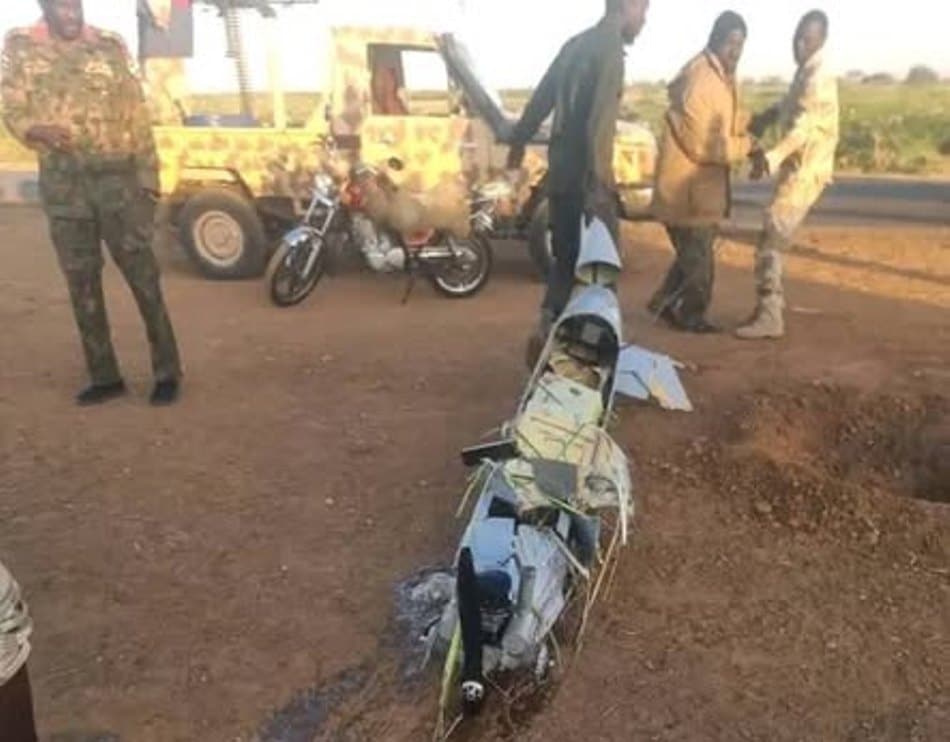
September 23, 2026 (KHARTOUM/NYALA) – Sudan’s military and the paramilitary Rapid Support Forces are pouring millions of dollars into an escalating aerial arms race, deploying hundreds of sophisticated foreign drones that have transformed the country’s skies into a lethal testing ground.
The surge in unmanned systems has reshaped combat across vast swathes of Kordofan and Darfur, inflicting heavy casualties and displacing hundreds of thousands of civilians as both factions ignore mounting international pressure to halt hostilities.
Battlefields in Kordofan and Blue Nile states are witnessing a tactical shift toward deep precision strikes, prompting both sides to secure complex cross-border procurement pipelines.
A Sudanese army source told Sudan Tribune that the military recently received shipments of modern tactical reconnaissance and strike unmanned aerial vehicles (UAVs) from an Asian nation that he declined to identify.
The source confirmed the consignments are Pakistani-developed Shahpar series drones, designed for long-range intelligence, surveillance, target acquisition, and precision-guided missile delivery.
Deliveries began arriving in agreed batches in July 2026, bringing the total number of Shahpar drones transferred to the armed forces to more than 40 units, according to military sources.
The inventory ranges from strategic reconnaissance platforms to combat-ready UAVs outfitted with advanced launch mechanisms and semi-active laser guidance systems.
Adel Abdel Latif, a retired air force brigadier general, said the military relies heavily on medium-altitude long-endurance (MALE) platforms that can loiter at 30,000 feet for up to 30 hours.
These drones provide intelligence, surveillance, and reconnaissance (ISR) coverage while directing strikes along critical operational corridors, Abdel Latif said.
Paramilitary air power
The Rapid Support Forces have countered with an arsenal that includes Chinese-manufactured FH-95 multi-role combat drones, according to military analysts tracking the conflict.
Engineered by Chinese defence contractor ATFTC, the FH-95 is designed for armed reconnaissance and precision attack in adverse weather conditions, boasting an endurance of 12 hours and a maximum takeoff weight of 850 kg.
An RSF field commander told Sudan Tribune that the paramilitary force acquired aerial capabilities matching the military’s hardware in sophistication to protect positions across Kordofan and Darfur.
The commander said his unit received more than 60 loitering munitions, reconnaissance UAVs, and commercial drones retrofitted with improvised explosive payloads.
War of attrition
The Sudanese military reported significant defensive intercepts in recent weeks, asserting that anti-aircraft artillery and electronic-warfare units neutralized waves of hostile drones targeting regional capitals.
Data compiled by Sudan Tribune indicates the belligerents widely used low-cost first-person view (FPV) attack drones to execute close-quarters strikes.
More than 90 unmanned aircraft were brought down or electronically intercepted nationwide between January and August, according to military communiques and local intelligence.
Kordofan recorded the highest concentration of losses, with more than 45 systems shot down or jammed, followed by White Nile, Blue Nile, and South Kordofan states.
Army batteries brought down strategic and attack drones over Omdurman, Khartoum, and El Obeid in January, alongside eight loitering munitions intercepted over Dilling in South Kordofan.
By mid-March, electronic jamming networks and ground defences intercepted 11 explosive-laden drones aimed at Ad Damir and Atbara in northern Sudan.
Surveillance drones penetrated airspace above Gedaref, while over 15 loitering munitions struck at the Wadi Seidna military base, the Corps of Engineers, and the Paratroopers headquarters in Khartoum North before being destroyed.
Army units in April repelled drone strikes targeting fuel and logistics infrastructure in Rabak, Kosti, Al-Keli in Blue Nile, and the perimeters of Merowe and Shendi.
Intense aerial duels erupted across Kordofan in early June following the arrival of fresh equipment, with ground fire knocking out 11 drones threatening El Obeid after strikes hit a court complex, a fuel station, and military installations.
Military sources said ground forces brought down 22 drones and electronically intercepted 18 others in Kordofan during late June, including four Chinese-designed FH-95 strike units.
July saw multi-wave drone assaults targeting transport links along the Khartoum-North Kordofan highway, as well as cross-border raids into White Nile state.
Engagements peaked through August in Kordofan, with daily clashes destroying advanced platforms and retrofitted commercial units near El Obeid, Kurmuk, and Sarkam in Blue Nile.
An army officer said military defences brought down more than 112 RSF drones across all battle fronts between January 1 and August 30, 2026.
The officer estimated that fixed electronic-warfare installations, operating out to a radius of 30 kilometres across central and northern states, neutralized more than 50 incoming suicide drones during that period.
Foreign suppliers and human cost
Reliance on unmanned systems represents the war’s most decisive operational evolution, said Mohammed Yahya Ali, a retired army colonel and strategic analyst.
Both factions spend millions of dollars each month on international procurement networks to replenish depleted air units, Ali said.
The integration of Shahpar airframes alongside Turkish Akinci and Iranian Mohajer variants gave the military precision-strike dominance across open terrain, clearing pathways for ground forces, Ali said.
Conversely, the RSF relies on high-speed loitering attacks to bypass radar cover, exhaust military munitions stockpiles, and erode army logistics, Ali noted.
A United Nations fact-finding mission report released in early September stated that drone strikes killed more than 1,000 civilians during the first five months of 2026.
The UN inquiry warned that both sides committed grave breaches of international humanitarian law and international human rights law that may constitute war crimes.
Investigators uncovered evidence that up to 2,000 foreign contractors, primarily from Colombia, assisted the RSF with maintenance, mission planning, and drone operations around El Fasher in North Darfur.
The panel reported that the army’s deep-strike capabilities expanded via imported loitering munitions, leading to strikes on populated non-military sites such as the Yabus market in Blue Nile.