
UN condemns strike on Sudan aid trucks as hunger and displacement mount
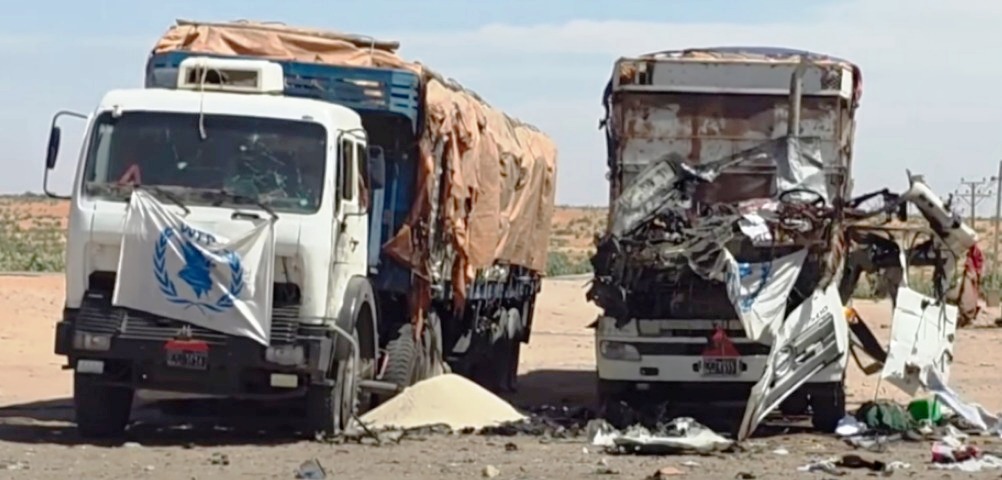
October 5, 2026 (PORT SUDAN) – An aerial attack on humanitarian supply trucks in Sudan’s South Kordofan state has killed a driver and disrupted relief deliveries, drawing sharp condemnation from senior United Nations officials who warned on Monday of deteriorating conditions across the country.
Two trucks contracted by the World Food Programme (WFP) were struck on Oct. 3 in the town of Dilling while en route to Kadugli, the UN Office for the Coordination of Humanitarian Affairs (OCHA) said. The vehicles were clearly marked as humanitarian transport and were carrying emergency food rations.
The incident occurred just 24 hours after another WFP-contracted vehicle struck an explosive device in the same town after completing an aid drop.
UN Under-Secretary-General for Humanitarian Affairs Tom Fletcher said targeting aid workers was unacceptable and demanded an immediate end to attacks on relief personnel. The food agency called for a prompt, impartial investigation into the incident and urged all combatants to adhere to international humanitarian law.
The violence forms part of an intensifying wave of drone strikes across the Kordofan region. In North Kordofan, a drone strike killed one child and injured 12 others in the state capital of El Obeid on Oct. 1, according to the UN Children’s Fund (UNICEF).
Further east in Blue Nile State, escalating clashes displaced more than 10,000 people between Sept. 26 and Oct. 4, the International Organization for Migration reported.
Humanitarian agencies face compounding challenges nationwide, with sharp funding shortfalls forcing aid rollbacks as acute food insecurity spreads. The International Rescue Committee recently cut back operations, reducing essential support for more than 473,000 people across Sudan.
The crisis remains acute in the western region of Darfur, where uneven and below-average rainfall has worsened agricultural yields and deepened malnutrition. Aid partners estimate that 7.1 million of the 9.1 million people projected to need food assistance during the final quarter of 2026 could face severe supply gaps.
OCHA renewed its call for combatants to halt attacks on civilians and vital infrastructure, urging international donors to release rapid and flexible funding to sustain operations across the country.