
Agriculture
Sudan on the brink of hunger as war and drought ravage livelihoods
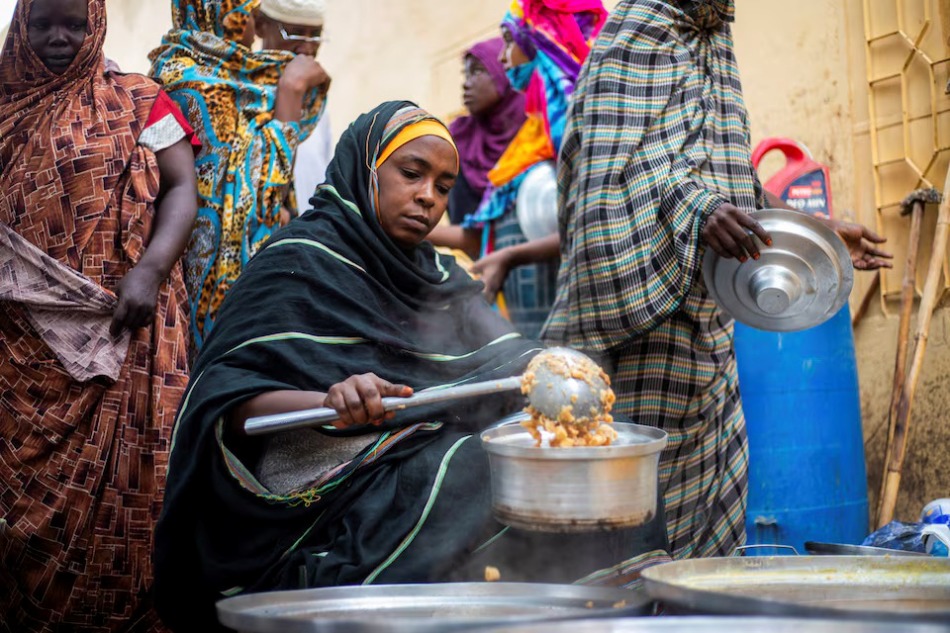
October 15, 2026 (EL OBEID/AL NAHUD/KHARTOUM) – Soaring production costs, shrinking incomes, and relentless conflict are pushing Sudanese families to the edge of survival, compounding a severe drought that has crippled harvests and emptied markets of buyers who can no longer afford to eat.
While basic commodities still line some stall shelves across the country, runaway inflation has pushed them far beyond ordinary citizens’ reach. The breakdown of the farming season in frontline and drought-stricken areas has wiped out rural incomes and seasonal employment, gutting local trade.
In El Obeid, the provincial capital of North Kordofan, resident Kawthar Saad sees daily life erode as economic activity grinds to a halt.
Agriculture, long the backbone of household revenue in the region, has stopped delivering sustainable returns as surging input costs and arid weather weigh it down, Saad told Sudan Tribune.
Families have seen their earnings shrink to the point that food, medicine, and school supplies are out of reach, forcing many to skip meals and sacrifice basic necessities, she said.
With formal jobs nonexistent and alternative livelihoods scarce, households face increasingly desperate decisions as the war drags on, she added.
Agriculture under pressure from war and drought
The hardship extends directly to growers, who face high operating expenses, virtually no access to credit, and acute shortages of seeds and fertilizer, all exacerbated by shifting climate patterns and deficient rains.
Abdullah Saleh, a farmer working the agricultural plains of West Kordofan, said the dual shocks of war and drought have made planting unviable.
Farmers must shoulder the upfront financial burden of clearing land, buying seeds, and running machinery long before harvest, Saleh told Sudan Tribune. Any crop failure delivers an immediate, fatal blow to their ability to finance the subsequent season, he explained.
The fallout spreads across the entire rural economy, eliminating day labour for agricultural workers and choking supplies to regional distribution hubs, Saleh said, warning that many families are preparing to abandon their ancestral lands altogether.
Markets strained by eroding purchasing power
Hundreds of miles to the northeast in Khartoum state, commercial hubs tell a similar story of paralyzed trade.
Yasin Abdulkarim, a shopkeeper in the Bahri market, said runaway prices have cratered retail trade, forcing customers to cut back and buy only survival rations.
Shoppers who once bought staples by the sack now buy by the cup, while others leave empty-handed, directly hammering daily turnover, Abdulkarim told Sudan Tribune.
Wholesale procurement, haulage, and storage costs have risen sharply, while capital to restock depleted inventories has dried up, leaving merchants squeezed between mounting overheads and impoverished consumers, he said.
The crisis is not merely about high shelf prices, but about collapsing livelihoods that have forced households to spend every remaining penny on food, Abdulkarim added.
The operational reality mirrors grim scientific assessments. The Integrated Food Security Phase Classification (IPC) reported that below-average rainfall, depleted soil moisture, record temperatures, and shrinking biomass, intensified by the El Niño weather pattern, have driven drought conditions across roughly half of Sudan’s arable acreage.
Satellite tracking shows 64% of cropland in North Darfur and nearly half across South Darfur, West Kordofan, and South Kordofan display stunted vegetation, with severe hydrological deficits recorded across almost all monitored tracts.
Sharp drop in food provision
As domestic production collapses, community safety nets are buckling under financial pressure.
Hamza Hassan Haroun, media officer for the emergency response room in Tawila, North Darfur, said a dry spell in donor funding and humanitarian grants has forced the closure of almost all communal kitchens in the area.
Only a single kitchen remains operational out of as many as 40 that once fed thousands, Haroun told Sudan Tribune.
The relief network previously relied on weekly disbursements to buy bulk food baskets and keep hot meals running, but that pipeline has contracted sharply in recent months, he said.
The resulting funding void has left displaced families with little to eat, while runaway local inflation has pushed the bi-weekly operational cost of a single community kitchen from roughly $3,000 to between $5,000 and $6,000, Haroun noted.
Without predictable donor support, sustaining direct nutritional assistance to the displaced has become nearly impossible, he said.
Prolonged war drives deepening crisis
Economists trace the humanitarian unravelling to the macroeconomic shocks of the ongoing military campaign.
Adel Khalafallah, a Sudanese economist, said the protracted conflict continues to drive the Sudanese pound’s freefall, noting that the currency has shed an estimated 145% of its purchasing power while public- and private-sector wages, salaries, and pensions remain frozen.
The collapse in purchasing power has put basic medical care and imported pharmaceuticals entirely out of reach for fixed-income families, Khalafallah told Sudan Tribune.
Runaway currency depreciation combined with spikes in transport and labour costs has forced key agricultural schemes to shut down entirely, Khalafallah said.
Compounded by erratic rainfall and expanding desertification, crop output has plummeted by 27% to 45%, validating early-warning forecasts of looming famine, he added.
Khalafallah argued that continued military operations, attacks on civilian infrastructure, and the entrenched interests of warring factions impede any viable containment of the humanitarian emergency.
State authorities have failed to implement coherent fiscal or protective measures to shelter vulnerable populations, he noted.
A cessation of hostilities remains the only viable path to economic recovery and structured relief, beginning with a humanitarian truce to open delivery corridors, Khalafallah said.
Securing sustainable food pipelines requires restoring formal trade channels and unravelling the predatory distortions of the country’s wartime economy, he added.
Khalafallah warned that every state across Sudan now faces severe food insecurity, with displacement corridors in Kordofan, Darfur, and Blue Nile facing extreme risks due to the escalation of ground fighting and drone strikes.
Newborns, pregnant and nursing women, the elderly, the chronically ill, and detained populations remain at immediate risk of acute malnutrition and death, he said.
Khalafallah called on non-aligned civic groups and domestic actors to mount concerted pressure on both warring parties to enter direct negotiations, halt military campaigns, and avert total state collapse.