
Sudan clears over 32,000 explosive devices, but deadly threat hinders recovery
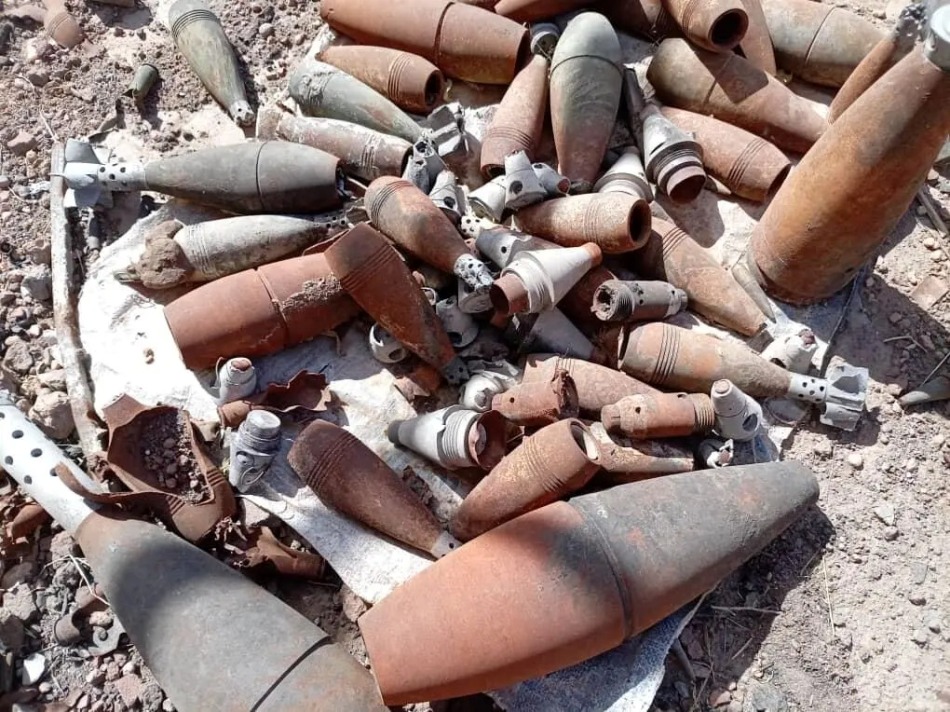
November 14, 2026 (KHARTOUM) – More than 32,000 explosive devices and unexploded ordnance (UXO) have been safely removed and disposed of across Sudan, according to sources at the National Mine Action Centre.
Warring parties in Sudan planted large quantities of landmines and explosives to halt enemy advances during intense military confrontations.
Meanwhile, unexploded munitions have scattered over long distances, landing in heavily populated residential areas.
Clearance operations have covered vital sites and neighbourhoods in several states, with the capital, Khartoum, being the most affected, sources told Sudan Tribune.
Dozens of landmines and UXO were cleared from water stations, schools, mosques, Khartoum International Airport, and major roads and markets.
Sources warned that more lethal weapons likely remain hidden in homes, particularly those still occupied by residents.
Survey teams are continuing to sweep Khartoum and other major cities.
Ongoing disaster
Sudanese cities and states are now saturated with explosive remnants of war, posing a daily threat to civilians.
These munitions act as hidden traps, threatening to turn returning families’ hopes into sudden tragedy.
Field estimates suggest the volume of unexploded ordnance in Sudan points to a decades-long crisis, according to international and U.N. reports.
Conflict monitors estimate that 10% to 30% of shells and rockets fired during the fierce fighting failed to detonate.
This high failure rate means tens of thousands of deadly devices remain buried under rubble, on rooftops, and in city streets.
Indiscriminate mutual shelling with heavy artillery and drones continues to introduce new risks to populated areas.
Mine Action Centre sources noted the diverse nature of these unexploded weapons, reflecting the wide array of munitions deployed in the conflict.
Heavy artillery and mortar shells are the most common unexploded projectiles threatening civilians in clash zones.
The contamination also includes cluster bombs, unexploded aerial ordnance from airstrikes, and landmines.
Risks extend beyond large munitions to highly lethal smaller devices, including hand grenades scattered among the debris.
Khartoum state and the capitals of the Darfur states are the most heavily contaminated areas.
Successive tragedies
In Khartoum’s Burri neighbourhood, a documented incident highlighted the danger when a family returned months ago to inspect their home.
Residents lit a fire to clear accumulated waste and rubble following a lull in the fighting.
They were unaware that an unexploded landmine lay hidden beneath the trash.
Heat from the fire triggered massive explosions that shook central Khartoum and caused severe panic.
While there were no immediate casualties, the incident served as a stark reminder of the hidden dangers.
In South Darfur’s capital, Nyala, the explosion of a shell and a UXO depot recently caused civilian casualties.
The incident occurred in a neighbourhood that had seen intense rocket fire and direct clashes.
Children and civilians were near the unexploded ordnance, unaware of the lethal threat.
The Nyala explosion underscores the daily peril in Darfur, where sudden detonations frequently disrupt civilian life.
Families remain helpless against the spread of these munitions, which prevent children from playing and adults from working safely.
Official warnings and international appeals regarding the crisis are mounting.
International bodies stress that UXO severely hinders national recovery and rebuilding efforts.
Wolfram Vetter, head of the European Union Delegation to Sudan, confirmed that unexploded weapons remain a persistent threat.
“Unexploded weapons remain a threat to the lives of civilians across Sudan and hinder their efforts to rebuild their lives,” Vetter said on the X platform.
He called for mobilized international support to clear the affected areas.
However, United Nations Mine Action Service (UNMAS) teams and volunteers face severe logistical and security challenges.
Ongoing tensions and shifting frontlines restrict access for technical staff and modern detection equipment.
The vast scale of the contamination also requires resources that far exceed current funding.
Major challenges
Clearance efforts are further complicated by a lack of accurate bombing maps and military records detailing where munitions were deployed.
Given these obstacles, Sudanese civil society groups and youth volunteers have taken on a pivotal role in public safety.
Humanitarian activist Al-Muntasir Al-Bashir told Sudan Tribune that volunteers are running field awareness campaigns using loudspeakers and leaflets.
These campaigns focus mainly on children, who are highly vulnerable because of their natural curiosity.
Communities are instructed to never touch strange objects and to report them immediately to authorities.
Al-Bashir noted that the crisis is worsened by Sudan’s collapsed health system and severe medical shortages.
Health centres lack specialized programs for the psychological support and physical rehabilitation of explosion victims.
Experts warn that injuries from UXO cause long-term psychological trauma and physical deformities for victims and their families.
The presence of unexploded munitions also severely disrupts the agricultural and transportation sectors.
Al-Bashir expressed concern over unexploded ordnance near abandoned infrastructure, such as the destroyed Shambat Bridge in Bahri.
Dangerous leakage
Environmental experts are warning of chemical risks from toxic and explosive materials leaking into groundwater.
Dr Ali Al-Ajib Ali, a professor of environmental studies, said the decomposition of metal shell casings releases sulfur and lead into agricultural soil.
This sustained pollution destroys crops and contaminates drinking water supplies relied upon by civilians and livestock.
He warned that explosive remnants could cause chronic diseases and chemical poisoning over the long term.
Ali stressed that removing the ordnance is insufficient without scientifically treating the contaminated soil and water.
Human rights and legal experts classify the widespread use of explosive weapons in populated areas as a clear violation of international law.
They are calling for accountability for all parties that deployed indiscriminate weapons in civilian zones.
Rights organizations are demanding the handover of military records and bombing maps to facilitate clearance operations.
Providing this data is a fundamental step to protect civilians and assist international demining organizations.