
Sudan asks China to help rebuild Khartoum Refinery and energy sector
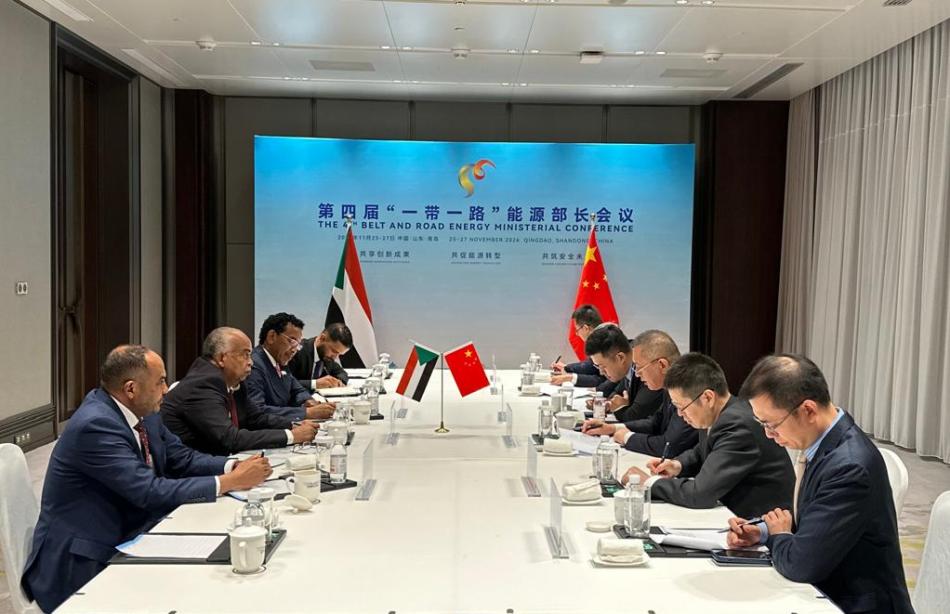
November 28, 2026 (QINGDAO, China) – Sudan and China held talks on rehabilitating the war-damaged Khartoum Refinery, boosting oil output, and overhauling power infrastructure as Khartoum seeks to rebuild its energy sector, Sudan’s energy ministry said Friday evening.
Sudan’s energy infrastructure, including power stations and the Khartoum Refinery—which previously met about 70% of the country’s fuel needs—has suffered widespread looting and sabotage during years of conflict.
Energy and Petroleum Minister Al-Mu’tasim Ibrahim Ahmed discussed bilateral cooperation and investment partnerships with Wang Jianbo, deputy administrator of China’s National Energy Administration, on the sidelines of the Belt and Road Energy Ministerial Conference in Qingdao, Shandong province, the ministry said in a statement.
Ahmed presented strategic reconstruction priorities including restarting the Khartoum Refinery, expanding oil exploration and production, repairing power generation plants and transmission grids and developing renewable and hydropower projects, according to the statement.
He said Khartoum hoped to expand Chinese corporate participation in major energy investments, building on bilateral ties dating back to 1999, when China began playing a central role in Sudan’s oil extraction.
Wang welcomed the proposals and called for reactivating joint working groups to coordinate technical cooperation and set priorities for the next phase, the ministry said.
The Nov 25-27 conference brought together energy ministers and officials from the 35-nation Belt and Road Energy Partnership, along with roughly 300 companies and institutions.
Sudan’s crude oil output stood at about 22,000 barrels per day in September 2026, according to OPEC data, down from 55,000 to 60,000 bpd before the war broke out.
Production had already dropped to around 120,000 bpd from 450,000 bpd after South Sudan seceded in 2011, taking roughly three-quarters of the country’s oil fields.