
Over a million people have fled Sudan into South Sudan: UN
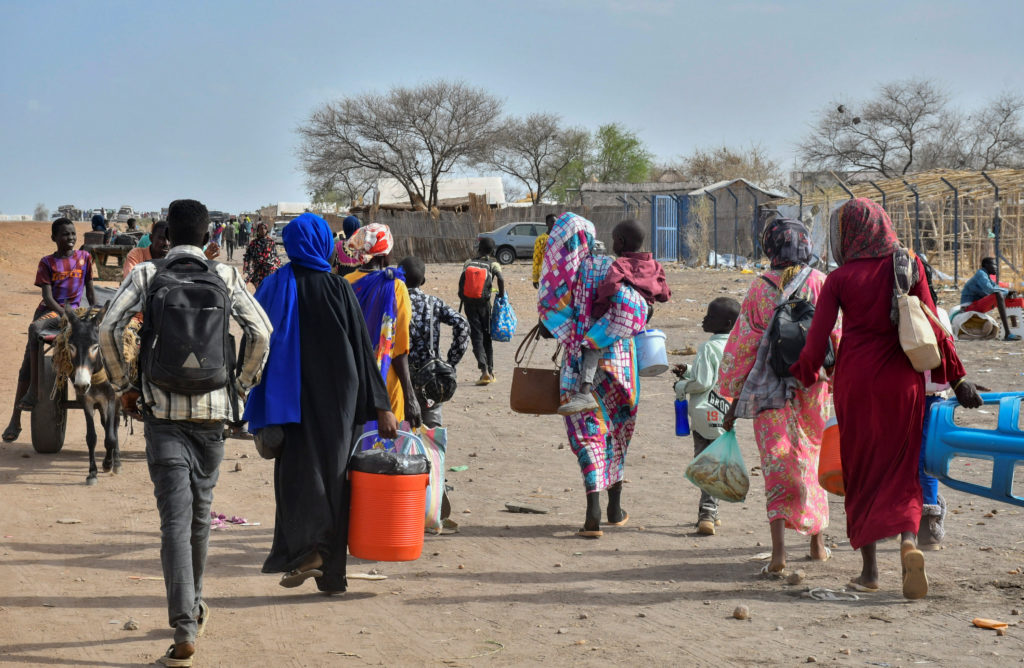
January 21, 2025 (JUBA) – Over one million people have fled the ongoing conflict in Sudan into neighbouring South Sudan, new data provided by two United Nations agencies indicates.
The figures from the UN Migration Agency (IOM) and UN Refugee Agency (UNHCR) have set a new record in the ongoing humanitarian and displacement crisis ignited by nearly two years of fighting between the Sudanese army (SAF) and the Rapid Support Forces (RSF).
More than 770,200 people, according to the UN, have entered through Wunthou (Joda) on South Sudan’s northern border Sudan since the outbreak of fighting in Sudan in mid-April 2023.
In addition, it further noted, tens of thousands have crossed through strategic points such as Majokyinthiou in Northern Bahr Gazal State, Panakuach in Unity State, and Abyei Amiet in Abyei Administrative Area, which have become critical transit hubs for those fleeing the violence.
“The arrival of over a million people into South Sudan is stark and sobering statistic and truly shows the increasing scale of this crisis. Every day more families are still being forced to make the difficult choice to flee the violence in Sudan and seek safety across the border. UNHCR is working hand in hand with the Government and partners to coordinate and deliver critical, live-saving support, including shelter, protection, and basic necessities, to those arriving, as well providing support for the communities hosting them” said Sanaa Abdalla Omer, UNHCR South Sudan Deputy Representative.
“The people of South Sudan continue to show extraordinary generosity, welcoming those in need and sharing what little resources they have, but they cannot shoulder this massive the responsibility alone. We urge the international community to step up support and ensure that both displaced families and host communities receive desperately needed support,” he added.
Ever since the conflict broke out in Sudan, IOM and UNHCR have reportedly been conducting biometric registration, flow monitoring and population tracking to arrive at these figures.
Most of the one million who have arrived are South Sudanese nationals who had been living in Sudan, many of whom had previously fled South Sudan’s civil war and sought refuge in Sudan.
Also, thousands of Sudanese nationals displaced for the first time by the ongoing violence, along with nationals from other countries residing in Sudan, have sought safety in South Sudan.
Meanwhile IOM and UNHCR have been providing transport assistance, multi-purpose cash assistance, shelter/non-food items, protection and mental health and psychosocial support services, water, sanitation and hygiene (WASH), and lifesaving healthcare services since war broke out.
“As the crisis in Sudan continues to unfold, IOM is committed to addressing the urgent needs of those who have been forced to flee into South Sudan and stands ready to scale up its response. In addition to the onward transportation assistance provided, which remains a priority response strategy to reduce the pressure in Renk County, it has become critical to also ensure more sustainable support for both displaced and host communities as local resources such as healthcare, water and shelter become dangerously overstretched”. Said Vijaya Souri, IOM South Sudan Chief of Mission.
There are concerns that while local communities in South Sudan continue to show solidarity, welcoming those in need, essential resources–particularly water, sanitation, and healthcare–remain dangerously stretched.
Additionally, the UN observed, the ongoing cholera outbreak in South Sudan further underscores the critical need for clean water and strengthened healthcare systems
The scale of displacement triggered by the war in Sudan, which is not decreasing but increasing highlights the urgent need for more humanitarian support and funding. UNHCR and IOM are on the ground continuing to deliver life-saving assistance at border entry points, facilitating the relocation of new arrivals to transit centers in Renk and Malakal, and supporting their onward movement in collaboration with other humanitarian actors and the Government of South Sudan.
According to the UN, while Sudanese refugees are transported to refugee hosting areas, South Sudanese returnees are assisted in reaching their intended final destinations across South Sudan.
Two transit centers hosting over 16,000 people and yet designed for 4,800 in Renk are already overstretched, putting a strain on the available limited services.
An estimated 337,000 new arrivals, according to the South Sudan Humanitarian Needs and Response Plan 2025, are expected to arrive in South Sudan as the conflict in Sudan continues.
(ST)