
Sudanese refugees stranded as Chad shuts border over security fears
March 18, 2026 (ADRE) – The Chadian government’s sudden decision to close its eastern border with Sudan has left thousands of displaced people trapped in a humanitarian limbo, caught between an escalating conflict and a shuttered gateway to safety.
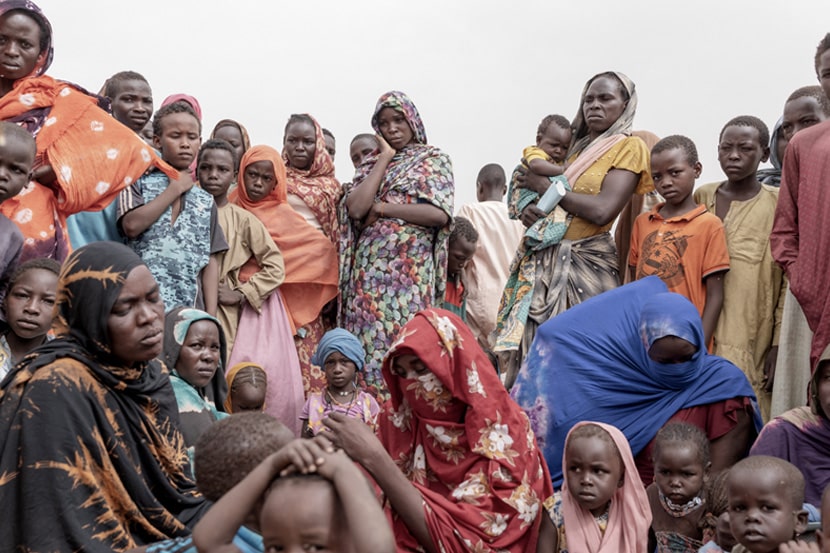
The closure of the Adre crossing in February, once the primary escape route for those fleeing the violence in Darfur, has transformed a site of hope into a militarized barrier. Families now find themselves stranded in the open, facing severe shortages of food and shelter.
N’Djamena maintains the move was necessary to protect national sovereignty following repeated incursions by Sudanese combatants. However, for the hundreds of families arriving daily, the closure represents a potential death sentence.
Border tensions
The Chadian government clarified in an official statement that the decision followed “repeated violations” of its territory by parties to the Sudanese conflict. Minister of Communication Mohamed Qasim Sharif said the incursions threatened the security of both Chadian citizens and the refugee population.
The actual spark for the closure appears to have been a violent clash in the border town of Tine on February 21, 2026. Fighting between the Rapid Support Forces (RSF) and elements loyal to the Sudanese army spilt over the border, hitting a Chadian military position.
Official sources in Chad confirmed that at least five soldiers and three civilians were killed in the skirmish, with a further 12 people injured. This followed a similar incident in January, where seven Chadian soldiers were killed in an attack attributed to the RSF.
Journey of survival
For those like Adam Saleh, a pseudonym for a survivor who recently reached a camp in Chad, the physical border is only the final hurdle in a gruelling journey. Saleh fled El Fasher on foot, dodging gunfire and passing bodies scattered along the scorching desert roads.
After walking for more than 24 hours to reach Tawila, Saleh and his family spent months scraping together enough money to board a cramped vehicle toward Adre. He lost two of his children to exhaustion and dehydration along the way.
Upon reaching the border town of Adkong, Saleh found the gates locked. Chadian soldiers now patrol the perimeter, turning back those who have risked everything to reach the crossing. Saleh says returning to Sudan is not an option, as it would mean certain death.
Market shocks
The border closure has also triggered an economic crisis within Darfur’s internal markets. With official trade routes paralyzed, the prices of basic goods have spiked, leaving the remaining population unable to afford essential supplies.
Traders in El Geneina and Zalingei report that the price of a sack of flour jumped from 150,000 pounds to 250,000 pounds within days of the announcement. On the black market, fuel prices have tripled, making even local transport prohibitively expensive.
Humanitarian organizations have also been forced to scale back operations. While authorities in Port Sudan extended the opening of Adre from the Sudanese side until late March to facilitate aid, the unilateral Chadian closure has left vital supplies rotting in trucks on the other side of the fence.
Smuggling routes
In the absence of legal passage, a dangerous and lucrative “trade of death” has emerged through the desert. Smugglers now charge desperate families massive sums to navigate rugged, unofficial paths controlled by armed groups.
Awad Khamis, a young man who paid 300,000 pounds to smuggle his sick mother into Chad, described a harrowing trip in a truck overloaded with 25 people. He witnessed a child fall from the moving vehicle and die, but the driver refused to stop for fear of detection by Chadian patrols.
The conditions in the existing Chadian camps are equally dire. Overcrowding and a lack of basic services have left women and children, who make up 70% of the new arrivals, vulnerable to disease and malnutrition.
Chadian authorities insist that the closure remains in effect until further notice. As the diplomatic deadlock continues, the millions of lives hanging in the balance at the border are left to wait for a political solution that remains out of reach.