
IGAD pledges $1m to fight Ebola as health ministers meet on regional outbreak
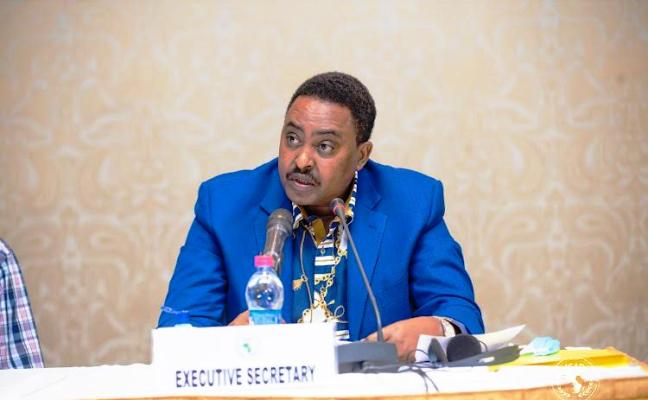
May 31, Djibouti — The Intergovernmental Authority on Development (IGAD) pledged one million dollars to help member states combat Ebola, as health ministers from the bloc held an emergency meeting on Friday to coordinate a regional response to the spreading disease.
IGAD Executive Secretary Workneh Gebeyehu addressed the ministerial meeting, urging member governments and populations to exercise caution, follow health guidelines, and report suspected cases immediately. The funding will be provided in cooperation with the Pandemic Fund, the World Health Organization, and the International Federation of Red Cross and Red Crescent Societies.
Sudan’s Health Minister Haitham Mohamed Ibrahim participated in the emergency session alongside counterparts from Uganda, Kenya, Somalia, and Djibouti, as well as representatives from UN agencies and international partners. Sudan also announced it was tightening precautionary measures at border crossings with IGAD member states.
Participants reviewed available information on the disease and the risks it poses to the region, and stressed the importance of joint action on epidemiological surveillance and health data sharing. The meeting affirmed the need to secure and equip border crossings to protect citizens, particularly given the large Sudanese diaspora communities in affected countries.
According to WHO data, the current Ebola outbreak — caused by the Bundibugyo strain — began in eastern Democratic Republic of Congo in late April 2026, when a healthcare worker first developed symptoms on 24 April. WHO was notified of an unknown outbreak with a high fatality rate in Ituri province on 5 May, and laboratory tests confirmed Ebola on 15 May. Uganda recorded its first imported case from the DRC on 15 May, with a second confirmed the following day.
The virus has been spreading since April across several IGAD member states that have received thousands of Sudanese displaced by the war, particularly Uganda, from which hundreds of Sudanese have recently returned.
Ebola is one of the most dangerous viral haemorrhagic fevers, with a fatality rate of between 50% and 90% without medical treatment. It spreads through direct contact with the bodily fluids of an infected person.