
Red Cross steps up aid in Sudan’s El Obeid as RSF assault looms
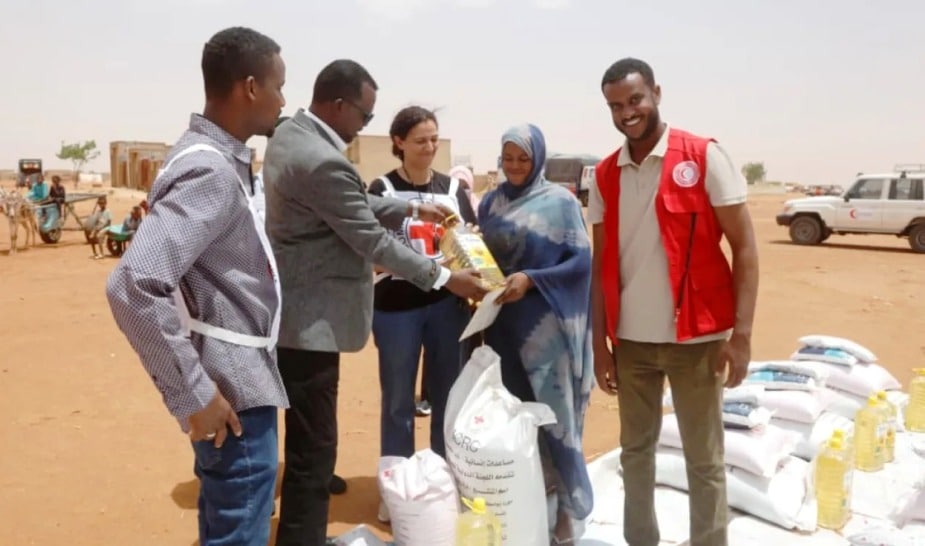
July 2, 2026 (EL OBEID) – The International Committee of the Red Cross (ICRC) said on Thursday it has delivered aid to 42,000 people in Sudan’s El Obeid and North Kordofan State as it scrambles to bolster health services amid a sharp escalation in hostilities.
El Obeid currently shelters 105,000 internally displaced persons, including 30,000 packed into the Al-Mina Al-Muwahad camp. Aid agencies warn that local families are running out of coping mechanisms due to a lack of jobs and a severely underfunded humanitarian response.
Working alongside the Sudanese Red Crescent Society, the ICRC distributed one month’s worth of food rations to displaced families and vulnerable urban communities.
The organization is also distributing nutritional supplements to more than 7,000 children, pregnant women, and nursing mothers to combat rising malnutrition over the coming weeks.
The ICRC said residents are facing a compounding crisis after months of displacement, psychological uncertainty, and rolling blackouts of essential services were exacerbated by the latest wave of fighting.
For weeks, the paramilitary Rapid Support Forces (RSF) have shelled power stations and fuel depots in El Obeid while massing troops around the perimeter, triggering international warnings of an imminent full-scale assault.
A major offensive on El Obeid threatens the lives of 563,000 residents and 105,000 displaced people, as well as an additional 700,000 civilians living within a 30-kilometre radius of the city centre.
The city holds immense strategic importance as a commercial and transport hub linking the capital, Khartoum, to South Kordofan, West Kordofan, and western Darfur.
To cope with the influx of casualties, the ICRC and Sudanese Red Crescent have deployed community first-aid teams and reinforced emergency healthcare capacity.
More than 850 people with weapon-wounded injuries have been treated at the El Obeid Teaching Hospital since the beginning of the year, underlining the severe strain on the local health system.
The ICRC has rushed surgical kits, emergency medical equipment, and cholera response materials to the area to treat the wounded and contain potential outbreaks of waterborne disease.
Engineers are also rehabilitating existing water wells and drilling new ones to provide clean drinking water and improve sanitation facilities for 6,000 displaced families.
Freya Raddi, the ICRC’s head of operations in Sudan, called on the warring factions to spare civilians, hospitals, water stations, and power grids from the fighting.
Raddi stressed that protecting and restoring basic infrastructure is vital to limiting human suffering and keeping vulnerable communities alive.