
Sudan’s Umma Party deputy leader proposes roadmap for anti-war declaration
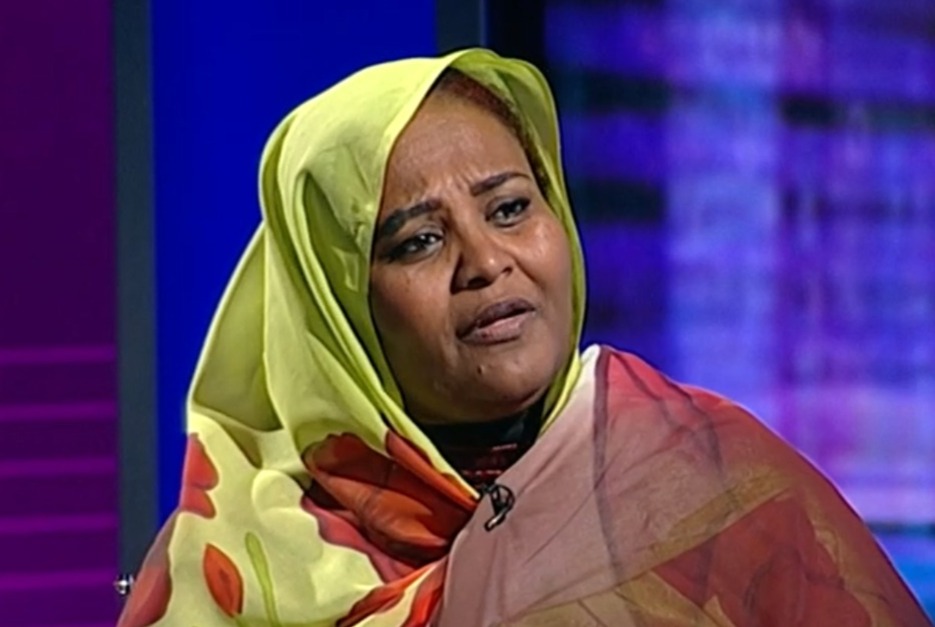
August 25, 2026 (KHARTOUM) – The deputy leader of Sudan’s National Umma Party, Mariam al-Sadiq al-Mahdi, on Tuesday presented a roadmap to implement an anti-war declaration, calling for a review of civilian political alignments to build an actionable peace plan.
Her proposal follows Sunday’s announcement of the “Peace Process We Want” declaration in Addis Ababa by a coalition of political forces, including the Sumood Coalition, the Sudan Liberation Movement led by Abdel Wahid al-Nur, the Popular Congress Party, the Umma Party of Mubarak al-Fadel, the Baath Party and various civil society groups.
In a statement, al-Mahdi welcomed the declaration and urged stakeholders to move from stating political positions to practical peacemaking, defining responsibilities, timelines, tools, and guarantees.
She said she supports the core principles of ending the war, preserving Sudanese sovereignty and unity, and establishing a civilian-led transition. However, she reiterated reservations regarding negotiations held while fighting continues or under the dominance of any armed faction.
Al-Mahdi called for a re-evaluation of civilian groups, arguing that civilian forces must move away from aligning with armed factions. Instead, she said, they should operate within an independent national space defined by commitments to peace, democracy, and citizen rights.
Reviewing classifications should not erase political distinctions or bypass established parties, she added, but must recognize the deep fractures within Sudanese society and seek cohesion rather than the creation of new polarized blocs.
“Political exclusions must be subject to clear criteria, the law, and constitutional documents, rather than shifting political classifications,” al-Mahdi said. “The goal is not merely to decide whom we sit with, but to build a path capable of ending the war and addressing its root causes, its parties, and the networks of interest profiting from its continuation.”
Anti-war signatories have demanded the exclusion of the Islamic Movement, the National Congress Party, and their affiliated groups from any future political process, accusing them of instigating the conflict.
Al-Mahdi said deep distrust remains a primary obstacle to peace and dialogue, noting that confidence-building is a shared responsibility among all factions.
She said the primary burden of building trust falls on those holding power and authority, who must provide binding, verifiable measures backed by legal and security guarantees.
The initial phase of de-escalation must dismantle the war economy and patronage networks profiting from the conflict, al-Mahdi said. She also warned civilian leaders against policies that lead to duplicate administrative systems, regional isolation, or the obstruction of humanitarian aid.
To translate consensus into an accountable political framework, al-Mahdi proposed building trust across five distinct relationships: among civilian forces; between civilians and the military; between the public and political leaders; between the public and the armed forces; and within society itself.
She called for the signing of a concise national civilian charter on Oct. 21 to establish clear obligations, oversight mechanisms, and execution timelines.
“The current moment offers Sudanese civilian forces a real opportunity to transition from defending stances and issuing statements to regaining political initiative—moving from polarization to consensus, and from declaring a desire for peace to building the capacity to achieve it,” she said.