
Cyanide pollution from gold mining kills livestock in Sudan’s South Kordofan
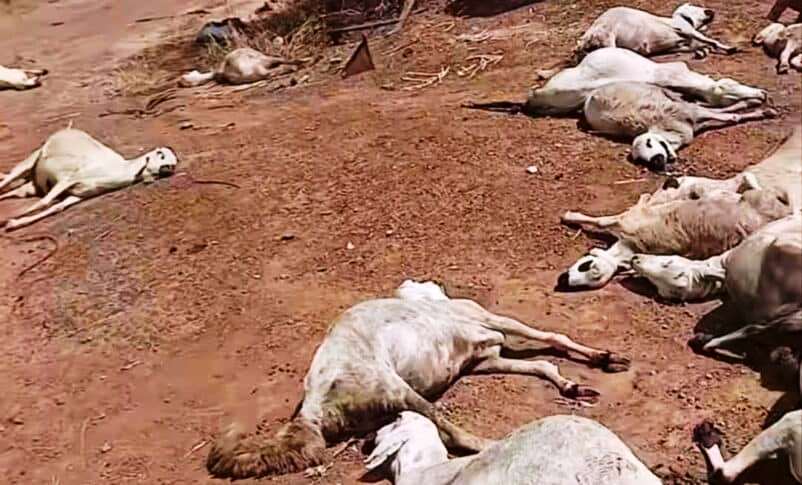
November 9, 2026 (TALODI, Sudan) – Activists in South Kordofan state said on Monday that 65 sheep died after drinking from a water source contaminated with cyanide used in local gold mining activities.
Environmental and health specialists warned that the use of the highly toxic substance poses severe risks to the local population and livestock.
Companies processing traditional mining waste, locally known as ‘Karta,’ operate across several mines in the Talodi area. The extraction process uses ground basins flooded with water and cyanide, which often leaks over large areas.
The Anti-Cyanide Committee, a local community group opposing the chemical’s use, said a farmer lost 65 sheep this week at the Bashaer mine.
The committee said the continued use of cyanide threatens water supplies and pastures, accusing authorities of a lack of oversight and accountability.
It also accused authorities and the Sudanese Mineral Resources Company of covering up a similar incident in the Al-Taqula area last year.
That leak allegedly caused fatal outbreaks of acute diarrhoea among dozens of residents and livestock without triggering an official investigation.
The group held the government primarily responsible, rejecting claims that unofficial mining entities were solely to blame, and stated that the cyanide trade occurs under state supervision.
The committee also accused local Native Administration leaders of allowing harmful mining activities in exchange for financial returns.
In addition to health and environmental threats, the committee warned that cyanide pollution is fuelling social and ethnic conflicts, potentially prolonging the broader war in the country.
Traditional miners extract about 40% of the gold from excavated ore. Companies with official permits then use cyanide to extract the remaining gold from the tailings.