
Sudan’s elderly face compounded suffering amid ongoing war, displacement
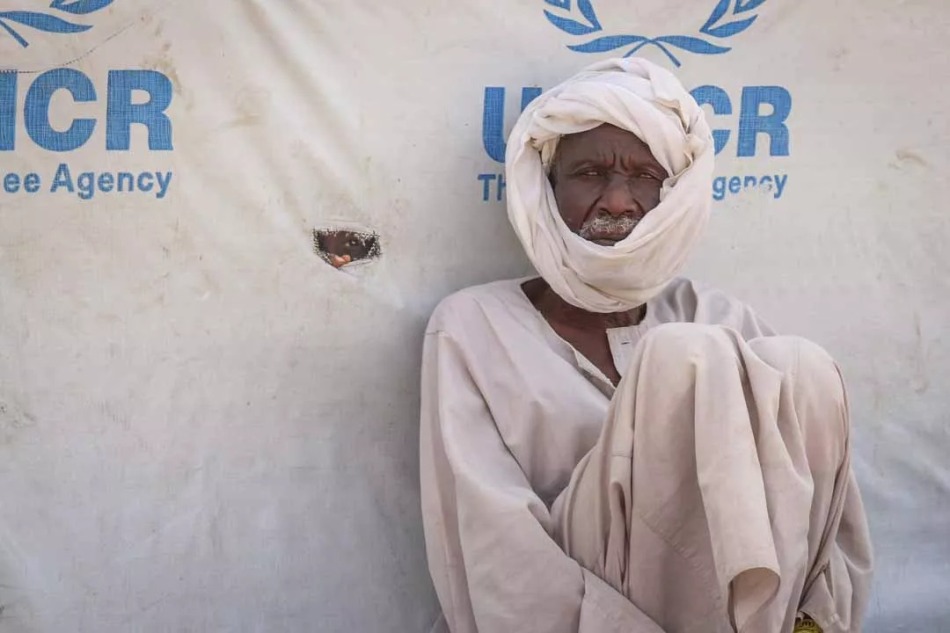
November 8, 2026 (KHARTOUM) – The ongoing war in Sudan has left no segment of society untouched since it erupted in April 2023.
However, the elderly face compounded suffering that extends beyond the risks of displacement, lost homes and vanished income.
Older people are struggling to obtain medical treatment, food and care amid the disintegration of family ties.
Uprooted from home
Aisha Abdallah, 72, said she never expected to leave her home of more than 40 years in Khartoum’s Bahri area.
“We left in a hurry, and we could only take some clothes and simple things,” Abdallah told Sudan Tribune.
She left behind memories, family photos and everything she had gathered throughout her life.
The displacement journey was harsh, she said, noting that travelling long distances, exhaustion and waiting on roads are difficult for someone her age.
“Now I live in a place I do not know, and I do not feel safe or stable in it,” Abdallah said. “What pains me the most is that I do not know when I will return to my home.”
Lost family support
Saleh Mohamed, 78, who lives in a shelter in Port Sudan, said he used to live among his children and grandchildren before the war scattered his family.
Some of his children left for distant areas, while he has no information about the whereabouts of others.
Mohamed told Sudan Tribune he now lives alone, spending most of his day waiting for a call or news about his children.
“Sometimes I get sick and find no one to help me go to the hospital or buy medicine, and even simple daily needs have become a heavy burden,” he said.
The hardest part is not poverty alone, but feeling left without support, Mohamed added.
According to the International Organization for Migration, the number of internally displaced persons in Sudan reached about 8.6 million in September 2026.
IOM data showed that returnees to their areas numbered about 5.1 million.
Daily battle for survival
Healthcare is a pressing challenge for the elderly, especially those with chronic diseases requiring regular medication.
Accessing care has become a heavy burden because of declining health services, medicine shortages, high prices, mobility difficulties, and treatment costs.
Fatima Ibrahim, 69, said she suffers from chronic diseases but obtaining treatment has become a daily struggle.
Medicines are sometimes unavailable, and when found, prices are often too high to afford, she told Sudan Tribune.
Reaching hospitals is also difficult because of transportation issues, security conditions, and treatment costs.
Ibrahim said she sometimes reduces her medication doses to save pills for other days.
“We, the elderly, cannot endure an interruption in treatment; diseases do not wait for the war to stop,” she said.
Psychological toll
Hassan Idris, 75, said the war robbed him of his peace of mind.
He lost loved ones, his family scattered, and he now lives in constant fear of bad news.
“At night, it is hard for me to sleep, and I keep thinking about my children and grandchildren, whom I don’t know where they are,” Idris told Sudan Tribune.
He said he sometimes feels like a burden on others and avoids complaining.
“We older people need someone to listen to us, reassure us, and make us feel that we are still important, not just food and medicine,” he added.
Absence of protection
Sociologist Najlaa Abdel Mahmoud Ahmed Al-Jaili said the war and family separation have worsened the psychological conditions of the elderly.
Many have been deprived of the family care they relied on for basic needs, including food and healthcare.
Al-Jaili told Sudan Tribune that the loss of children or spouses has led to the collapse of support networks.
In Sudanese culture, sons traditionally manage daily needs and accompany parents to health facilities, she said.
Many elderly people now find themselves in harsh conditions without relatives to help them.
Al-Jaili cited cases in displacement camps in eastern Chad, including a man in his 70s who lost his wife and children and now lives alone in a tent.
Another 78-year-old man suffering from joint pain ran out of blood pressure medication two months ago and has no one to help him get more.
The war has exposed a structural fragility in Sudan’s social system, which relied heavily on extended families rather than government institutions, Al-Jaili said.
Elderly care homes have also been affected.
One facility in Khartoum North relocated its residents to another city, where four died during a temporary stay, and others returned with physical disabilities, including amputations.
Al-Jaili said some care home residents suffer from extreme isolation, with attempts to contact their relatives often going unanswered.
She called on humanitarian organizations to give the elderly greater attention in aid programs, noting they are often excluded from distribution mechanisms that require standing in long lines.
Interventions should include mobile health services and direct delivery of food and medicine, Al-Jaili said.
She also urged psychological support, efforts to restore family links, and increased resources for elderly care homes.