
Agriculture
Sudan’s water paradox: abundant resources, poor management
Mohamed A. Elbashir
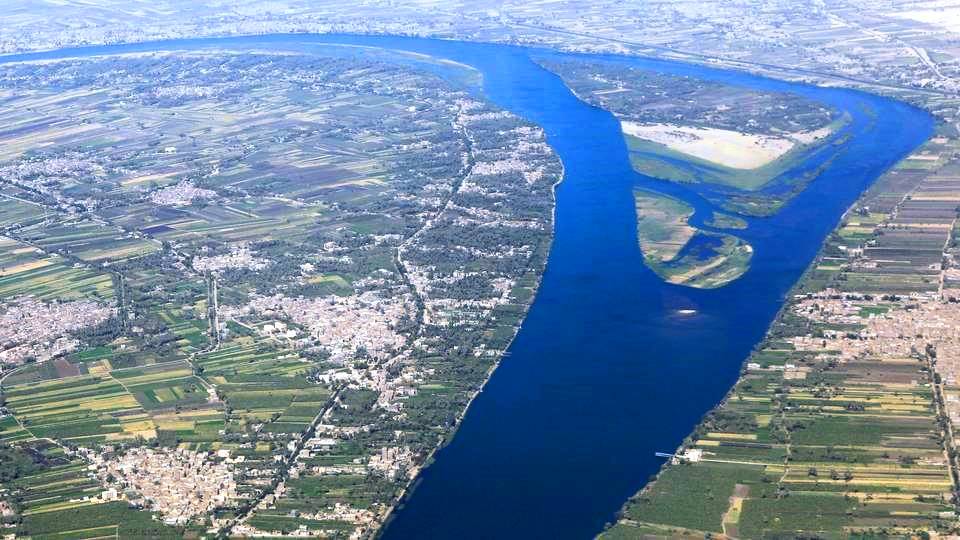
 Home to the world’s largest known fossil water aquifer system, Sudan is also nourished by the Nile, the world’s longest river. Yet millions of Sudanese still face severe water insecurity. How can a country so rich in water continue to suffer a water crisis?
A crisis of management, not scarcity
Sudan does not have a water shortage; it has a water management problem. Its water resources could be a foundation for national development, but poor governance and infrastructure prevent it from turning water into reliable economic and human benefits.
With better, more intentional management, Sudan could become a regional water and global agricultural powerhouse, supporting both domestic development and wider regional prosperity.
Sudan is home to almost half of the Nile River Basin, numerous other streams, extensive groundwater reserves, reservoirs, seasonal rainfall, and lakes spread across the country.
Yet the same country also routinely encounters droughts, water shortages, unreliable access to safe water, and devastating floods. The answer lies in the difference between having water resources and having reliable access to water.
Infrastructure gaps and the toll of conflict
Sudan’s water resources remain severely underutilized and underdeveloped, while their management varies significantly from one region to another. Water is also not distributed evenly across the country or throughout the year.
Some regions experience ample seasonal flows and flooding, while others face prolonged dry periods and limited access to reliable water supplies.
Even where water is physically available, inadequate infrastructure for storage, treatment, distribution, and irrigation can prevent it from reaching the people and sectors that need it.
This historic mismanagement is now catastrophically compounded by the devastating civil conflict that erupted in 2023. The ongoing war has led to the collapse of state institutions and the direct destruction of utility infrastructure in key regions like Khartoum, Darfur, and Al Jazirah, turning chronic bureaucratic failures into an immediate humanitarian disaster.
The consequences of this gap between Sudan’s water resources and people’s reliable access to safe water are significant. An estimated 17.3 million people in Sudan lack access to basic drinking water services, leaving them at greater risk of disease, while approximately 24 million lack access to adequate sanitation facilities.
The problem extends well beyond households. About half of Sudan’s schools either have no access to water or have dysfunctional water facilities.
Access to handwashing facilities in schools is even more limited, with only around 10% of schools having functioning facilities. Most schools have the facilities, but they simply lack running water, rendering them unusable.
These conditions reflect the broader water-supply crisis facing Sudan: water resources are plentiful, yet millions of people and essential institutions still lack reliable access to safe, usable water.
Only 33% of Sudan’s population uses improved sanitation facilities, while 29% have no sanitation facilities at all.
Access to improved sanitation facilities also varies dramatically across the country, with rates ranging from just 10% in some states to 79% in others, and from 22% in rural areas to 57% in urban areas. These disparities reflect the incredibly uneven capacity to provide and maintain essential water and sanitation services across the country.
A tangled web of governance
When most of Sudan’s water distribution networks were established before independence in 1956, their continued deterioration and failure to modernize reflect a chronic water governance problem.
The problem is deeper than simply ageing infrastructure or active conflict. Sudan’s water sector is governed by a complex web of laws, with an estimated 52 laws referencing drinking water and sanitation.
Responsibilities are spread across numerous institutions and authorities, without a single comprehensive national framework to bring them together and provide clear direction. When responsibilities are fragmented, coordination is weak, and funding for the country’s water challenges is limited, even well-intentioned, scattered policies struggle to move beyond planning and paper.
In December 2017, Sudan announced plans to develop a Water Quality Policy. Nearly a decade later, no publicly available evidence shows the policy or efforts to formulate it.
Without adequate funding or a serious, coordinated effort to tackle this water crisis, the result is disastrous, leaving Sudan among the poorest-performing countries in access to sanitation facilities.
The agricultural drain
To better understand the scale of Sudan’s water management problems, it is worth examining how the country uses its current water resources.
According to 2011 estimates published in a 2015 report by the Food and Agriculture Organization of the UN, agriculture accounts for a staggering 96.2% of Sudan’s freshwater withdrawals, compared with a global average of 70%.
The domestic sector accounts for only 3.5%, while the global average is nearly 20%. Industry accounts for a mere 0.3%, compared with a global average of about 12%.
Globally, the share of freshwater withdrawals allocated to domestic use is approximately 5.7 times Sudan’s, while industry’s is 40 times Sudan’s. These values are disturbing and raise questions about Sudan’s water-use practices, their efficiency, and whether they deliver the greatest possible socioeconomic benefits.
These values should not suggest that agriculture is a thriving sector in Sudan. According to the World Bank’s 2020 report on Sudan’s agriculture, the sector underperforms, productivity is in decline, and crop yields remain low.
Consider the Al Jazirah Scheme, the world’s largest irrigation scheme under single management. An estimated 78% of the water supplied to the scheme was lost before reaching crops.
Agriculture consumes nearly all of Sudan’s freshwater withdrawals, yet a substantial share of that water is lost before it can benefit the sector, leaving very little for domestic use and almost none for industry.
Cases like the Al Jazirah Scheme are why Sudan must rethink its approach to water management. Water allocation or supply alone does not guarantee development. Without efficient, well-built infrastructure, strategic planning, and accountability, even substantial water resources can fail to deliver meaningful economic returns.
Water as a strategic national asset
Achieving United Nations Sustainable Development Goal 6, which calls for universal access to safe water, sanitation, and hygiene, must be central to Sudan’s eventual postwar recovery strategy. Access to safe water and adequate sanitation is a basic right and fundamental to public health, human dignity, and well-being.
Meeting this requires Sudan to treat water as a national development priority. Water management must be integrated into agricultural, industrial, economic, and social planning. It must be managed strategically to support agricultural productivity, strengthen food security, expand industrial activity, and improve living standards across the country.
The task ahead is enormous, but it must start with a fundamental shift in how the country views and manages its water resources. It is not simply a matter of scarcity, but of governance, priorities and national planning.
The country has the water resources to support its population, strengthen food security, expand economic activity, and achieve high living standards. But this potential will remain unrealized without effectively investing in infrastructure, stronger legislation, and a coordinated national strategy to rebuild after the war.
Sudan must move toward recognizing water as a strategic national asset, and treat access to safe water as a human right. Only then can its water resources become a foundation for long-term economic and human development.
Ultimately, the problem is not the absence of water, but the failure to manage abundance effectively. Sudan needs a comprehensive national strategy that provides universal access to safe water, improves agricultural efficiency, modernizes the agricultural sector, and ensures that industry has the water resources it needs to grow. The issue is not just making water available but turning it into a foundation for national development.