
ICC Prosecutor says new Darfur arrest warrants imminent
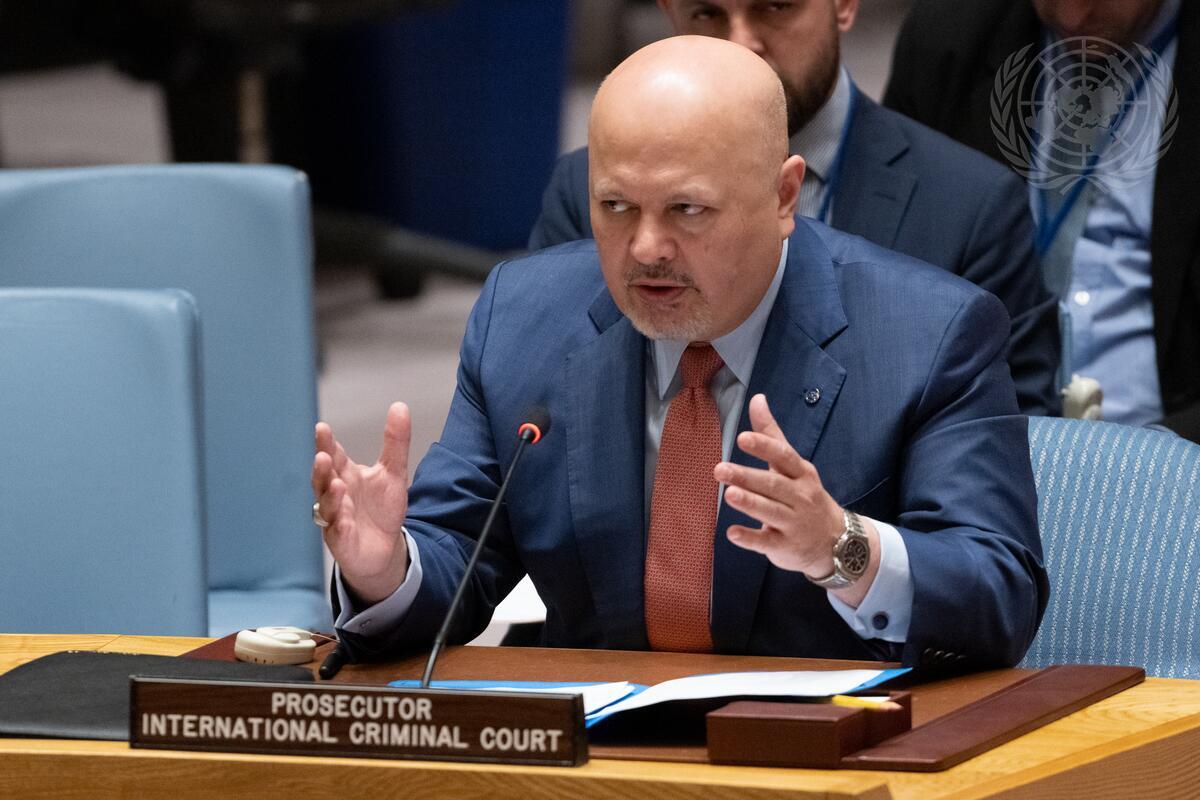
January 27, 2025 (NEW YORK) – The International Criminal Court (ICC) prosecutor told the U.N. Security Council on Monday that new arrest warrant applications related to the escalating violence in Darfur are imminent, describing a situation of “deeper suffering” and widespread atrocities.
ICC Prosecutor Karim Khan said international crimes are being committed “on a wide scale, in real-time” in the Sudanese region, expressing particular concern over attacks on hospitals and civilian infrastructure, as well as gender-based crimes targeting women and children.
“The last six months have reflected a further descent into deeper suffering for the people of Darfur,” Khan told the Council, adding that his office has gathered extensive evidence, including digital and documentary material, in collaboration with affected communities in neighbouring countries. He said the new warrants will focus on crimes in West Darfur.
Khan also highlighted the ongoing trial of Ali Mohamed Ali Abd-al-Rahman “Kushayb”, an alleged senior Janjaweed militia member, as a crucial step toward justice. He urged member states to arrest and surrender other ICC indictees, including Omer Hassan Ahmad al Bashir, Ahmad Harun and Abdel Raheem Mohamed Hussein. He specifically called for the transfer of Harun, whose case is linked to the Kushayb trial, saying, “We believe we know where he is and have communicated this to Sudan.”
“Let politics and division be silenced for a moment to hear the cries of the Darfuri people [who] have the right to justice,” Khan pleaded.
Several Council members echoed Khan’s call for accountability. The U.S. representative said both the Rapid Support Forces and the Sudanese Armed Forces bear responsibility for the violence, adding that the current conflict is fueled by the same impunity that allowed past atrocities.
Other delegates, including representatives from Slovenia, South Korea and Sierra Leone, highlighted the recurring violence and the need to address its root causes.
Sudan’s representative outlined the country’s cooperation with the ICC, including granting visas to investigators. He noted challenges to extradition and establishing a stable legal framework due to the ongoing conflict and political transition but affirmed, “We will continue to cooperate.”
While some Council members commended Sudan’s cooperation, others stressed the need to arrest and surrender wanted individuals. Concerns were also raised about foreign interference in Sudan.
Algeria, the Council President for January, speaking in its national capacity, urged for complementarity between transitional justice, accountability and peacebuilding in Sudan, particularly in Darfur. The Algerian representative noted the need to strengthen Sudan’s judicial structures to support national ownership of the justice process and stressed that a lasting solution is impossible without ending foreign interference in Sudan.
Russia rejected the ICC’s legitimacy, calling its Darfur investigation “ineffective.”
The Council discussion underscored the challenges facing the pursuit of justice in Darfur. While the ICC’s announcement offers a measure of hope, the ongoing conflict and instability in Sudan, along with concerns about foreign interference, continue to impede efforts to hold perpetrators accountable.