
Sudan anti-war coalition splits over proposed parallel government
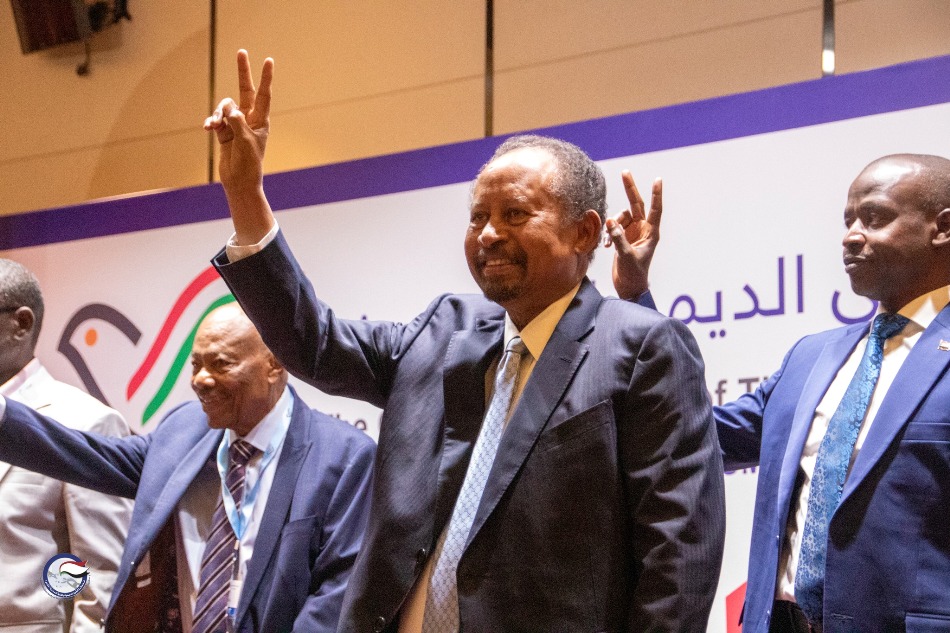
January 30, 2025 (NAIROBI) – A major Sudanese anti-war coalition has split after less than two years, sources said on Thursday, driven by deepening rifts over whether to back a proposed parallel government in areas controlled by the paramilitary Rapid Support Forces (RSF).
The Coordination of Civilian Democratic Forces, known as Tagadum, has sought to remain neutral in the conflict that erupted in mid-April 2023 between the Sudanese Armed Forces (SAF) and the RSF. However, internal divisions have grown over the formation of a parallel government in the RSF-controlled areas.
A spokesperson for Tagadum officially announced a “disengagement” from a faction led by the coalition’s deputy chairman, Al-Hadi Idris, after one of its members announced its plan to form a parallel government in RSF-held areas in February.
Two members of a Tagadum political body tasked with reviewing the positions of those backing a parallel government told Sudan Tribune that the pro-parallel government group’s recent stance, as articulated by leading member Osama Saeed, had accelerated the decision to break away.
They said Tagadum chairman Abdalla Hamdok had told associates he categorically rejected the move to form a parallel government and believed a split was necessary if the faction proceeded.
Late last year, Tagadum leader Shihab Ibrahim told Sudan Tribune that a proposal to form a government in exile had been “settled” and that there was an agreement not to proceed due to potential divisions.
Tagadum spokesperson Bakry Eljack told Sudan Tribune that the coalition’s political body had agreed in its latest meeting to separate from individuals and groups insisting on forming a government, and those who reject forming any government unilaterally or with any of the warring parties.
However, coalition deputy chairman Idris said in a statement issued a statement on Thursday saying that Tagadum had not yet made a decision on forming a government and that the issue remained under discussion. He called any premature statements outside the organizational context “irresponsible attempts to impose specific agendas” that did not represent the coalition’s collective will.
Eljack told Sudan Tribune that a committee had been formed to reach a separation agreement that would maximize common ground while allowing each side to operate politically and organizationally independently, with mutual respect for differing views.
A Tagadum statement said, “The reality confirms that these choices cannot coexist within a single coalition that rejects war and is not biased towards any of its parties.”
It said the coalition’s official position remained against forming a government in exile or a parallel government, adding that it remained neutral and did not recognize the authority in Port Sudan or any other authority.
Tagadum stressed its rejection of war and violence as a means of managing the political conflict and reaffirmed its commitment to building a civilian front opposed to the war and supportive of the country’s unity.
Idris said the statement circulated in the spokesperson’s name did not reflect the coalition’s official position, nor was it agreed upon by any of its accredited bodies.
He described Eljack’s statements as hasty and an attempt to create division, which his statement strongly rejected.
“The Tagadum coalition was founded on political consensus among its founders, and only they have the right to determine its fate,” Idris said. “No single party can decide the fate of the coordination or issue crucial decisions without the consent of all.”
He rejected any attempts to impose a fait accompli without consulting all partners.
The Sudanese Revolutionary Front, led by Idris, proposed forming a government in exile during a leadership meeting in early December in Entebbe, Uganda.
At the time, three coalition leaders told Sudan Tribune that the proposal had been fiercely debated, with proponents indicating their willingness to leave the coalition amicably if it were rejected.