
Rift widens in Sudan’s Umma Party as acting leader rejects ouster, dissolves key body
February 25, 2025 (PORT SUDAN) – A power struggle within Sudan’s National Umma Party (NUP) intensified on Tuesday after the party’s acting leader rejected a move to oust him and dissolved the body that initiated his removal, escalating a dispute over a pact with RSF-aligned groups.
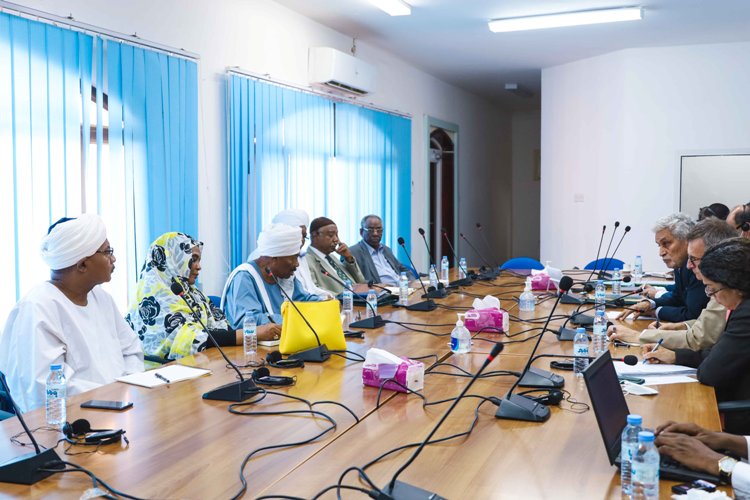
Late on Monday, the NUP’s Presidential Institution withdrew confidence from acting party president Fadlallah Burma Nasir for signing an agreement with groups aligned with the paramilitary Rapid Support Forces (RSF) to establish a parallel government. The institution appointed Mohamed Abdullah Al-Douma as his replacement.
On Feb. 22, Burma Nasir, representing the NUP, signed a founding charter alongside other armed, political, and civil organizations. The charter endorsed the establishment of a parallel government, a secular state, and the right to self-determination if secularism is not enshrined in a transitional or permanent constitution.
In a move threatening the unity of the long-established party, Burma Nasir issued a decision Tuesday evening terminating the mandates of the vice presidents, presidential assistants, and advisors, effectively dissolving the Presidential Institution. He also announced plans to reconstitute the Presidential Institution on “new foundations” and to consult with the head of the Political Bureau and the Secretary-General on convening an extraordinary general congress.
Burma Nasir stated that the actions taken in the name of the Presidential Institution were contrary to the party’s constitution and did not represent the institutions stipulated within it.
The head of the Political Bureau, Mohamed Al-Mahdi Hassan, had already preempted Burma Nasir’s move by asserting the illegitimacy of the decision to withdraw confidence from the acting president. In a statement, Hassan said the vice presidents, assistants, and advisors “are aides to the president and do not have any authority or powers according to the party’s constitution to relieve or dismiss the president, who exercises his constitutional powers.”
Hassan affirmed that Burma Nasir remained the acting head of the party, holding the president’s constitutional powers. He added that the alleged violations attributed to him were “political assessments” to be addressed by the party’s internal mechanisms.
He clarified that the president was appointed by a decision of the Political Bureau, not by his deputies, assistants, or advisors. He explained that the party’s central institutions are the General Congress, the party president, the Central Authority, the Political Bureau, and the General Secretariat.
Hassan stated that the Political Bureau is the party’s highest political authority and acts on behalf of the Central Authority and the General Congress between sessions, exercising both its original and delegated powers.
He noted that the Presidential Institution is a “horizontal body” formed by the party president at his discretion, under his authority and command. Its members are accountable to the president, who appoints and dismisses them.
Meanwhile, a group calling itself “Leaders and Cadres of the National Umma Party” issued a statement claiming that the withdrawal of confidence from the acting party president was an attempted coup against the party’s constitutional legitimacy.
The group accused what it called the “Port Sudan group,” which it alleged was aligned with the former regime, of being behind the attempt to remove the party president. They said this represented a flagrant violation of the constitution and the legitimate institutions of the organization.
The statement pointed out that the Presidential Institution is an advisory body established by the late President Al-Sadiq Al-Mahdi to promote further consultation. It has no executive powers or binding decisions and is convened by the party president.