
Waiting for the next shell’: Fear, surreal normalcy grip Sudan’s El Obeid
By Altaghyeer
KHARTOUM, April 14, 2025 (Sudan Media Forum – Joint News Room) – Residents of El Obeid, a strategically important city in central Sudan, face ongoing insecurity and fear amid explosions and shelling that strike civilian homes, markets, and schools, according to reports from Altaghyeer.
El Obeid, located 588 km (365 miles) southwest of Khartoum, is significant militarily and economically, and also holds a prominent place in Sudanese cultural life.
The death of five members of a single family from artillery shelling was described by the newspaper not as an isolated tragedy, but as part of the daily reality of war in the city.
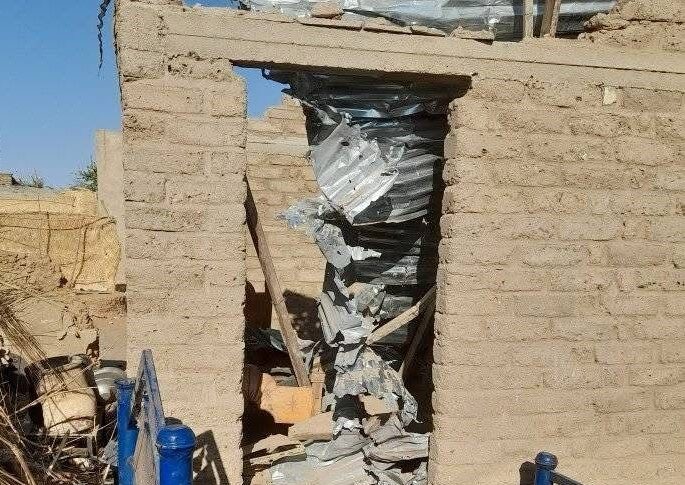
Eyewitnesses told Altaghyeer that the paramilitary Rapid Support Forces (RSF) shelled the city indiscriminately on Tuesday, April 9, 2024. An artillery shell hit a house, killing five civilians from one family, a source told the newspaper.
Ramadan Under Fire
The sounds of explosions often replace the call to prayer, residents said. Um Al-Hadi described sitting before an empty food tray near Iftar, the breaking of the fast during Ramadan, preoccupied by the familiar sound locals call “Al-Tadween” which signals incoming shelling.
“You hold your breath, squeeze your trembling children’s hands,” she told Altaghyeer, describing the wait for the blast. When her home was spared, she knew others might not have been as lucky.
This experience reflects the daily reality for many in El Obeid, where fear is constant. During Ramadan, shelling became part of the Iftar period, with families using dining tables as makeshift shelters and prayers focusing on survival, the report said.
Citizen “T.F.” told Altaghyeer that last Ramadan (March 2024) saw nine consecutive days of direct shelling on residential areas, killing many and leaving others severely injured or requiring amputations.
During the first four days of that Ramadan, T.F. said shelling often coincided with the Maghrib (sunset) call to prayer, before shifting to unpredictable times and locations.
Another resident, identified as “M.N.”, told the newspaper that recent days had been the most terrifying since the war began in April 2023, with RSF shelling continuing day and night even after the Sudanese Army broke a months-long siege on the city.
Siege lifted, shelling continues
The RSF imposed two sieges on El Obeid after the national conflict began. The second lasted about six months, during which RSF controlled Ar Rahad and Um Ruwaba on the vital road linking El Obeid to Kosti. The Sudanese Army broke the siege on this route in late December 2023, restoring a lifeline but not halting the shelling attacks on the city itself.
Despite the danger, mass displacement from El Obeid has been limited, resident “A.S.” told Altaghyeer, partly because the shelling comes unpredictably from various directions.
He added that a military unit known as the “Al-Sayyad” force is stationed in the city but has reportedly remained inactive. Residents heard only a limited army response to shelling on two occasions, A.S. said, and attempts to identify shelling locations could lead to interrogation on suspicion of collaboration with warring parties.
Surreal normalcy amid danger
Amid the violence, aspects of normal life persist: schools hold classes, markets are busy, and Ramadan gatherings continue. But when shelling starts, residents brace for impact, then rush to rescue the wounded and bury the dead in a grim, familiar routine, according to Altaghyeer’s report.
Resident T.F. noted that targeted areas often include neighbourhoods where military personnel are present, sometimes using schools, health facilities, or residential buildings like the “Abdel Zahir Building.” She argued this did not justify the high civilian toll, suggesting the deployment of the “Al-Sayyad” force had drawn the wider Kordofan conflict into the city.
Life is marked by constant tension, resident “N.A.” told Altaghyeer. “People have become tense,” he said, knowing shelling is inevitable but not when or where it will strike. Even Iftar became a race against time: “Quick, quick, the shelling could start any moment.”
Internal displacement is occurring, with some fleeing targeted neighbourhoods and others leaving the city entirely. A market for real estate sales has emerged, and shops have seen some revival as goods become more available, though this provides little comfort amid the trauma.
N.A. recalled hearing an approaching shell, the tense silence, then the explosion’s aftermath: “You see an old woman fall… an old man sit down from shock, children’s screams…” He described the automatic relief of personal survival – “Thank God, I’m okay” – followed by the news of where the shell landed and who was hit.
Wider context
El Obeid continues to face difficult conditions, with citizens demanding urgent humanitarian assistance. The city has seen heavy fighting since the conflict between the Army and RSF began nationwide on April 15, 2023, leading to hundreds of civilian casualties from crossfire and shelling.
The RSF seeks control of the city, while the Army defends key sites including the 5th Infantry Division headquarters. El Obeid’s strategic importance stems from its location, its status as the world’s largest Gum Arabic market, other agricultural markets, and its connection to export routes in western Sudan.