
London conference on Sudan fails to secure joint agreement amid Arab state divisions
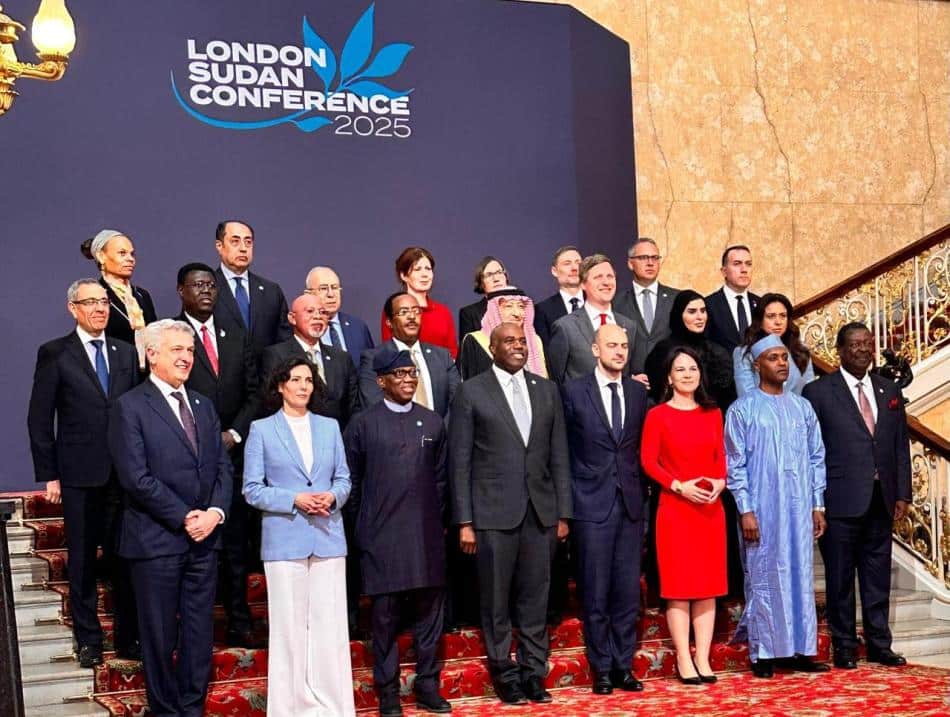
April 15, 2025 (LONDON) – A British-led conference aimed at forging a unified international approach to the conflict in Sudan failed to achieve a key objective on Tuesday, after disagreements among Arab nations prevented the signing of a joint communique.
The Guardian newspaper described the outcome as a “big diplomatic setback” for efforts to end the two-year civil war that has devastated Sudan, killing hundreds of civilians recently in Darfur refugee camps and displacing millions.
The conference, held in London, sought to establish an African Union-led international contact group and build greater political coherence among nations involved in Sudan’s future. However, disputes between Egypt, Saudi Arabia, and the United Arab Emirates over the wording of the final statement reportedly scuttled hopes for a unified declaration. Officials struggled to find neutral phrasing acceptable to Egypt, which maintains ties with the Sudanese army, and the UAE, which Sudan accuses of arming the rival Rapid Support Forces (RSF) – an accusation the UAE denies.
UK Foreign Secretary David Lammy’s attempt to secure an agreement on diplomatic principles for the contact group ultimately failed, as the Arab states present were not able to participate.
This is the first time that Egypt and Saudi Arabia have expressed open disagreement with the UAE’s alleged support for the paramilitary group led by Mohamed Hamdan Daglo.
According to the Guardian, the UK Foreign Office expressed sadness that “agreement on a political way forward had not been reached” but maintained that “progress had been made.”
In lieu of a joint communiqué signed by all participants, the conference co-chairs – the UK, France, Germany, the African Union, and the European Union – issued their own statement. They pledged support for peace efforts, rejected external interference prolonging the fighting, and called for an immediate ceasefire. The co-chairs stressed the importance of Sudan’s unity, sovereignty, and territorial integrity, rejecting any parallel governments and supporting a transition to civilian rule.
Their statement also urged parties to implement relevant UN Security Council resolutions and AU communiqués, including obligations to protect civilians.
The conference was not intended as a mediation or aid-pledging event, but rather an effort to align the political strategies of key international players.
Sudan’s government had previously criticised the organisers for excluding it from the meeting while inviting the UAE, which is accused of destabilising the country.
The co-chairs’ statement concluded by outlining agreed “next steps” focused on strategic coordination through existing mechanisms, such as the AU Expanded Mechanism, involving the conference participants.