
Sudanese army halts weapon supplies to allied militias, cites indiscipline
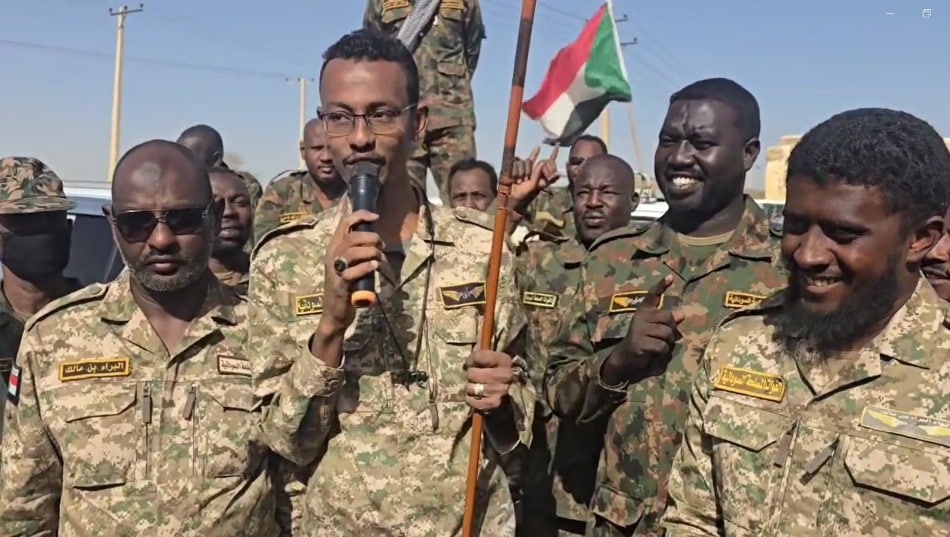
May 8, 2025 (PORT SUDAN) – Sudan’s army has stopped supplying weapons to allied militias and armed groups since early May and is reviewing its recruitment procedures, military sources told Sudan Tribune on Thursday, amid concerns over the conduct of these forces.
The move affects numerous groups fighting alongside the Sudanese Armed Forces (SAF), including Islamist-leaning battalions such as Al-Baraa bin Malik and Al-Bunyan Al-Marsous, as well as others like the Revolutionary Battalions, Sudan Shield Forces, and factions from Darfur movements.
“The army halted the supply of weapons to battalions affiliated with the Islamic Movement, armed groups, and movements, since the first of May,” a military source said. The sources indicated that the army would now only provide allied forces with ammunition and that new recruitment for these auxiliary units would be suspended pending a procedural review.
The decision was reportedly prompted by allied groups adopting military tactics that contravened army command directives, particularly since government forces recaptured parts of the capital, Khartoum, in late March.
On May 3, Lt. Gen. Shams al-Din Kabbashi, a member of the Sovereign Council and SAF Assistant Commander-in-Chief, called for the withdrawal of these allied forces from recaptured urban areas. He acknowledged issues with their discipline and warned of the dangers posed by the widespread proliferation of weapons.
Army intelligence also reportedly objected to these battalions forming their own security units to conduct arrests and investigations within Khartoum’s residential areas, sources said.
According to the sources, these groups had established checkpoints and detention centres in neighbourhoods, leading to a surge in complaints from citizens to military commanders regarding arrests, alleged torture, and killings.
Battalions linked to the Islamic Movement are accused of taking a hardline stance against individuals alleged to have collaborated with the paramilitary Rapid Support Forces (RSF) in areas formerly held by the RSF and later retaken by the army. They face accusations of extrajudicially killing dozens of civilians.
The army is also contending with a significantly depleted police presence in recaptured cities, with sources estimating police forces are operating at only 15% of their capacity. This security vacuum, they noted, has enabled the allied battalions to assert control in these urban areas.
This week, the commander of the Al-Baraa bin Malik battalion, Al-Musbah Abu Zaid Talha, stated his forces had not sought “military registration numbers,” a comment perceived as a response to Kabbashi’s remarks on weapon proliferation. However, military sources suggested Talha’s statement was made in the context of efforts to integrate his fighters into the regular army.