
Sudan teachers say conflict fuels child marriage, recruitment as schools close
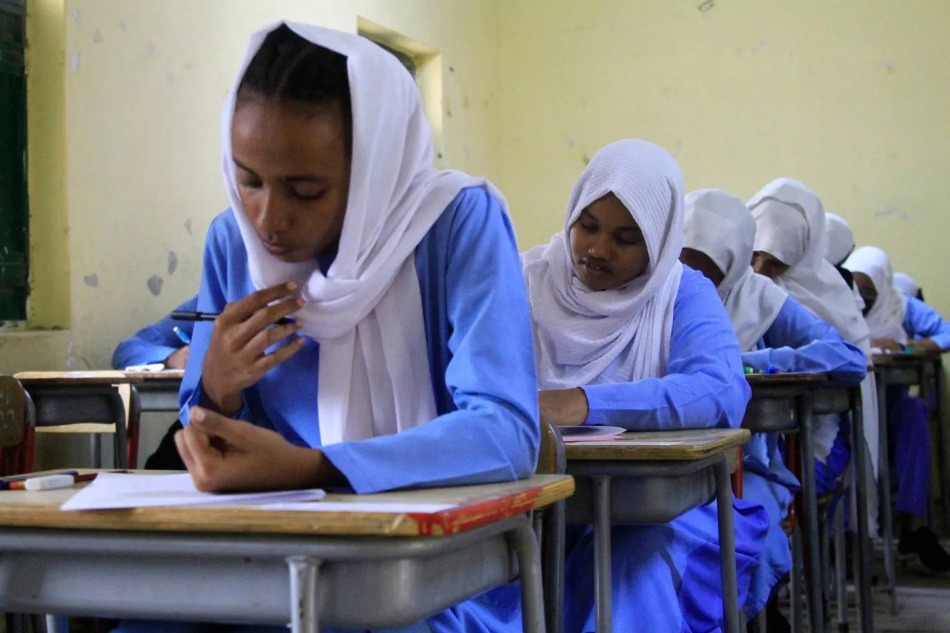
May 10, 2025 (PORT SUDAN) – Sudanese teachers on Friday warned that school closures due to the ongoing conflict have led to a rise in forced child marriages and the recruitment of children by armed groups, with millions of pupils out of education.
Some families have been forced to marry off underage girls because of fears of conflict-related sexual violence, with minors sometimes wed to soldiers for perceived protection, occasionally under duress or at gunpoint, the teachers said.
The “Women Against Injustice” campaign highlighted the war’s devastating impact on Sudan’s education system during a virtual symposium.
“The prolonged interruption of education has caused older male students to be recruited by the warring parties, while female students have been subjected to forced marriage to protect them from combatants,” teacher Khalida Saber told the online gathering.
She called for the urgent resumption of education to protect students from these risks.
Saber said about 1,000 schools have been destroyed, converted into shelters for displaced people, or turned into military bases. This has directly forced students in conflict zones out of school, while others have fled with their families to other states or neighbouring countries.
Profession abandoned
The conflict has pushed some 17 million pupils out of school, Saber said, while more than 500,000 teachers have had to flee their homes. Some are now displaced within Sudan, while others are refugees.
“Many teachers have abandoned the profession for low-paying jobs,” Saber said, adding that more than 250,000 teachers have gone unpaid, even as salary payments reportedly continued in the Northern and Red Sea states.
The conflict has also increased unemployment after damaging Sudan’s industrial, commercial, and agricultural sectors.
Saber noted that Sudanese students who fled to Uganda faced significant problems, including language barriers for older pupils. “Students are often set back several grades, impacting their psychological well-being, especially when studying with younger children,” she said.
‘Legitimate concerns’
Sami Al-Baqir, a spokesman for the Sudanese Teachers’ Committee, told the symposium that a key problem was the holding of national secondary school certificate examinations only in limited, specific areas.
He said this had deepened societal divisions, and that the paramilitary Rapid Support Forces (RSF) had tried to disrupt the exams by preventing students from reaching test centres.
Al-Baqir called for international mediation between the warring parties for the upcoming 2024 exams and for the prevention of attacks on schools, which he described as war crimes, to avoid a repeat of issues seen with the 2023 certificate results.
He also urged the creation of a new educational strategy involving all stakeholders, based on the experiences of other post-conflict countries.
Symposium participants called on the Sudanese government to pay teachers’ salaries to allow education to continue, warning that the recruitment of students threatened the country’s future and could foster new militias.
They also urged the education ministry to support students with disabilities by providing accessible facilities and technology, particularly for deaf and blind students, and to strengthen partnerships to promote inclusive education.