
Beyond past narratives, forging a new path for Sudan’s marginalized people (1-2)
May 16, 1983 – May 16, 2025
The Gap Between Movements and the Marginalized Masses
Towards Modernization and Renewal of the Marginalized Discourse (1–2)
Yasir Arman
(1)
On May 16, 1983, in Bor, Upper Nile, South Sudan, a new era was inaugurated – a political and military rhythm whose echoes persist to this day. The war that erupted on April 15, 2023, in Sudan traces aspects of its DNA back to the questions raised on May 16, and even earlier. The pressing issues of the past continue to pursue the present agenda.
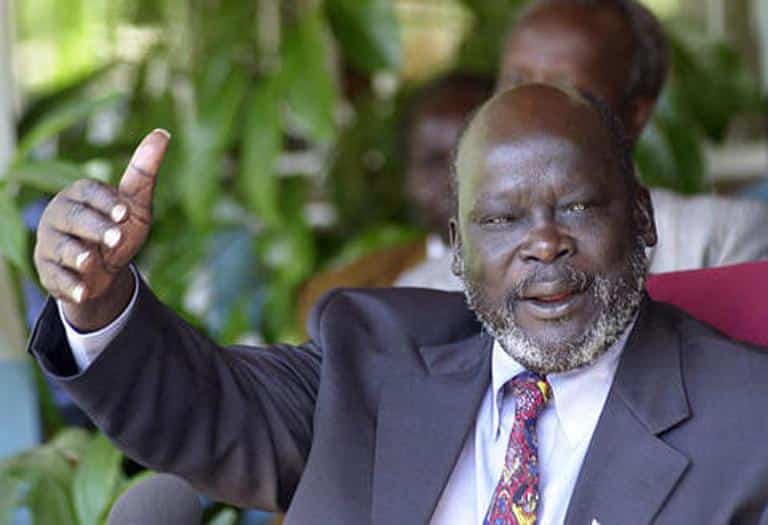
Recently, Major General Albino Akol Akol, one of the highest-ranking officers from the first Anyanya movement integrated into the armed forces, passed away. Notably, he led the secret organization of Anyanya members within the army. On May 16, 1983, Colonel Dr. John Garang arrived in Bor with prior planning and an approved leave from the army command in Khartoum, assisted by General Youssef Ahmed Youssef and provided transportation to Juba by Brigadier Fadlallah Burma Nasir, an operations officer in the army. Garang’s confidential mission – unknown to the army command – was to secretly persuade Kerubino Kuanyin Bol to adhere to the secret organization’s plan and avoid premature confrontation at the Bor garrison. The late Elijah Malok provided a vivid account of that historic meeting. However, Kerubino pulled the trigger, and the first shot was fired on May 16, 1983 – a shot that totally transformed the margins and Sudan itself, which has never become the same again.
The events of May 16, 1983, resonated throughout Sudan’s rural and urban areas. It was not merely a military incident devoid of political context; the bullet was the weakest aspect compared to the unique political evolution and intellectual brilliance that emerged from the new marginal movement. In July 1983, the Sudan People’s Liberation Movement (SPLM) issued its first manifesto, outlining the vision of a “New Sudan” with Dr. John Garang’s imprint. This vision challenged the old Sudanese paradigm at its most intellectually and politically cohesive points, proposing a new alternative emphasizing unity, social justice, and non-discriminatory citizenship.
(2)
The New Sudan project evolved in response to the complexities of reality and subsequent political changes. Dr. John Garang’s leadership, intellectual acumen, and adaptability played a pivotal role. Initially, Garang addressed underdevelopment and imbalanced development, later expanding his thesis to the center-periphery dichotomy, incorporating class, social, and historical dimensions alongside ethnic issues. Eventually, he deeply engaged with the question of democracy.
The period from May 16, 1983, to August 1991, was marked by a commitment to achieving a unified, democratic, secular Sudan, with early discussions even touching on socialism. However, following the events in Nasir in August 1991 and the SPLM’s split, the issue of self-determination posed a challenge to the New Sudan thesis. Dr. Garang, employing a dialectical approach, sought to integrate the widely supported notion of self-determination among southern nationalists into his vision of a united Sudan.
(3)
Despite its significance, the New Sudan thesis remained general and slogan-driven, addressing major questions without a detailed program. It clashed with the cunning and conspiracies of the center and failed to build an organic front or historical alliance and bloc of the marginalized in both rural and urban areas capable of accomplishing the historical mission and implementing a new national project. Instead, the vision was used as a mechanism for separation rather than a tool for historical change. Garang came close to realizing his dream during the massive gathering at the Green Square on Friday, July 7, 2005, which showcased Sudan’s diversity.
The New Sudan vision faced significant challenges when tested against pre-capitalist structures in rural Sudan, which tended to cater to the narrow desires of local nationalists rather than embracing a national democratic project that transcends social divisions, heals historical wounds, overcomes limitations and biases, and forms a substantial organic bloc capable of building a new renaissance project that grants dignity to all, establishes a non-discriminatory democratic citizenship state, achieves justice and sustainable development, bridges the rural-urban divide, and restores the productive face of the countryside. As Dr. Garang articulated, this involves transferring the city to the rural areas, not the other way around.
(4)
After 42 years, with our dreams ahead and the practical experiences of marginal movements, particularly the SPLM, behind us, we find ourselves at a crossroads. One path leads to stagnation, refusing to acknowledge the shortcomings of past experiences or critically examine the New Sudan project, effectively stifling it by avoiding the transition from glorification to critical analysis and sound methodology. The recent Sudanese revolutions, especially in December, have demonstrated the project’s relevance, with the slogan “The people want to build a New Sudan” resonating strongly in the Republic of the Tunnel, energizing the December revolutionaries with renewed vigor.
(5)
Escaping the predicament of the April 15 conflict and achieving sustainable peace requires returning to the foundational platform and building a New Sudan through the will of the masses, not through the barrel of a gun or authoritarian projects. Additionally, we must revisit and deepen our understanding of the strategic relationships between the two Sudans, viewing them through the lens of history, genuine interests, and profound commonalities, rather than through narrow perspectives. This approach could lead to a “Sudanese Union” between two sovereign states and pave the way for a larger project and shared dream with Africans, Arabs, and humanity at large.
(6)
The experience of Sudanese marginal movements necessitates a strategic pause to seriously address the intellectual, political, and organizational gap between these movements and the marginalized masses. Many practices by these movements have been extensions of the old state and project, with the April 15 war exacerbating their crises and presenting them with difficult choices.
Marginalized forces and movements, and the issue of marginalization itself, deserve a serious and thorough review of thought and practice aimed at modernizing and renewing the marginalized project. This includes forming an organic alliance of the marginalized in both rural and urban areas, encompassing women—
– the most marginalized among the marginalized – and enhancing focus on intellectual and cultural issues. It also involves studying the Sudanese revolution’s experience over the past century, from the 1924 revolution to the present, and extracting lessons.
The issue of armed struggle and its significant experiences in Africa, Latin America, Asia, and elsewhere requires examination to pose critical questions about the feasibility and human cost of armed struggle, and whether it is the sole path and mechanism for achieving the New Sudan project. A critical evaluation is needed of how many marginal movements have utilized the efforts and sacrifices of the masses to fulfill the narrow desires of elites in power and wealth, rather than solving the masses’ problems.
If we do not confront these questions courageously and with a spirit of self-criticism regarding our experiences, we will not ascend to the harbors of the new project and will succumb to stagnation. Instead of being a valuable treasure, marginal movements will become a heavy burden.
Reviewing our experiences and practices concerning human rights and democracy has become a serious matter; otherwise, we risk adding a new chapter to the book of the old regime’s violations. Marginal movements need to reconsider the fundamental question: Who is the enemy? They must emerge from the cocoon of ethnic biases into the realm of a national project capable of confronting the flaws of the old project. These movements should not stop at the gates of protest and slogans but must proceed to present a unifying and constructive national alternative. Many experiences have shown that it is possible to dismantle the old system without the ability to build a new one.
In critically examining their experiences and practices, marginal movements need to move beyond generalizations and view the political and social struggle and its active forces not as monolithic blocks but with precise distinctions between actual and potential friends and enemies.
The marginalized forces in our society, both in rural and urban areas, are undergoing political and social changes and transformations in their composition and constituent forces. We are on the threshold of the emergence of a new movement for the marginalized forces – clear-sighted and steady-footed – that learns from the positives and negatives of past experiences.
To be continued…
May 16, 2025