
South Sudan President Kiir sacks three party deputies
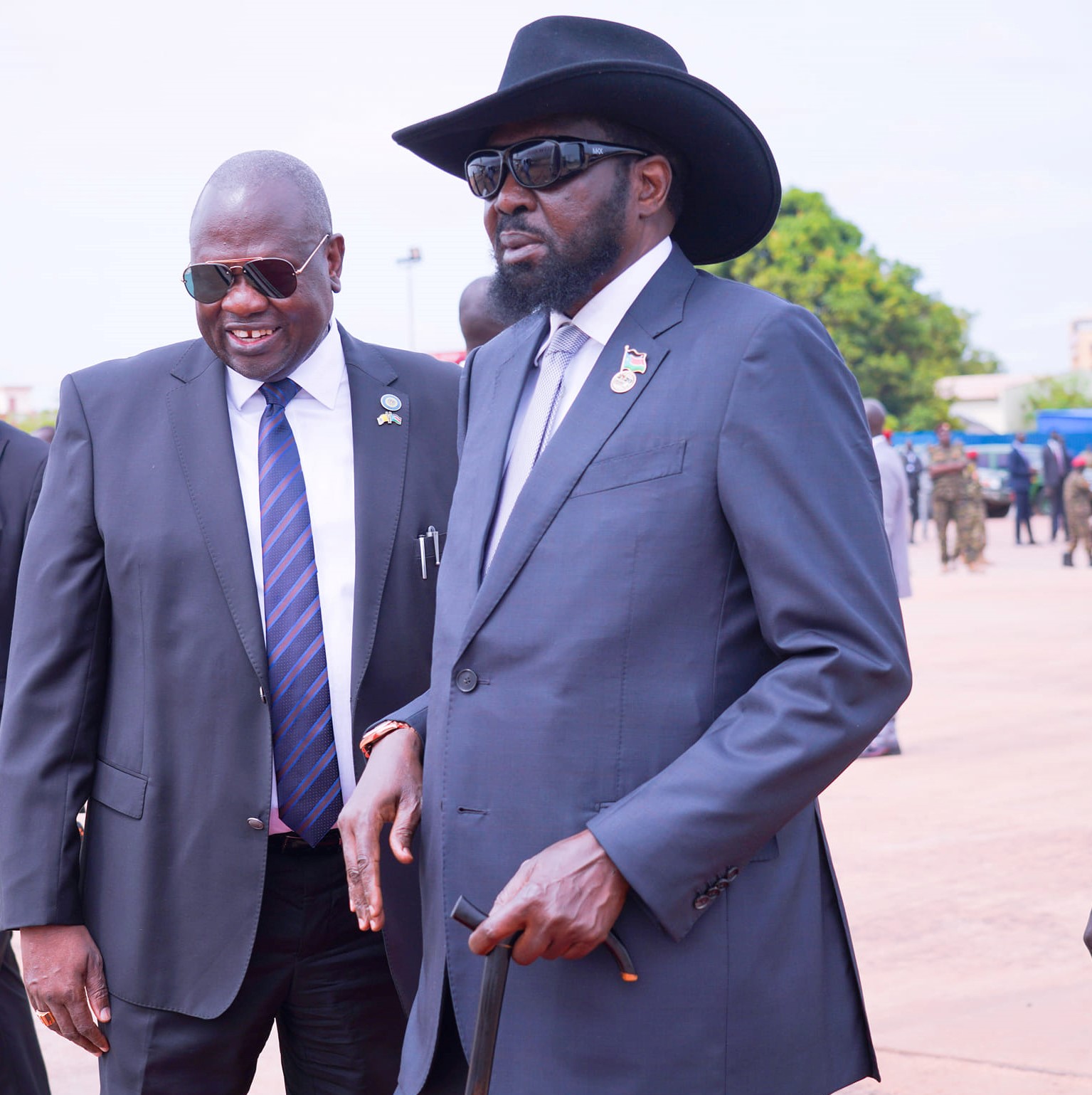
May 21, 2025 (JUBA) – South Sudan President Salva Kiir sacked three deputies and the secretary-general of the ruling Sudan People’s Liberation Movement (SPLM) late on Tuesday, state media reported, in a party reshuffle that has sparked speculation about his succession plans.
The changes, announced by the state-owned South Sudan Broadcasting Corporation, saw Kiir remove first deputy James Wani Igga, Daniel Awet, and Kuol Manyang Juuk from their party positions.
Benjamin Bol Kuol immediately replaced Igga as first deputy. Mary Apai replaced Daniel Awet Akot, while Simon Kun Puoch, former governor of Upper Nile state, replaced Kuol Manyang Juuk.
No statement was issued explaining the reason for the changes, though some party and government officials argued that the president has a constitutional prerogative to make cabinet changes, including removing deputies and appointing new officials in their stead.
Others argued that party changes are subject to a general congress, national convention, or a political bureau meeting where major decisions are discussed before a decision is made. Such changes, however, could cause dissent and risk further divisions within the party, which is already struggling to hold together in preparation for elections envisioned by the end of 2026, as required by the 2015 agreement revitalized in 2018. The elections are intended to end more than five years of conflict.
Kiir had removed Igga in February 2025 and appointed him as the SPLM secretary-general while leaving him as first deputy, prompting concerns about dual roles within the leadership. He was replaced by Benjamin Bol Kuol, who is widely seen by some as the president’s choice in a succession plan. Igga’s prior removal was preceded by changes in security, defence, and police leadership, and the deployment of Ugandan troops, before the arrest of First Vice President Riek Machar. Machar has been linked to hostilities in Upper Nile state, particularly Nasir County, where local armed youth attacked and overran a military garrison in March 2025.
The attack led to the death of over 700 government soldiers, including their commanding officer, General David Majur Dak. Machar and members of his group deny playing a negative role, but protested the deployment of government forces planned to replace those who had served in the area and were due for relief and replacement.
Opposition figures argued that the new troops, predominantly government soldiers, undermine the security arrangement, which advocates for the deployment of a necessary unified force comprising troops from the armed opposition and the government to form a new army.
Kuol, a longtime business ally of President Kiir, has been placed on a watch list by the United States. The U.S. has charged and sanctioned him and his companies for alleged relations with money laundering groups, corruption, and misappropriation of the country’s resources through single-sourcing construction contracts for road projects. He has also risen quickly within the party, first as deputy secretary-general for political syndication and mobilization, and later as deputy party leader and chair of the economic cluster committee, a structure created under the terms of the transitional government of national unity to oversee economic reforms and guide economic development.
The changes have received widespread mixed reactions. Some welcomed them as overdue, believing older generations should give way to younger ones, while others viewed them as a move that could create fertile ground for dissent and division within the party.
Augustino Jaddallah Kamilo Wani, Governor of Central Equatoria and chairperson of the ruling SPLM in the state, welcomed the changes, describing them as a significant milestone in revitalizing the party’s structures and spirit while ensuring inclusion and visionary leadership.
“These appointments mark a significant milestone in revitalizing the structures and spirit of our great party. They stand as a testament to the SPLM’s continued commitment to unity, inclusivity, and visionary leadership in service to our people,” Wani said in a statement released to the public and extended to Sudan Tribune on May 21, 2025.
He commended the service of those who were replaced, pointing to the diligence with which they performed while in service of the party and the people. “I also express my appreciation to Comrade Dr. James Wani Igga, Comrade Gen Daniel Awet Akot, and Comrade Kuol Manyang Juuk for their diligent service to the party during their tenure and for their invaluable role in delivering an independent state. I wish each of you success in your future endeavors,” Governor Wani added.
Peter Adwok Nyaba, a leading SPLM member and a longtime critic of the country’s governance and security policies, expressed a different view, saying he envisioned that old ties might not bind again.
“Just read that the three deputies to the SPLM chairman have been dismissed,” Nyaba wrote in reaction to the new changes. “The last sentence of my 2022 autobiography reads: ‘My humble assessment of the political situation in South Sudan is that the SPLM may not sustain itself after the current leadership is gone. Old ties may not bind again.'”