
Sudan’s Agar calls for new press law to bolster freedoms amid conflict challenges
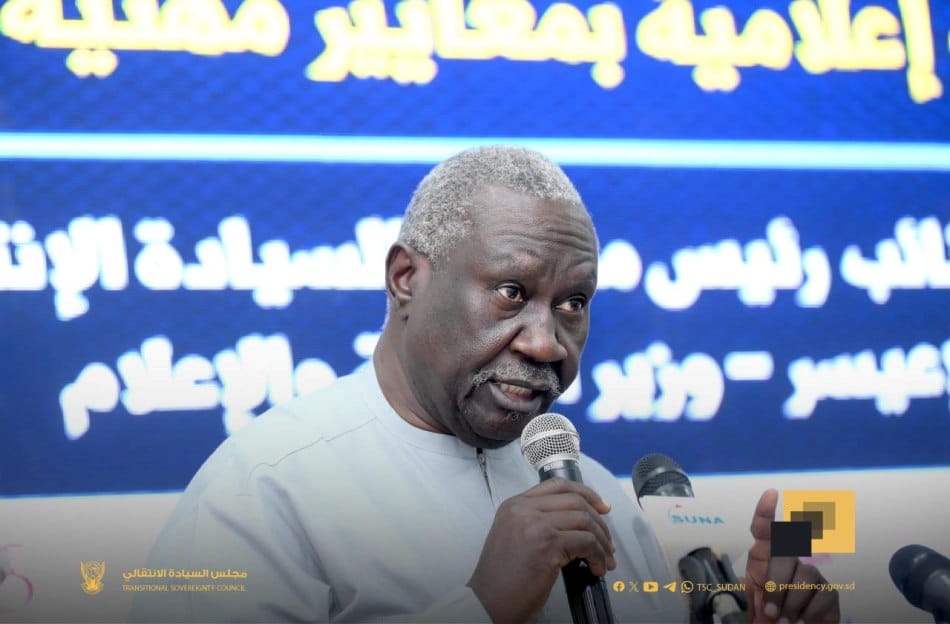
May 26, 2025 (PORT SUDAN) – Sudan’s Sovereign Council Deputy Head Malik Agar on Monday called for a comprehensive reform of the country’s press laws, saying a free and responsible media was crucial for Sudan’s democratic transition and development.
Speaking at the opening of a workshop in Port Sudan on amending the 2009 Press and Publications Law – organized by the Ministry of Culture and Information under the slogan “Media freedom with professional standards” – Agar said independent media was “a fundamental condition for achieving sustainable development, protecting rights, and promoting conscious community participation.”
Agar stressed the Sovereign Council’s full commitment to creating the political and legal environment that allows the media to perform its mission in an atmosphere of freedom and responsibility.
He said the workshop came at a “delicate time and a very sensitive national circumstance,” as Sudan seeks stability after significant transformations, including a rebellion by the Rapid Support Forces.
The call for reform comes amid fears that authorities could include provisions in a new law that would restrict journalistic work. The press in Sudan already faces significant challenges due to the ongoing conflict, including insecurity and restrictions imposed by the Ministry of Culture and Information, which is under army authority.
“We want a law that guarantees freedom of expression, preserves the dignity of the journalist, and establishes professional, balanced media that reflects reality and illuminates the path to the future,” Agar said. This, he added, required “a genuine partnership” between the government, media professionals, and stakeholders.
Agar criticized the current 2009 law as outdated, saying it “no longer meets the requirements of the current phase, nor has it kept pace with the digital revolution or the democratic transformation our people aspire to.” He noted that previous regulatory attempts often occurred under “repressive and dictatorial regimes.”
Agar highlighted deficiencies in the existing legislation, including conflicting powers between regulatory bodies and security entities. He also pointed to “excessive restrictions” on publishing based on vague terms like “national security” and the criminalization of publishing offenses.
Additionally, Agar criticized the “absence of regulation for electronic journalism,” which he said created a “legislative vacuum,” and a lack of sufficient guarantees for the financial and institutional independence of media outlets, making them “vulnerable to political or economic influence.”
While advocating for greater freedom, Agar cautioned that it “should not be used to threaten the state’s entity or delve into activities that threaten state security.”
Agar said a new law must adhere to international standards, balance freedom with journalistic ethics, clearly regulate online media, protect journalists from threats and pressure, and ensure an independent Press Council.
He also warned against media professionals becoming beholden to financial interests and stressed the need for “continuous training” to combat misinformation and improve critical thinking, preventing media from becoming a tool for “entertainment and colonization of minds.”
“I affirm to you that the Sovereign Council is fully prepared to support any sincere national effort aimed at formulating a modern press and publications law,” Agar said. He concluded that press freedom was “not a threat to the state, but a guarantee of its peace, stability, and prosperity.”