
Cholera outbreak in Sudan’s Darfur kills 315, cases top 7,400, local group says
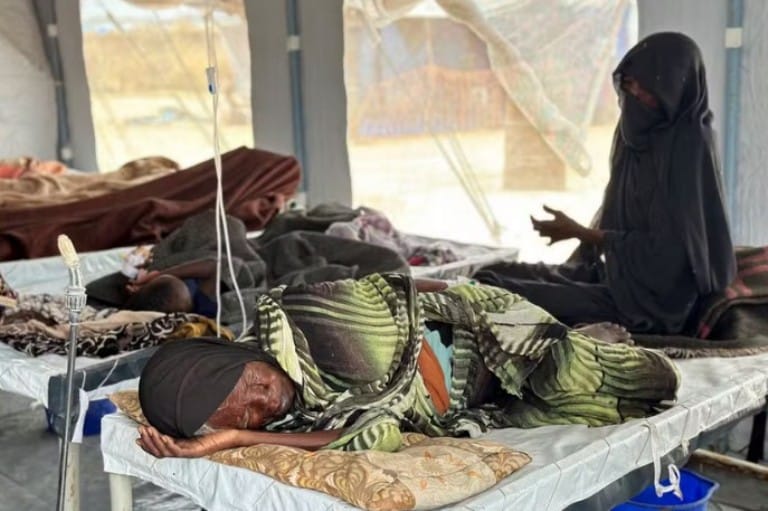
August 22, 2025 (EL FASHER) – A cholera outbreak in Sudan’s Darfur region has killed at least 315 people and infected 7,437, a prominent displaced persons’ advocacy group said on Friday, warning of a “forgotten humanitarian catastrophe” in the war-torn territory.
The epidemic began spreading in June but has accelerated at an unprecedented rate since July across the region, most of which is controlled by the paramilitary Rapid Support Forces (RSF), according to the General Coordination for Displaced Persons and Refugees Camps.
“The cholera outbreak… is witnessing an alarming rise in daily registered cases,” said spokesperson Adam Regal, citing displacement camps in Tawila, Jebel Marra, Nyala, and Zalingei as being particularly hard-hit.
The area of Tawila, about 60 km (37 miles) west of El Fasher, has been severely affected, with many residents having fled there to escape recent fighting. The camps in Tawila have recorded a total of 4,537 cases and 75 deaths, the report said.
The report detailed the widespread nature of the outbreak, with significant clusters in multiple states. The mountainous Jebel Marra area has recorded more than 1,600 cases and 83 deaths across several villages. In South Darfur, camps around the capital, Nyala, have registered a combined total of over 750 cases resulting in 119 deaths, while the area in and around Zalingei in Central Darfur has seen more than 275 cases and five deaths.
The report warned that the epidemic continues to spread at unprecedented rates.
Humanitarian organizations and local volunteers are making “tremendous efforts” to combat the disease despite a shortage of medical supplies and isolation centres, the group said.
“Significant difficulties and challenges remain due to the increasing infection rates, threatening people’s lives and representing a forgotten nightmare… in a country torn by war, famine, and disease,” the report stated.
The group called on the World Health Organization (WHO) and other international bodies to take urgent action to address the health emergency.