
Sudan’s Al Jazirah Scheme crippled by ‘thirst’ amid official disputes
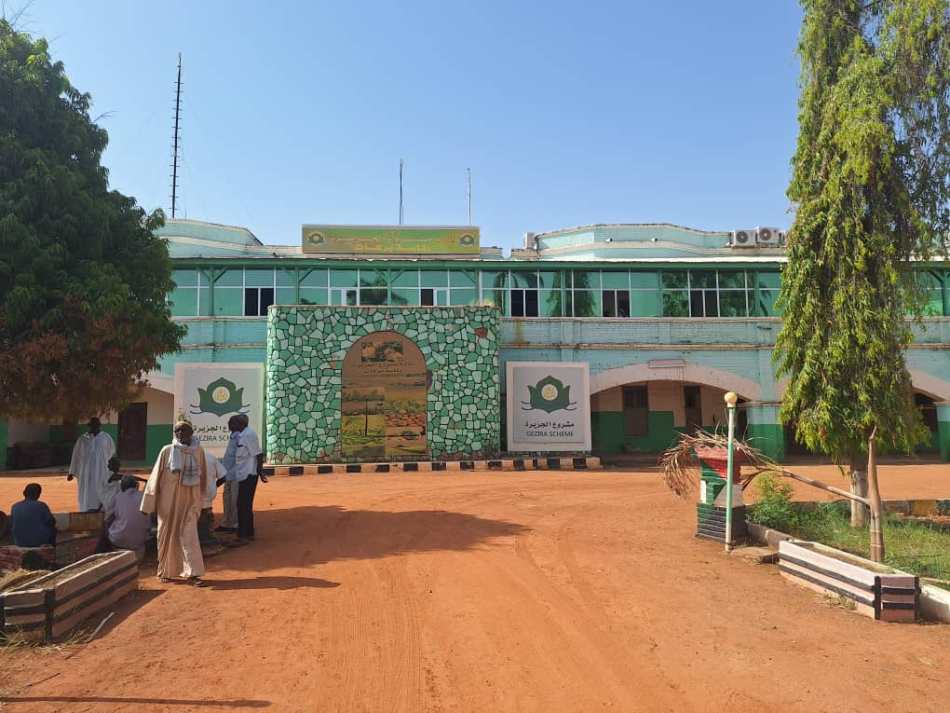
September 7, 2025 (WAD MADANI) – Large parts of Sudan’s Al Jazirah Scheme, one of the largest irrigation projects in the world, have been damaged by a lack of water amid escalating disputes between the Ministry of Irrigation and the project’s management.
Spanning over 813,701 hectares, the project has been severely impacted by the war between the army and the Rapid Support Forces (RSF), leading to the loss of most of its assets and agricultural equipment, along with widespread destruction of irrigation canals and farmers’ property.
Jad Karim, head of the Al Jazirah and Managil Farmers’ Union, told Sudan Tribune that the “Haddaf Wad al-Fadl” area has been completely damaged by the “thirst,” and that the northern, western, and southern regions are also suffering.
He stated that cultivated areas in the scheme do not exceed 10%, excluding the Managil sections, and that current cultivation in eastern Al Jazirah is rain-fed.
Karim accused the irrigation ministry of neglecting its duties and pointed to a host of internal problems, including the spread of weeds and silt.
Official bodies, including the central bank and the ministry of finance, have refused to grant guarantees to companies financing the farmers, he said. He added that the Agricultural Bank has stipulated that farmers must pay all their arrears to receive new financing.
Karim called this a deliberate act by what he described as the “de facto government,” which he accused of giving the project no importance. “The government has no confidence in the farmers… and it has no desire for the project to move forward,” he argued.
He said a conflict with elements of the former regime is underway as they attempt to control the project. A fistfight broke out between them during a visit by Prime Minister Kamil Idris to the Barakat area, Karim said.
He criticized calls by these elements in Al Jazirah to form new committees, saying they were the same people who opposed a steering committee during the country’s political transition. “What was forbidden during the transition has now become permissible during the war,” Karim said.
He added that disagreements within the project’s reconstruction committee have so far prevented an accurate assessment of the total losses.