
Sudan’s government of brokers, its tribally divided rival are failing the nation
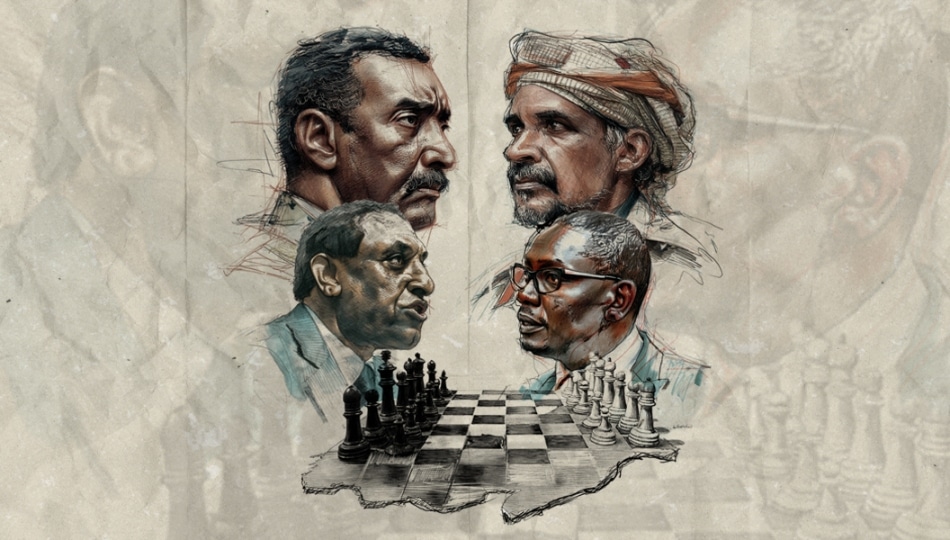
Kamil Idris’s government of brokers and fixers and the Tasis government, torn by tribal disputes
Yasir Arman
I have avoided and decided for some time now to remain silent about the rampant brokerage, fixerage, and the ongoing destruction of our country. I declined interviews on social media platforms and satellite TV channels, overwhelmed by a deep and cumulative sense of grief for our homeland and its great people, and I limited myself to writing articles on what is unfolding.
Yesterday I witnessed the worst press conference I have ever seen in over forty years of consciously following political events. It was the press conference held by Kamil Idris, who appeared confused, mentally unsettled, physically exhausted, and visibly drained. The only thing left for him to do is submit his resignation – whether for personal or health reasons – so as not to embarrass anyone, and then return to his home in Switzerland to rest.
Kamil Idris’s “government of hope” carries no hope. Instead, it is filled with a good number of brokers and fixers. Top among them is the Minister of Information, a mediocre broker who spent a long time in London trying to scam others under the pretence of being a media entrepreneur launching a TV channel. Sometimes he’d claim it to be a sports channel, at other times a political one, and often with no clear concept at all. This was until he and his old friend, who had been eyeing the office of the Prime Minister, managed to get it. And, by some miracle, he seized the ministry responsible for all satellite TV channels!
And since this war is funded by the blood and resources of our people, and the lives of our sons and daughters are lost in it, some questions must be raised to its supporters, while we stand firmly in the anti-war movement:
1. Who appoints these brokers and fixers, and for whose interests?
2. Do they serve the army within a coherent strategy while it is engaged in a fierce and its most significant war?
3. Are the sacrifices of the army meant to enthrone brokers and mediocre swindlers politically?
4. Does the so-called comprehensive war strategy include politics, administration, competence, and capability?
It is in the army’s interest to rid itself of these brokers and fixers, for they are of no use in war or peace.
A final question to Kamil Idris, setting aside his constant falsehoods about employing a million youth during the war – rather than addressing their suffering from displacement, refuge, and the very war they endure – and his failure in New York to present any statistics on the war, the humanitarian crisis, material losses, and the destruction of institutions (water, health, education) in a language the international community can understand instead of empty chatter… Regarding his naked lie that his visit to Saudi Arabia was his most important and successful visit, where he presented investment projects worth 100 billion dollars to the Saudis: Who exactly does Mr Kamil Idris think he is deceiving? Is it the Sudanese people, who know he did not meet with Saudi officials in any sessions?! Does he not feel ashamed before our Saudi neighbours, who know very well the reality of the situation? Or is he living in denial and delirium?
Meanwhile, the Founding Government (Tasis), standing halfway and suffering from internal divisions, has not been completed because of endless tribal disputes over representation in power. Its very formation was a mistake, deepening splits as we had warned before. Now, its followers bicker over who received positions and reaped the fruits of power without fighting, and who fought but was denied positions. The existence of two governments harmed Tasis as much as it harmed Sudan. What Sudan needs is unity and peace, not governments that entrench divisions within Tasis itself, before even dividing the nation.
These two partial governments cannot cover the whole body of the nation. At best, they represent only fragments of the people and deepen geographic, ethnic, and political divisions. Civilians pay the price through violations, war crimes, and the destruction of society and life. What is happening in El-Fasher – the devastation of a historic city – is the responsibility of both warring parties. “Fashirgrad” has been destroyed, just as Leningrad once was, and it belongs to its civilian inhabitants, regardless of which criminal hands seize it.
Neither of the two governments has a national project capable of uniting the divided sides. The split runs deeper than the illusion of legitimacy – it is tied to the fundamental questions of nation-building and how to unite Sudan on fair and just foundations. Our people need a new project that bridges the rural and urban areas, grounded in peace, freedom, justice, and equal citizenship without discrimination – a Sudan that embraces all.
The current projects, however, are built on a foundation of fraud, pretending to embrace all. After all the killing of your own people, have you not yet exhausted your ammunition?