
Sudan’s democratic movement grapples with war, a new world order
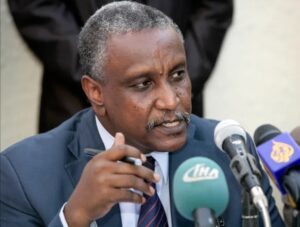
By Yasir Arman
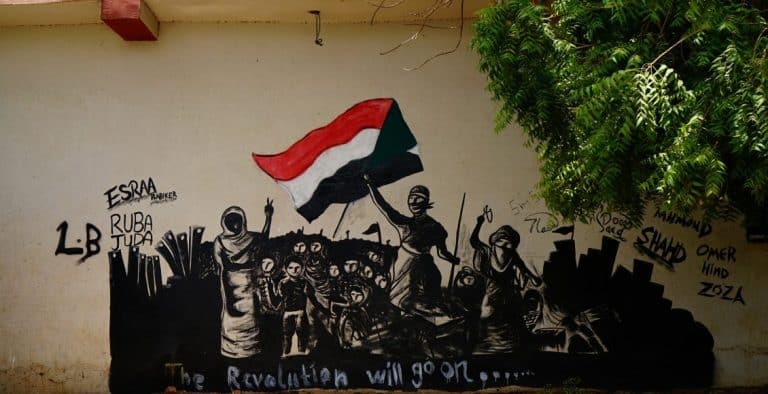
 The October 1964 Revolution represented a pivotal milestone in the history of the Sudanese struggle. It was part of the global waves of liberation and humanity’s tireless quest for social justice, individual freedom, collective welfare, democracy, and equality. The revolution embodied the Sudanese people’s commitment to the spirit of their emancipatory era. It also gave rise to a burst of creativity in culture and thought whose impact remains enchanting to this day.
Sixty-one years later, the success of the Sudanese revolution and the end of the April 15 war depend on our ability to comprehend the profound transformations reshaping both our society and the world, and to harness them in building a democratic national project that affirms sovereignty, unity, justice, equal citizenship, and regional and international cooperation in an age of astonishing global change.
The April 15 war is Sudan’s foremost issue, and a just peace remains our only path toward the future. Yet the question of war and peace itself is deeply rooted in and connected to the geopolitical upheavals sweeping the globe. The current world order – and the regional and international organizations that represent it, including the most inclusive ones such as the United Nations – have become grand palaces and idle wells, barely able to perform some of their duties. They now stand hollow, incapable of generating a single unified political will to end human suffering across the planet.
Sudan intersects with highly influential geopolitical belts, foremost among them the Red Sea, the Horn of Africa, and the Sahel, all of which are linked to the vital Middle Eastern corridor. Sudan’s geographic and historical ties are laden with civilizational intersections, resistance movements, margins, and conflicts over resource plunder. The fierce war raging within Sudan is both influenced by and intertwined with these global realities.
The world order established after World War II is nearing exhaustion and the completion of its historical cycle – a new world is in the making. The collapse of the socialist bloc allowed Western capitalist dominance for decades, but it is now evident that the global system is undergoing a thorough transformation, amid growing calls for the construction of a new multipolar order. We are witnessing the rise of both new and old power centres – the United States, China, Russia, India, the European Union, and the BRICS bloc. Meanwhile, the Western world itself is experiencing major political and economic upheavals, marked by the broad ascent of populism and the far right even in the most developed nations. Clearly, we are living through a Gramscian moment; the old order is dying, the new has not yet been born, and the world is gripped by ferocity and chaos in this transitional phase.
The democratic movement in Sudan finds itself at the intersection of domestic warfare and global transformations. Its main currents have stagnated and must be renewed through fresh paths and critical self-reflection on both vision and practice. This comes amid rapid global change and a war that has shattered society, torn apart the social fabric, and destroyed infrastructure, leaving the state and its institutions adrift. These circumstances impose unprecedented burdens on the democratic political movement.
The April 15 war and the October 25, 2021 coup both aimed to extinguish the December Revolution and derail the civilian democratic transition.
Multipolarity serves the democratic political movement and Sudan’s national interests in issues such as sovereignty, resources, and unity. At the same time, the Sudanese revolution aligns itself with pluralism, democracy, social justice, and equal citizenship as the pillars of its national project. Sudan’s best interest lies in building a democratic system within a multipolar world, one that rejects authoritarian tendencies while leveraging global diversity to enhance the conditions for democracy, safeguards sovereignty and national resources for the benefit of the people, and promotes regional and international cooperation based on balanced interests and comprehensive development for the Global South within a just and equitable international order.
The Islamist movement, though a significant current within Sudanese politics, stands opposed to a national project that includes all Sudanese. Despite its loud slogans against imperialism and Western domination – and its apparent support for a multipolar world – its domestic project is built on repression, resource plunder, hostility toward women and diversity, and concentration of power in the hands of a corrupt political class that rejects accountability and transparency. It has devastated rural Sudan and expanded poverty, fueling wars under a tyrannical regime that pursues predatory economic policies and commits atrocities up to the level of genocide. It depends on a narrow social base whose survival rests on repression, thereby entrenching internal tyranny and external dependency. This paradox exposes its false claim to support a “new world order.”
The fierce transformations around us – regional and global – intersect with Sudan’s internal dynamics and influence the prospects for lasting peace, development, and democracy. On a global level, approaches to peace and conflict resolution are shifting toward narrow interests and transactional bargains, rather than comprehensive change and democratic reconstruction. The current political process to end the war offers two paths: one that seeks mere power-sharing, resource plunder, and dependency, without addressing the root causes of the crisis; and another that stands with the Sudanese revolution and popular participation, embodying a democratic civilian project that rejects tyranny.
Finally, 61 years after the October Revolution and a century after the 1924 Revolution, Sudan’s revolutionary forces must redefine the national project, especially after historic events, each of which demands deep reconsideration. These include the secession of South Sudan, ethnic cleansing and genocide in the rural areas, and the April 15, 2023, war, which carries within it the legacy of all past conflicts.
Our internal crises are undoubtedly linked to the global upheaval shaping a new multipolar world order.
In redefining our national project, we must put forward the idea of a “Sudanese Union” between the two Sudans as a starting point for broader regional integration – African and Arab alike – at a time when the emerging world is moving toward large-scale blocs and alliances.