
Bona Malual, A warrior with the tongue and the pen
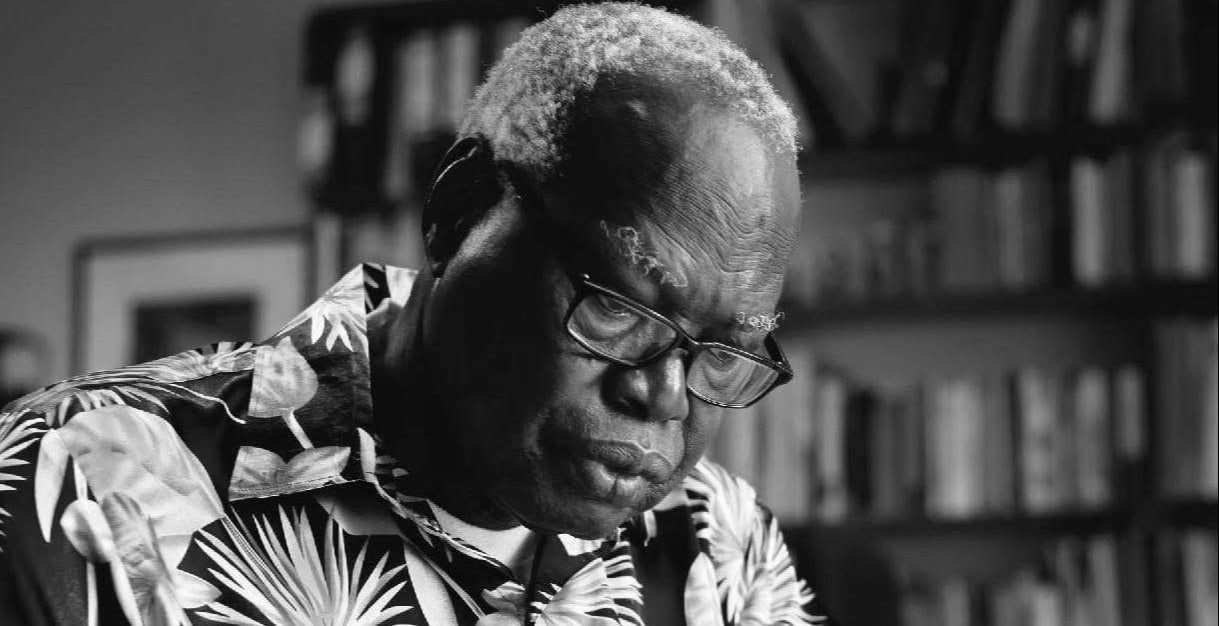
Professor Francis Deng
In Bona Malual Madut Ring, we have lost a patriotic leader who made an enormous contribution to the destiny of our nation. For me personally, Bona was my partner in serving our country and people, a dear brother and closest friend. I am still having difficulty believing that he is no longer with us. But that is the destiny we must all go through when the time comes. Bona demonstrated exceptional courage in the face of danger and fearless expression of opinions, which he articulated verbally and in his prolific writings. That is what I mean by fighting with the tongue and the pen.
Bona and I were age-mates. He once told me that Chief Benjamin Lang Juuk, who was literate, recorded 1938 as his birth year. Although the specifics of my birth were not recorded, I have been able to trace the month to August and the year to 1938. Our passports, typical of the pattern in Sudan at the time, when dates of birth mainly were unrecorded and therefore constructed to January 1, the date of independence from colonial rule, show Bona and me as born on January 1, 1938. Once, when we showed our passports at the State Department in Washington, the receptionist asked whether we were twins.
According to Bona, we first met as children when he accompanied his father, Chief Madut Ring, who was our father’s age mate and friend, who came to Abyei for an inter-tribal meeting around 1945, and they stayed in our house. My recollection about that occasion is foggy, but I do remember chiefs and a child staying in our home for that occasion.
Many years later, in the 1960s, I began to hear the name of Bona Malual as a politically active young man, then as the editor of the influential South Sudanese newspaper, The Vigilant, the mouthpiece of South Sudan, which courageously documented and exposed the horrific atrocities raging in South Sudan. The government prosecuted him for that, but he was exonerated on appeal. He later emerged as one of the founders of the Southern Front, which was championing the Southern Sudanese cause for self-determination.
I got to know Bona personally in 1968 when, as a member of Parliament, he visited the United States and was in New York City. I was in New Haven doing my doctorate in law at Yale University. Bona called me and I went to see him. We met and bonded. He then paid me a return visit to New Haven, and our relationship deepened.
A year later, specifically in August 1969, several months after the May takeover of power by Colonel Jaafar Nimeiri, my brother Bol and I went home to our dying father. We arrived in Khartoum and settled in a hotel. I then contacted Abel Alier, who had been my senior colleague in the Khartoum University Faculty of Law. Abel was then a minister in Nimeiri’s cabinet. He and Bona were political partners and leaders in the Southern Front. Abel immediately informed Bona about our arrival, and Bona promptly came to us in the hotel. He insisted that we stay with him in his house. From that time on, he became a close partner in caring for our father.
One day, Bona and I visited Father in the hospital. As we were leaving his room, Father called me back as Bona exited. He spoke very highly of Bona and advised us to work closely with him. It was obvious to me that Bona must have done things that left a profound impression on Father. I only got to know later that Bona, as an influential member of Parliament, defended Father in his confrontation with the Governor of Kordofan by gaining the support of the Minister of Interior against the governor. That governor had served in the South and was notoriously known for his antagonism against Southerners in general and tribal chiefs in particular.
Bona and I reconnected when he left the country to pursue his studies in the United States. We shared my tiny apartment until he enrolled in the University. From that time until his death, we worked closely together and consulted on national issues. This clearly entailed so many activities that cannot be recounted in this brief tribute. i can only mention a few highlights. We contributed quite significantly to both the 1972 Addis Ababa Agreement and to the 2005 Comprehensive Peace Agreement that granted South Sudan the right of self-determination and led to the independence of South Sudan on July 9, in 2011.
Bona and I were then appointed in Nimeiri’s government, Bona as Deputy Minister of Information and Culture, from which he was promoted Minister of State and then full Minister. I was appointed Ambassador to Scandinavia, promoted Ambassador to Washington and then Minister of State for Foreign Affairs. Bona was very innovative and formative in transforming and technologically upgrading the ministry of culture and information. He developed very close relationship with the President. I also worked very closely both with Dr. Mansour Khalid as Minister of Foreign Affairs and with President Nimeiri. In our respective positions, we worked in close collaboration with our Southern compatriots to coordinate our activities and do what we could to .m promote the interest of Southern Sudan at the center.
During the so-called Libyan invasion by the Libya-based opposition, under the leadership of Sadig al-Mahdi, Bona played a truly heroic role. Rather than remain secure in his house out of danger, he drove through treacherous streets to his office and literally assumed control in running the show under dangerous conditions. Using Radio Juba, and in partnership with the Southern Regional Government and allies in the wider region, specifically Egypt, Bona contributed effectively to crushing the attack. Senior military officers in the government would later talk to me in raving praise of Bona as a brave man and the courageous role he played in thwarting the attack.
When Nimeiri reconciled with the exile opposition barely a year later, and bearing in mind the fact that those were people who had vehemently rejected the Addis Ababa Agreement, Bona opposed the reconciliation as posing a threat to the Addis Agreement and against the south. I on the other hand supported it as a broadening of the national consensus. I tried to mediate between Bona and Sadig, but to no avail. Bona decided to resign, but Nimeiri resisted his resignation. They compromised by granting Bona a study leave and he went to Oxford. He however remained a member of the Sudan Socialist Union Political bureau and periodically returned to Khartoum for meetings.
Later, Abel Alier, in his second term as President of the High Executive Council, appointed Bona as Minister of Industry. Relations between the Southern Sudan Regional Government and President Nimeiri were becoming increasingly acrimonious, especially when Nimeiri divided the South into three weaker regions based on the old provinces of Bahr el Ghazal, Equatoria, and Upper Nile. With respect to the management of the petroleum sector, the central government took the crude from the South to be refine in the North. That generated a confrontation in which Bona played a critical role.
On my visit back in Khartoum to attend the meeting of the Sudan Socialist Union Central Committee, I landed on the massive detentions of leading members of the Southern regional government, and about twenty Ngok Dinka leaders, including the Paramount Chief Kuol Adol Deng, and Dr. Zachariah Bol Deng, who had been successively the Deputy Speaker of the Legislative Assembly and Minister of Health. . The situation in the South was boiling and reaching an explosion point. Abyei had staged a rebellion under the leadership of our brother Michael Miokol Deng that was creeping to the South. During the meetings of the Central Committee, Governors of both Kordofan and Bahr el Ghazal were placing the blame for the unrest on Abyei, and specifically our family of Deng Majok. I wanted to speak, but the Chairman, Vice President Omer Mohamed Eltayeb, who was also the Chief of National Security, advised me against speaking and asked me to see him in his office to discuss the situation.
In our discussion, I proposed taking an initiative on both situations in South Sudan and Abyei which were the causes of the mass detentions. On South Sudan, I proposed that General Mohamed Al-Baghir, the respected former Vice President, be mandated to conduct unity negotiations among the Southern leaders, while I undertook to mediate over the Abyei issue. Omer Mohamed Eltayeb welcome my proposal but needed Nimeiri’s authorization. I also briefed key Southern leaders, Abel Alier, Joseph Lago, and Bona Malual on my initiative, and all of them were supportive.
After waiting for a feed back from the Vice President for a period of time that signaled discouraging prospects, he called me with enthusiasm to tell me that President Nimeiri had warmly welcomed my mediation over Abyei. But the President appeared to have reneged on al-Baghir mediating the unity of Southern Sudanese conflict. Baghir himself intimated to me that he thought Nimeiri was intent on dividing tge South and abrogating the Addis Ababa Agreement and would therefore not want the South to get united. My initiative went on for months and successfully ended with the release of the Ngok Dinka detainees which was enthusiastically welcomed and celebrated as though a second Addis Ababa Agreement.
Despite the arrangement Nimeiri reached with Bona to take study leave abroad, their relations continued to deteriorate. , especially in light of the role Bona was playing in the South in asserting the rights of the regional government against the central government. I remember Nimeiri posing a question to me about Bona with obvious animosity in his tone, “Why is your friend so ambitious?” It was of course an ironic question coming from a man whose ambitions had made him seize power by force. I did not respond, other through a non-committal gesture.
The day the Ngok Dinka detainees were released, Bona was arrested and detained. Bona was well treated by the guards and was allowed free visits. They certainly showed respect to him as a leader. On one of my visits to him, I requested the guards to allow Bona to go with me for a ride to give him a change. The guards granted permission and one of them joined us. We ended our drive around town at my house for tea. And of course, the guard was with us. I could not help but think of the unique humane character of the Sudanese to allow a detainee that measure of freedom.
Another gesture of the deferential attitude toward Bona even under detention was when Omer Mohamed Eltayed, who, as the security chief, had privileged information about individuals suspected of plotting against the regime, made an exceptional emergency arrangements to immediately take Bona out of the country because of the eminent threat to his safety, presumably from the President. Bona settled in Oxford where he established his monthly journal, The Democratic Gazette, that became a strong voice for the cause of South Sudan internationally.
Bona and I continued to work in support of the Southern cause. When the Sudan People’s Liberation Movement and Army, SPLM/A, became established, although we were not formally members of the Movement, we worked with the leadership, specifically with the Chairperson, Dr. John Garang de Mabior, in promoting the cause of the South in the United Staes. Bona often joined me and the team we had put together in Washington to promote the Southern cause. I remember a meeting with our mutual friend, Boutros Ghali, then the UN Secretary-General. Ironically, Boutros scolded us for not joining the SPLM. We retorted by asking whether he would have met with us if we were members of the anti-government rebel movement. Our position was that we were more helpful to the movement outside formal membership of the movement.
John Garang tasked Bona and me to represent the SPLM in the Swiss-sponsored bilateral quartet talks in which the government was represented by two men and we represented the Movement. The representatives of the government kept changing and included, at several times, Mutrif Siddig, Mohamed Abdelrahman, Ali Osman, among others, while Bona and I remained constant over the entire duration of tge initiative. According to John Garang, it was important that we were not card-carrying members of the Movement as that would entitle them to claim us as members if they were happy with our work and deny us, if they we were not. We were all happy with that arrangement.
When the IGAD countries under the new leaders in Ethiopia and Eritrea, Meles Zenawi and Isaias Aferworke undertook to mediate an end to the war in the Sudan. A regional think tank, the Inter-Africa Group under the leadership of an Ethiopian Muslim activist, Abdul Mohamed, formed a resource group to advise the mediators. Bona Malual and I were active members of the resource group. On hearing of Bona’s passing, Abdul Mohamed sent me a message which included this paragraph: “My dear Dr. Francis, I was deeply saddened to hear of the passing of your dear friend and lifelong brother, Bona Malual. Please accept my heartfelt condolences and deep solidarity at this difficult moment … You and Bona have always been a joy to see together — your friendship was one of intellect, respect, and shared patriotism. You argued passionately, but always in the spirit of love for Sudan and for Africa.”
In the National Dialogue that President Kiir initiated in 2017 to deliberate on issues of peace, unity, and nation-building in South Sudan, Bona and I were members of the Steering Committee. Bona was the Rapporteur, and, I was one of two Deputy Rapporteurs. At the suggestion of Bona, I was designated as the Spokesperson of the steering Committee. And on my initiative, one of the sub-committees that conducted grassroots consultations was on Abyei. National Dialogue was a process that comprehensively dealt with the political, economic, social, and cultural challenges of peace, security and nation-building in the country.
Bona and I were always seen together, coming into the meeting and leaving in one car, even though we each had a car, sharing our meals and afternoon rea-coffee, , and attending diplomatic and social functions together, and yet vehemently disagreeing in a manner that was entertaining to our colleagues. The combination of our unshakable friendship with frequent disagreements on issues was a source of entertainment to our colleagues who, openly seemed to enjoy it, reminiscent of what Abdul Mohamed alluded to in his recollection of the IGAD mediation process. Abu Ajaj, Bona’s trusted aide, used to refer to Bona and me as Teiman, Twins.
After four years of intensive work, we documented the proceedings of the national dialogue in five volumes which were professionally produced with the generous support of the United Nations Development Program, UNDP, in South Sudan. Bona and I wrote the same Foreword.
Although Bona and I often disagreed on issues, and our relations were complex, I have no hesitation in saying that I considered Bona Malual both a dear brother and my best friend. Despite our complicated and sometimes contentious relationship, which people generally found difficult to understand, we did a great deal together in the service of our people and our country. Our disagreements far from being divisive, was a source of complementarity and mutual reinforcement in pursuit of our shared interests in serving our country and people.
Although Bona will be sorely missed, the legacy of his service to our people and tto the nation will endure. In addition to some form of life after death, now reinforced by the Christian and Muslim concepts of everlasting life in the hereafter, the Dinka believe in a concept known as kooc e nhom, holding the head of the dead person up right. . It is a principle of permanent identity and influence through the memory of the dead by the living, children, relatives, friends and all those one has touched in memorable way. By those criteria, there is little doubt Bona will continue to live in our memory and for generations to come. And may the Almighty God also rest his soul in eternal peace.