
Colombian mercenaries, RSF deployment routes exposed in AFP investigation
DECEMBER 21, 2025 (BOGOTÁ) – A specialized network of profit and deception has funnelled hundreds of Colombian ex-soldiers into the war-torn Darfur region to bolster the paramilitary Rapid Support Forces (RSF), according to a new investigation by the AFP news agency.
The report uncovers previously unknown transit corridors through Somalia and identifies an Abu Dhabi-based security firm as a central node in the recruitment of South American veterans for the Sudanese conflict.
While the presence of Colombian fighters in foreign conflicts is not a new phenomenon, the AFP investigation reveals a significantly more sophisticated logistical operation than previously documented. Using geolocation data from battlefield footage and corporate records, the agency tracked mercenaries recruited via WhatsApp under the guise of providing security in the United Arab Emirates, only to be deployed to the frontlines of the RSF’s campaign in western Sudan.
A critical discovery in the investigation is the use of Bosaso, Somalia, as a primary stopover. Local sources and satellite imagery analyzed by AFP show that since early 2025, platoons of foreigners have been transported through a UAE-run section of the Bosaso airport. These fighters, often arriving in cargo planes, are then flown toward the Sudanese border. Somalia’s Defence Minister, Ahmed Moalim Fiqi, confirmed to parliament that aircraft have been moving personnel from Bosaso to Chad and Niger to facilitate entry into Darfur.
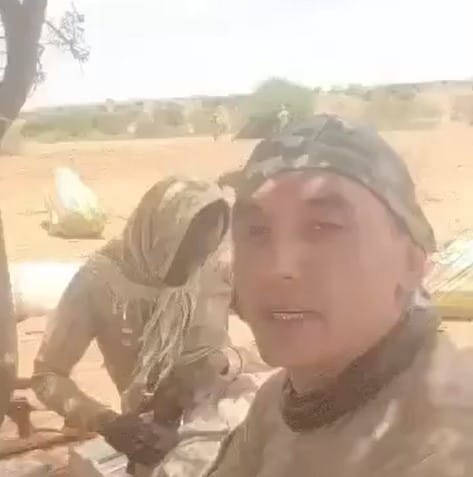
Beyond the Somalia route, the investigation documented a second corridor through eastern Libya, a territory controlled by military strongman Khalifa Haftar. One mercenary, Christian Lombana, documented his journey through this region on social media before his convoy was ambushed in the Darfur desert. Documents recovered from the scene, including a passport with a Libyan entry stamp, provided a rare paper trail of the transit through UAE-aligned territories.
The AFP investigation also identifies the specific corporate entity allegedly managing the mercenaries’ compensation. While the United States recently sanctioned Colombian recruiters like retired colonel Alvaro Quijano, the AFP report points to the Global Security Services Group (GSSG) in Abu Dhabi as the financier. Contracts signed by 26 Colombian recruits in Libya authorized GSSG to pay their salaries, which ranged from $2,500 to $4,000 a month, through a Panama-registered firm. GSSG, which previously listed the UAE’s interior and foreign ministries as clients on its website, has since removed those references.
The impact of these specialized fighters on the ground has been profound. Geolocation data places Colombians at the scene of the RSF’s October takeover of El-Fasher, a siege marked by widespread reports of mass killings and sexual violence. The RSF has leveraged the Colombians’ expertise in drone and artillery warfare to compensate for the technical limitations of its foot soldiers. Furthermore, verified footage shows the mercenaries training child recruits in Darfur, teaching them to operate rocket launchers and other heavy weaponry.
The United Arab Emirates has repeatedly denied any involvement in the conflict, with a senior official telling AFP that the country rejects any claim of providing support to either warring party. However, the investigation’s findings on the “Somalia stopover” and the GSSG contracts add to a growing body of evidence from UN experts and international observers suggesting a high degree of regional coordination in sustaining the RSF’s military capabilities.
For the families back in Colombia, the operation has left a trail of grief and unanswered questions. Many veterans were lured by the promise of six times their military pension, only to disappear into a war thousands of miles away. One widow, whose husband died shortly after arriving in Sudan in mid-2024, told AFP that the bodies of many fallen mercenaries have yet to be returned, as the secretive nature of the recruitment network complicates official repatriation efforts.