
Umma Party leaders hold first Khartoum meeting amid deepening split
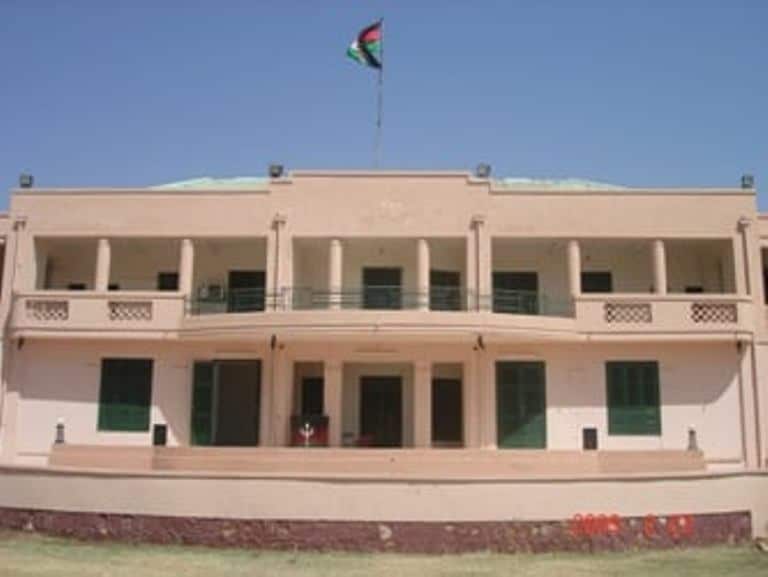
January 10, 2026 (OMDURMAN) – Leaders of the National Umma Party (NUP) organized on Saturday the first political forum at its headquarters in Omdurman, Khartoum State, a move that consolidates further division within the organization currently led by two rival acting presidents.
The forum was attended by the party’s legal advisor, Ismail Katr, along with leaders from the youth and women’s secretariats. Others were absent due to opposition to the move, security concerns, or insufficient notification.
In a statement, participants called on members of the Umma Party inside and outside Sudan to stand united behind the organization’s stance on the war under the leadership of Acting President Mohamed Abdalla Al-Duma, to strengthen the national ranks and serve the causes of the Sudanese people.
The statement declared support for the army, which they described as the legitimate national institution, while emphasizing the need for it to adhere to its constitutional duties in protecting the people and maintaining the country’s unity.
The Umma Party is split into three factions. The first is led by Acting President Fadlallah Burma Nasir, who heads a wing perceived as supportive of the Rapid Support Forces (RSF). The second is led by Al-Duma, who has declared full support for the army. The third faction, associated with Secretary-General Al-Wathiq Al-Berir, opposes the war entirely.
Burma Nasir has served as acting party leader since Nov. 28, 2020, succeeding historic leader Sadiq al-Mahdi, with Ibrahim Al-Amin, Mohamed Abdalla Al-Duma, and Siddig Mohamed Ismail as his deputies.
Disputes surfaced publicly in February 2025 when the party presidency decided to withdraw confidence from Burma Nasir for signing the “Tasis” (Founding) coalition charter, viewed as a political wing of the RSF, and appointed Al-Duma as acting president in his place.
The party’s Organizational Coordination Council intervened to resolve the dispute, retaining Burma Nasir in his post on the condition that he limit his involvement to the signing of the charter without entering into future commitments.
However, Al-Duma continued his duties as acting president, moving closer to the army. This angered Burma Nasir, who dismissed him from the vice presidency in August 2025, a decision that also included the dismissal of other deputies and advisor Ismail Katr.
Participants at the forum condemned violations committed by the RSF against civilians and public property. They also affirmed their commitment to the party’s alignment with the will of the Sudanese people, to a democratic civil state, to ending the war, and to preserving the dignity of Sudanese citizens.
The statement noted that participants adhere to the slogans of the December Revolution—freedom, peace, and justice—chanting “military to the barracks and the Janjaweed must be dissolved,” in reference to the RSF.
The forum, the first political activity in Khartoum since the war began, drew objections and reservations from sectors within the party.
Secretary-General Al-Wathiq Al-Berir told Sudan Tribune that the organization has not held any official activity sponsored by party institutions at its headquarters since the outbreak of the conflict.
He stated that the forum is not considered an official institutional activity and has no connection to the party’s institutions or bodies, as what was raised does not amount to an institutional meeting and was not held within this framework or under any approved organizational capacity.
In a related context, sources within the NUP considered the forum to have been held by the group loyal to the army-backed government after they were granted control of the party headquarters, at a time when the country is witnessing a devastating war and an unprecedented political deadlock.
The sources told Sudan Tribune that the rhetoric was practically contradictory to reality, given what they described as a clear political alignment with the government dominating the scene from Port Sudan, which suppresses voices calling for an end to the war.
They added that political activity in army-controlled areas is effectively restricted to groups supporting the continuation of the war, while any voice calling for its cessation is classified as sympathetic to the RSF, a classification that has led to a wide-scale arrest campaign among party members.