
Sudan Tribune investigation reveals mass graves and secret RSF detention centers in El Fasher
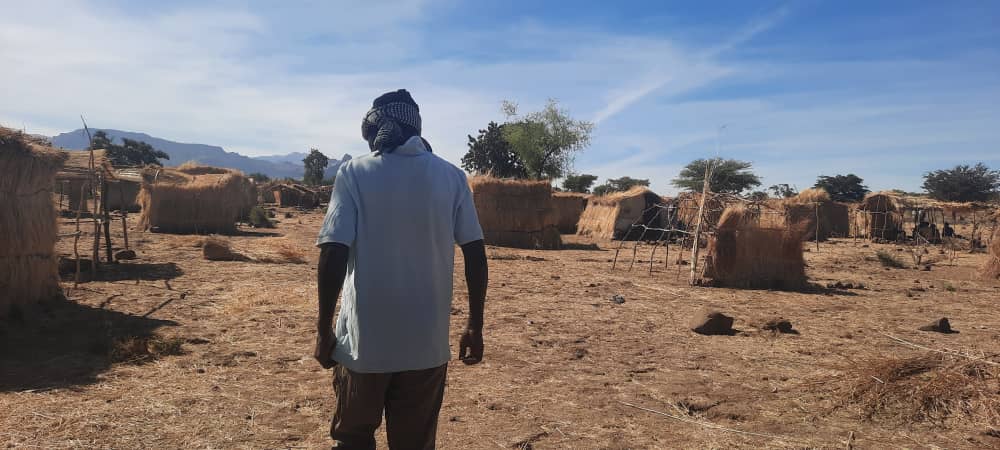
January 12, 2026 (EL FASHER) – On October 26, 2025, El Fasher, the capital of North Darfur, fell to the Rapid Support Forces (RSF) following a gruelling 500-day siege. The city’s fall marked more than just a military shift; it signaled the start of a harrowing chapter of human rights violations, with growing allegations of crimes amounting to genocide and ethnic cleansing.
Before the siege, UN agencies estimated the population of El Fasher and its surrounding areas, including the Abu Shouk and Zamzam camps, at 1.5 million. By April 2025, that number had plummeted to 900,000. That same month, an RSF assault on Zamzam—the city’s largest camp—displaced half a million people. Subsequent attacks on Abu Shouk in August, coupled with relentless artillery fire, triggered further mass displacement until the RSF seized full control in October.
By mid-November, the number of displaced persons reached 650,000, with survivors scattering to 23 localities across nine states. While many remain on the city’s outskirts due to a lack of resources, roughly 1.4 million people—including those displaced by earlier conflicts—are now reportedly sheltering in the Tawila area, 30 miles west of El Fasher.
A Sudan Tribune investigation, based on testimonies from survivors, residents trapped inside the city, and field sources, has identified suspected mass grave sites. The findings reveal a disturbing pattern of secret burials, enforced disappearances, and the systematic destruction of evidence intended to mask the scale of the atrocities.
Networks of detention and abuse
Residents still in El Fasher describe a city dotted with secret detention centres. In these facilities, RSF fighters reportedly subject civilians to murder, rape, torture, starvation, and financial extortion.
Sources told Sudan Tribune that the RSF has detained the vast majority of the city’s male population, sparing only a small number of the elderly, women, and children. Key detention sites include the University of El Fasher’s “Al-Rashid” student dormitories and the former residence of Tijani Sese, a former head of the Darfur Regional Authority. Other detainees are being held at the Al-Daraja Al-Ula Grand Mosque, the former UNAMID headquarters, and the Research Authority buildings. These sites operate outside any legal framework, housing hundreds of civilians in dire conditions.
Repurposed civilian infrastructure
Witnesses claim that younger detainees are often moved to overcrowded facilities like Shala Prison, where approximately 3,000 men and 500 women are currently held. Many women are reportedly detained on baseless charges of supporting the Sudanese army.
The RSF has also reportedly converted the Children’s Hospital in eastern El Fasher into a makeshift prison. Among the estimated 2,000 detainees are North Darfur’s Health Minister, Khadija Moussa, along with dozens of medical professionals, civil servants, and educators.
Extortion and lethal conditions
Reports indicate that civilians are also being held in the Women and Child Protection building and the private residence of RSF commander Saeed Sarkul. In some “high-risk” zones like “Al-Borsa,” detainees have reportedly died from disease, starvation, or summary execution. Survivors also described a terrifying environment in Shala Prison, citing daily reports of sexual violence against female detainees.
Families have shared accounts of “digital kidnapping,” where RSF members send voice notes or photos of detainees to relatives, demanding ransoms for their release. In several cases, families paid the requested amounts only to have the RSF demand more money without releasing the prisoner.
Operations beyond city limits
The investigation found that splinter groups of the Revolutionary Awakening Council, led by Musa Hilal, have moved detainees to sites outside El Fasher, including Kutum and the Al-Zarq base near the Libyan-Chadian border.
Evidence of mass burials is also mounting. Sources identified several suspected mass grave sites: the Al-Ashlaq neighbourhood, the area west of the former UNAMID headquarters, and a large trench along the road to Tawila. There are also reports of bodies being transported from the city to be burned or buried at night near the Zamzam camp to avoid detection.
Testimonies of erasure
Abubakr Ahmed Imam, a spokesperson for the North Darfur Popular Resistance who escaped the city, told Sudan Tribune that his group has documented the burning of bodies and the digging of fresh pits. “Enforced disappearance is ongoing,” Imam said, citing sites near the Children’s Hospital and the Wana Mountains. He also referenced video evidence of detainees being held in shipping containers, who were allegedly burned alive.
The RSF leadership has not responded to multiple requests for comment on these allegations.
In the Tawila displacement centre, survivors shared similar horrors. Omar Adam, a carpenter, described seeing the bodies of his neighbour and his son disappear shortly after an RSF vehicle arrived at their home. Others described seeing armed men in RSF uniforms hurriedly digging pits along the road to Tawila, forbidding anyone from stopping.
Systematic destruction of evidence
Satellite imagery analyzed by the Yale School of Public Health’s Humanitarian Research Lab shows significant terrain changes in these areas, consistent with mass graves. A former surgeon from El Fasher Hospital noted that the RSF targeted the hospital’s administrative wing specifically to destroy death records and archives.
Dr. Abdel Nasser Salm Hamed, of the Focus Research Centre, characterized these actions as a “highly organized effort” to eliminate witnesses and physical evidence. He noted that satellite images of Wadi Kafout show graves being dug in remote, inaccessible areas.
Information blackout and health crisis
The humanitarian situation inside El Fasher is catastrophic. Medical sources report that at least a thousand people wounded by shelling and drones remain trapped in the city, facing a cholera outbreak and severe malnutrition.
To maintain control over the narrative, the RSF has banned Starlink satellite internet, isolating the population. Sources claim that the RSF uses the Saudi Hospital as a stage for propaganda, filming hand-picked prisoners to show “humane treatment” while hiding the fact that hundreds of patients and staff were reportedly killed when the city first fell.