
El Fasher’s children: Alone after the guns fell silent
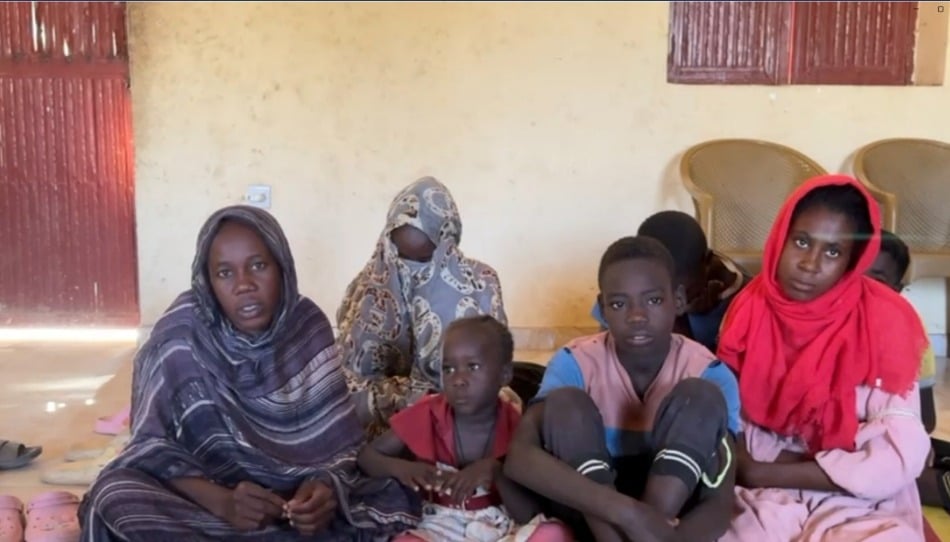
January 23, 2026 (TAWILA, North Darfur) – Eight-year-old Ikram Mohammed Fadl arrived in this windswept locality on foot in late November, leaving behind the bodies of her parents buried in the soil of El Fasher. Her father had died from shell shrapnel wounds during the final assault; her mother was killed 40 days later as the violence continued.
Ikram is one of approximately 2,000 children separated from their families following the Rapid Support Forces’ (RSF) capture of North Darfur’s capital on Oct. 26, according to the National Council for Child Welfare. She now lives with her aunt, Hasaniya Abakar Adam, in Tawila, 60 kilometres (37 miles) west of El Fasher, one of hundreds of minors who have flooded into this area and the city of Ad Dabbah in Northern State.
The children came alone. Some watched their parents die before their eyes—killed by sniper fire, artillery shelling, or drones that pursued them into homes, displacement centres, and markets. Others were lost in the panic of the city’s final hours, swept away in waves of chaos as the front lines collapsed.
TRAUMA AND SURVIVAL
In a dusty corner of the Rwanda camp in Tawila, 11-year-old Hasna Bukhari remains paralyzed by memories of witnessing her parents’ killing on the road. She now stays with an aunt who lacks even the most basic necessities, relatives said.
Ten-year-old Mamdouh Abdel Rahman lives in the same camp with his aunt and four siblings, still asking questions about his mother, whom he lost track of in the crowded flight from El Fasher and has heard no news of since.
Hasaniya Abakar Adam, caring for Ikram and her siblings, described a journey through horrors that “would turn a child’s hair grey.” She told Sudan Tribune that she is now the sole provider for four siblings in “the complete absence of support from official bodies or organizations.”
The burden of care has fallen heavily on displaced women already struggling to survive. Aziza Mohamed Salem, who works day-to-day marginal jobs, carried a three-year-old child with her on the arduous foot journey after the boy lost both parents during the fall of the city.
Ikram Abdullah Mohammed, who lost most of her own family to RSF fire during the long siege of El Fasher, found a three-year-old child lost on the road and took him in, along with two siblings, aged seven and nine, to provide for them all.
Razaz Abdel Rahman, who moved between El Fasher’s neighbourhoods under shelling before fleeing to Tawila, discovered five children on her displacement path, aged between four and 10, whose parents had been killed. She decided to take them with her.
“I go out early every morning to sell hot drinks in the market, and what I earn barely covers a single meal,” she said. “These children are without medical or nutritional support.”
A “COMPLEX HUMANITARIAN EMERGENCY”
Najla Abdel Mahmoud, an expert in social and psychological sciences, warned that the arrival of about 800 unaccompanied children in Tawila represents a crisis that extends far beyond immediate physical needs.
Describing the situation as a “complex humanitarian emergency,” she told Sudan Tribune that these children face “multi-dimensional loss involving family, home, and safety,” making them vulnerable to post-traumatic stress disorder, risks of sexual exploitation, or forced recruitment, in addition to malnutrition.
“Investing in the recovery of these children is an investment in a stable future for Darfur,” she said adding, “Neglecting them will lead to long-term social tensions.”
DOCUMENTED VIOLATIONS
The scale of the crisis has overwhelmed local authorities. The National Council for Child Welfare has documented approximately 2,000 cases of forced separation among children who reached Tawila.
Abdul Qadir Abu, the Council’s Secretary-General, told Sudan Tribune that officials have recorded grave violations, including forced marriage and sexual assaults affecting about 500 young girls, confirming that these practices represent “a flagrant violation of the International Convention on the Rights of the Child.”
Lana Awad Sabil, a media official at the North Darfur Ministry of Health, told Sudan Tribune that field estimates record the arrival of between 450 and 800 separated children in Tawila, while more than 200 children reached the Al-Affad camp in the Ad Dabbah area of Northern State after a harsh desert journey.
Sabil explained that the children arrived in a state of severe emaciation with outbreaks of cholera and malaria among them. In the near-total absence of central government services, the greatest burden has fallen on emergency rooms and local volunteers, alongside limited efforts by organizations such as UNICEF, Save the Children, and the Red Cross in attempts at family reunification and psychological support.