
UN rights chief calls El Fasher events preventable humanitarian disaster
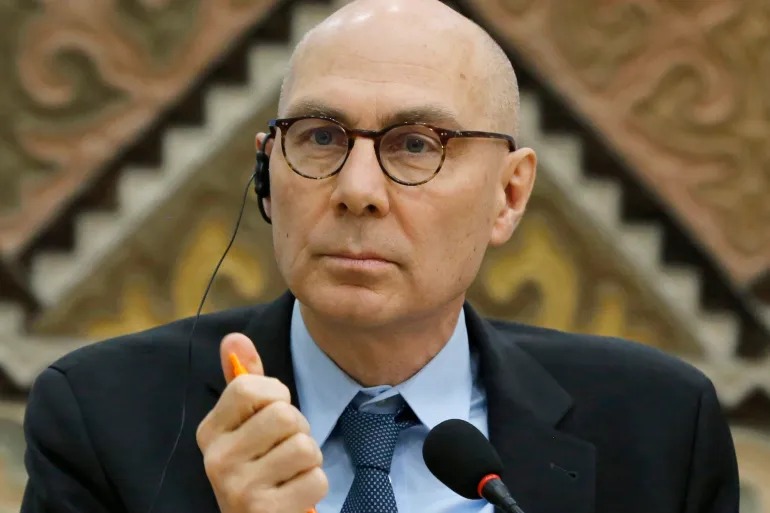
February 9, 2026 (GENEVA) – UN High Commissioner for Human Rights Volker Türk on Monday described the events in El Fasher, the capital of North Darfur, as a “horrific humanitarian disaster” that could have been avoided.
The paramilitary Rapid Support Forces (RSF) seized control of the city in late October 2024 following an 18-month siege. International reports and satellite imagery have since documented widespread abuses against thousands of civilians, including ethnic-based killings, looting, forced displacement, and sexual violence.
In a briefing to the Human Rights Council, Türk stated that the situation in El Fasher constituted a humanitarian and rights catastrophe. He noted that after a prolonged siege characterized by starvation and shelling, the RSF launched a wave of intense violence that killed thousands of people within days. Tens of thousands fled in panic, Türk said, adding that there is a collective duty to hold those responsible accountable to ensure such events never recur.
Evidence of psychological trauma
Türk shared insights from his recent visit to Sudan, where he heard firsthand accounts from survivors. He remarked that he had rarely seen people suffering from such profound levels of psychological trauma. His team gathered evidence through interviews with more than 140 victims and witnesses in Northern State and eastern Chad.
Survivors reported mass killings and extrajudicial executions of civilians and those no longer participating in hostilities, both within the city and during their escape. Türk detailed accounts of rape, other forms of sexual violence, torture, ill-treatment, detention, enforced disappearances, and kidnappings for ransom.
According to the High Commissioner, survivors described seeing piles of bodies along the roads leading out of El Fasher, a scene one survivor likened to the “Day of Judgment.” He added that the RSF and its allied militias systematically used sexual violence as a weapon of war.
Targeted ethnic violence
In one example, Türk noted that people who fled to locations thousands of kilometres apart provided identical testimonies regarding massacres of hundreds of people who had sought refuge at the University of El Fasher. Others reported attacks on health facilities and healthcare workers, while Türk’s team heard evidence that some victims were targeted specifically for their non-Arab origins, particularly members of the Zaghawa ethnic group.
The High Commissioner revealed that RSF fighters and their allies kidnapped people as they fled, demanding heavy ransoms for their release. Most victims were men and teenage boys perceived to be of fighting age. He also reported that the RSF and its allies detained individuals believed to be affiliated with the Sudanese Armed Forces, government officials, doctors, journalists, and local humanitarian volunteers.
Citing former detainees, Türk reported that more than 2,000 men were held at the El Fasher Children’s Hospital, with reports indicating that those who died in custody were buried near the facility. He asserted that responsibility for these crimes lies with the RSF, its allies, and its supporters.
Türk urged the international community to increase its efforts, warning that if the world remains idle while armed groups commit documented international crimes, only worse outcomes can be expected. He expressed deep concern that these violations could be repeated in the Kordofan region, where fighting has intensified since the fall of El Fasher and where civilians face the risk of extrajudicial execution.