
Sudan’s humanitarian truce faces uphill battle
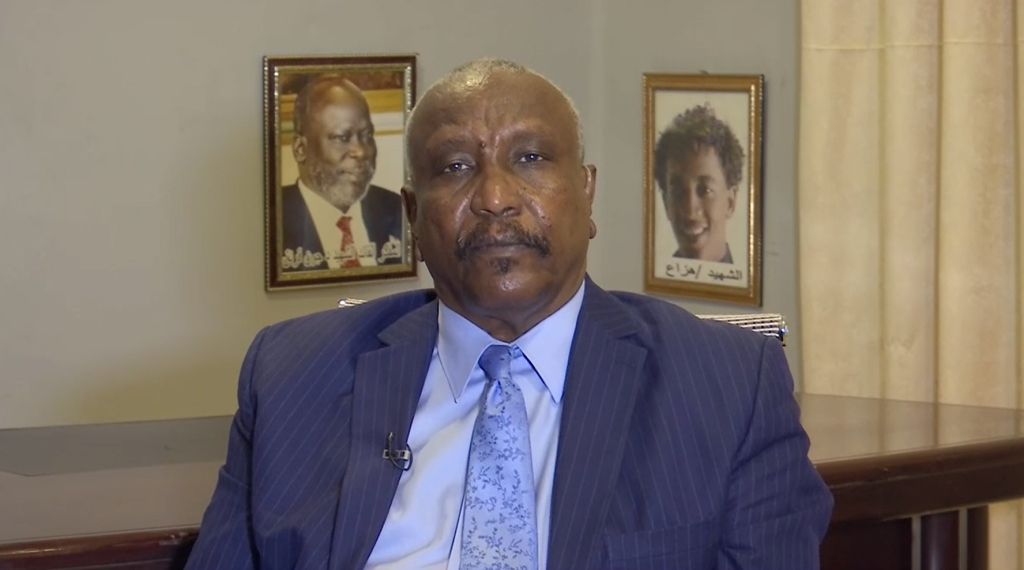
Yasir Arman
Our people deserve to know the facts, away from the information blackout and the rosy picture surrounding the painstaking search for a humanitarian truce. The path to it is filled with difficulties, and false hopes are worse than having no hope at all – especially in times of war. Promises that obscure reality only breed more pain and frustration.
This was not the first time we have been told we are within a stone’s throw of a humanitarian truce, only to find ourselves facing a mountain before which the humanitarian truce stumbles. It is important that we are candid with our people about the facts and not leave them prey to obscurantism.
We are grateful for the mediators’ efforts to achieve the truce. Yet the question remains: how they are using their leverage with the parties to the conflict to secure the humanitarian truce, and whether the war in Sudan itself is a priority on the international community’s agenda.
Claims of a ready-made, completed agreement lack evidence. One can speak of understandings, but it is clear that the path to a truce is filled with difficulties that we must approach with caution, while listening to the people of Sudan – the main stakeholders and owners of the future. The main burden of finding solutions, developing internal mechanisms of pressure, and engaging positively with external forces and mediators, falls on Sudanese men and women. The foremost mechanism within our reach is the unity of the anti-war front. We can mobilize into a formidable anti-war front whose voice is heard, uniting the largest bloc of our people. The December Revolution previously united them, and the interest in stopping the war is drawing in forces from outside the December Revolution bloc. This is necessary to ensure that Sudanese people are taken into account and not ignored in the design, ownership, and participation in the peace process as a key party, and that peace does not become a deal struck out of sight and without the people’s participation.
Before hastily and arbitrarily seizing on statements issued from time to time in regional and international forums, and so that we – as Sudanese – are not merely an echo chamber welcoming what others do without our involvement, we need to study the challenges and how to address them. In this article, I will touch upon four difficulties among others. In a subsequent article, I will explore potential solutions. All of this requires collective effort, collective intellect, and popular support.
1. The Position of the Army and its Allies:
The army command seeks to make the Rapid Support Forces a junior partner, content with whatever share of power and resources the army and its allies allocate to it, within a system that rejects accountability and provides impunity as part of the deal, and which excludes genuine civilian forces. The army fears that a truce might allow the Rapid Support Forces and their allies to reorganize and rearm, and that they might try again to seize army positions, especially if the truce entrenches the Libyan model and legitimizes the RSF’s external alliance. The army sees its interest in continuing the war. Despite the marriage of convenience between the army and the Islamists, the Islamists remain wary of the current army leadership and reject the idea of the army fighting and negotiating, as was the case during al-Bashir’s era. They fear the international gateway that could bring the army into the fold of the international community and shut the door in the faces of the Islamists.
We must study the army’s position without aligning with it. The anti-war forces must present an alternative vision that carefully examines the army’s position and astutely analyzes the marriage of convenience between it and the Islamists. We must work internally, in line with the stated position of the mediation excluding the Islamists, and avoid a simplistic conflation of the army and the Islamists. We are the stakeholders, and civilians are paying the price. The Islamists’ project must be contained. The army must realize that demanding the surrender of the Rapid Support Forces constitutes a call for the continuation of the war and undermines any desire for peace within the RSF.
2. The Rapid Support Forces and Their Allies:
They announce a truce and claim to seek it, yet at the same time, they attack army positions and besiege cities. In this situation, they are on the offensive, not the defensive, which casts doubt on their seriousness about a truce and whether it is, for them, part of a performative public relations campaign to improve their image. Furthermore, their announcement of forming a government and building a state is a strategic move that complicates prospects for a swift truce and political process, and prolongs the truce without reaching a final settlement.
3. The Lack of Cohesion within the Mediation:
The mediation has entered into conflict with itself, except for the United States, which appears distant from the disputes of the other mediating countries. The lack of cohesion within the mediation and the demands by some parties to the war for the exclusion of others are negative indicators that weaken the mediation’s leverage and contribute to prolonging the war. Moreover, there is another quartet led by the African Union, and there is no clear coordination between the two quartets.
4. The War in Sudan and the Platforms of Regional Conflict:
Current wars have organic connections to geopolitics across various regional belts worldwide. The war in Sudan has entered the quagmire of regional conflicts with international extensions. Sudan holds a unique position along the Red Sea belt, the Horn of Africa, the Sahel, and the Middle East, and is linked to wars over resource plunder, including water. Recently, the war inside Sudan has spilt over into neighbouring countries. The longer a solution is delayed, the more regional complexities increase and regional alliances linked to the war, with their international extensions, grow.
These four factors, along with others, including internal divisions, complicate achieving a humanitarian truce. However, the world, and Sudan in particular, has experiences in matters of war and peace that can be benefited from.
Do We Write the Prescription, or Will Others Write It for Us?
We learned from Dr John Garang de Mabior, during the years of war and through our interaction with what transpires within our country and its regional and international linkages, to hasten in writing the prescription suitable for treating our country’s conditions and not to leave it to others, while maintaining positive interaction with them. Sooner or later, the truce is undoubtedly coming. It is a key condition that opens the path towards the right to life and the protection of civilians, free from starvation and terrorization, and to halt the humanitarian catastrophe and violations. However, the humanitarian truce will be deficient if the anti-war forces do not unite into a formidable front, agree on a vision that addresses the critical question of the role and participation of civilians in the humanitarian truce, and do not leave it solely to the two military parties to the conflict. This is because the primary objective of a truce is to protect civilians from the warring parties, and it serves as an entry point to expand the civilian space. This will not be achieved without the participation of civilians themselves.
The truce lays the groundwork for the political process as a single, integrated package in harmony and coherence. This requires building a broad front for peace, democracy, and citizenship, so that we define ourselves positively by what we work for, not merely by what we reject as an adversarial and anti-war front.
We must write the prescription for which our people have struggled, and not leave the door open for a deal made in the name of peace that reproduces our previous crises and steers us towards a new war, rather than towards sustainable peace, citizenship without discrimination, and entrenched democracy.