
Gedaref farmers warn of insolvency as crop prices plunge..
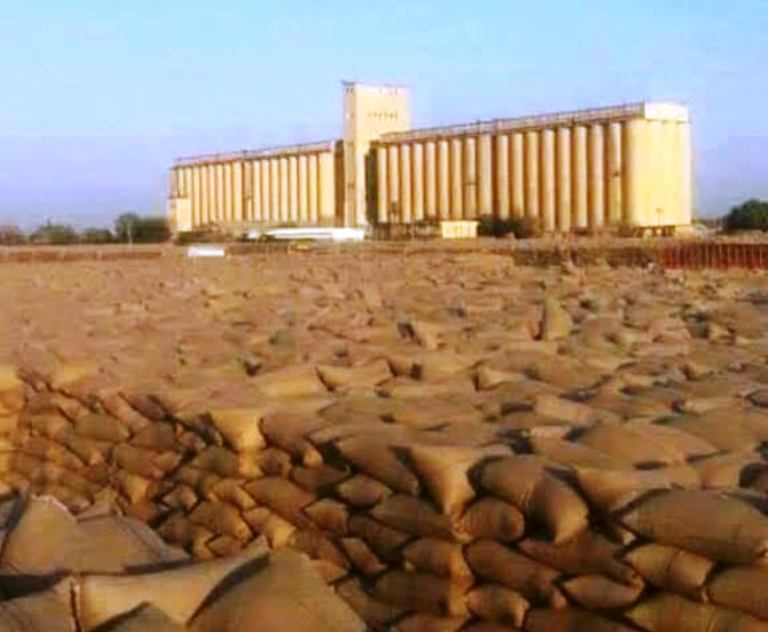
February 18, 2026 (GEDAREF) – Farmers in Gedaref State are warning of mounting financial losses as an influx of agricultural produce into the state’s crop exchange drives down prices, forcing many to sell at a loss to settle debts with banks and fertilizer companies.
The Gedaref crop market witnessed a significant surge in arrivals on Tuesday. Total supplies included 30,470 bags of sorghum, 1,958 bags of sesame, 8,110 bags of watermelon seeds, and 2,521 bags of millet.
Price indices from the Gedaref exchange show that while the price of a kantar of sesame remained stable at 165,000 Sudanese pounds over the past month, other commodities saw fluctuations. The price of an ardeb of millet rose to 260,000 pounds, and a ton of watermelon seeds reached 2.2 million pounds.
Sorghum prices, however, faced downward pressure. The price of an ardeb of Feterita fell from 180,000 to 177,000 pounds. Other varieties were priced as follows: Akar at 172,000 pounds, Dabbar at 200,000 pounds, Hareeray at 180,000 pounds, Wad Baako at 180,000 pounds, and Mugud at 200,000 pounds.
Farmers told the Sudan Tribune that, despite a successful harvest, high production costs and heavy debt burdens have made the season financially devastating. They noted that they are single-handedly bearing the costs of agricultural operations while facing pressure from creditors.
Mubarak al-Noor, a farmer and former member of parliament for the Al-Fashaga constituency, said on Wednesday that cultivation took place under “extremely complex” economic and security conditions, particularly along the border with Ethiopia.
Al-Noor highlighted that the cost of a single barrel of diesel has reached 1,000,000 Sudanese pounds—approximately $300. He added that a shortage of seasonal labour from Ethiopia and South Sudan delayed harvesting, further inflating costs and contributing to the current crisis.
He argued that the market will not recover unless the government permits large-scale sorghum exports. Without access to international markets, Al-Noor warned, farmers risk imprisonment for failing to repay loans.
Gedaref State alone cultivated 10 million acres this season. Despite challenges including erratic rainfall, low liquidity, and labour shortages, production remained high.
Former Agriculture Minister Issa Timan told Sudan Tribune that the increased supply at the exchange is partly due to the closure of trade routes in western states because of the ongoing war, which has diverted crops to Gedaref.
Timan noted that the oversupply naturally depresses prices. He called for the establishment of farmer organizations and better local government protection to help producers navigate rising costs and market volatility.
Altayeb Ibrahim, head of the Economic Services Chamber at the Gedaref Chamber of Commerce, attributed the surge in supply to fears of theft or spoilage in production areas. He echoed the call for opening sorghum exports, noting that the current surplus far exceeds local demand.
Sudan requires between 5.5 and 6 million tons of grain annually to meet its food security needs. According to the United Nations, sorghum is the primary staple in central regions, while wheat is favoured in the north and millet in the west.
While the government had previously banned sorghum exports to prevent shortages, authorities approved a partial lifting of the ban in October 2025 in response to a bumper crop in Gedaref. The move was intended to clear silo backlogs and generate foreign currency, though farmers claim current measures are insufficient to prevent insolvency.