
Sudan industry losses from war estimated at up to $58 billion
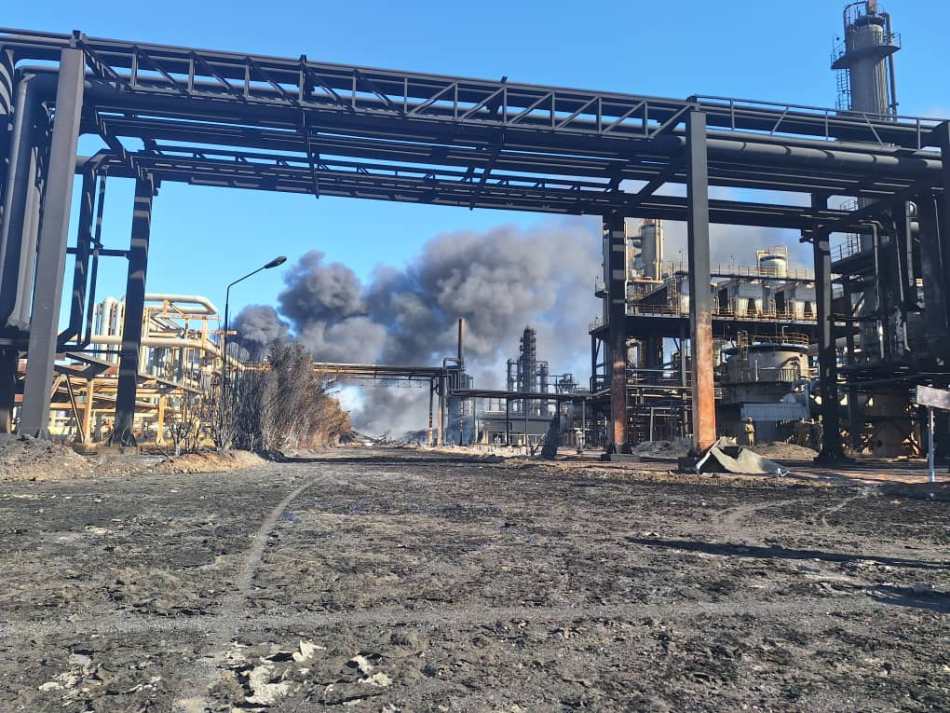
March 3 2026 (KHARTOUM) — The Sudanese Federation of Industries has estimated the industrial sector’s losses due to the ongoing war at between $50 billion and $58 billion, calling for the establishment of an independent reconstruction commission with broad powers.
Thousands of factories in Khartoum and several other states have been subjected to extensive looting of raw materials, power cables, and infrastructure, leaving many unable to resume operations.
Abbas Ali al-Sayed, Secretary-General of the Sudanese Federation of Industries, called for an independent reconstruction commission with authorities equivalent to those of the presidency. He said the body should include relevant technical, financial, and oversight entities to develop a clear and transparent national plan for rebuilding, moving away from individual initiatives and narrow interests.
Al-Sayed told Sudan Tribune that the country currently lacks a comprehensive and announced government plan for the post-war phase. He noted that the determination of priorities is being driven by personal initiatives rather than by an integrated national vision grounded in accurate data and urgent needs.
The proposed commission should include experts in engineering, finance, auditing, and investigation, he said. It would be tasked with developing a phased strategy aligned with available capabilities, while committing to full transparency and disclosure to reduce costs and accelerate implementation.
CALL FOR OVERSIGHT AND TRANSITION LEGISLATION
Al-Sayed called for the creation of an independent body for administrative oversight, transparency, and anti-corruption, as well as the activation of direct and indirect popular oversight. He described the absence of a legislative council as a major flaw in managing the current phase.
He suggested the formation of a temporary legislative council including representatives from civil society organizations, professional and labour unions, and business associations. Such a body would contribute to oversight, accountability, and decision-making during the transitional period.
INDUSTRIAL LOSS FIGURES
Data from the Ministry of Industry indicates that approximately 1,800 industrial facilities have been damaged to varying degrees. This includes about 650 factories that were completely destroyed, nearly 450 of which are located in the industrial zone south of Khartoum.
Total losses in the sector, based on estimates from industrialists, range between $50 billion and $58 billion. Al-Sayed noted that earlier preliminary estimates had suggested figures as high as $80 billion before reaching the current consensus.
The damaged factories are concentrated in the states of Khartoum, Al Jazirah, Blue Nile, and parts of White Nile, while facilities in other states remained largely unaffected.
ASSESSMENT REPORTS AND FEES
Al-Sayed criticized previous measures initiated by the Investment Ministry—now the Higher Council for Investment—which required reporting to authorities before resuming industrial activity and imposed fees for facility status reports.
The Federation of Industries objected to these fees, leading to their withdrawal. A Ministry of Industry committee was subsequently formed to handle the inventory process without charge. Al-Sayed emphasized that any loss assessment must be conducted by an independent and credible committee comprising national entities and neutral international organizations.
He added that representatives from the industrial, commercial, and agricultural sectors have prepared a comprehensive vision for national reconstruction that extends beyond industry to reform the political and economic systems. This proposal has been submitted to official authorities for review.
Regarding the timeframe, Al-Sayed said the agricultural and industrial sectors could recover within five years if concessional external financing is available from friendly nations and funds. If relying solely on domestic resources, the process will take significantly longer.
INVESTOR REQUIREMENTS
Economic organizations and unions in Islamic countries have expressed readiness to contribute to reconstruction, but they require a stable investment environment. Conditions include legal guarantees for contracts, the freedom to transfer profits and capital, exchange rate stability, consistent tax and customs policies, and clear collection procedures to prevent the imposition of illegal fees.
While some small investors from Asian and Arab countries have shown interest in returning to Sudan, Al-Sayed described administrative obstacles and policy fluctuations as ongoing barriers to investment flows.
ADVISORY COUNCIL PROPOSAL
Al-Sayed revealed that he submitted a proposal to the Prime Minister and the Sovereign Council to form a high-level advisory council. The body would include economic ministers and Sudanese experts from both inside and outside the country, working voluntarily to develop an integrated national strategy.
Although more than 180 Sudanese experts expressed readiness to participate, Al-Sayed said the proposal received no response and was forwarded to the Ministry of Industry without practical steps being taken.
“The period before the war is not like the period after it,” the Secretary-General said, calling for a change in the state’s management approach. He urged the adoption of institutional planning, transparency, and effective oversight as the primary entry points for accelerating reconstruction and facing internal and external challenges.