
Sudan’s displaced find new ways to observe Ramadan as war reshapes cities
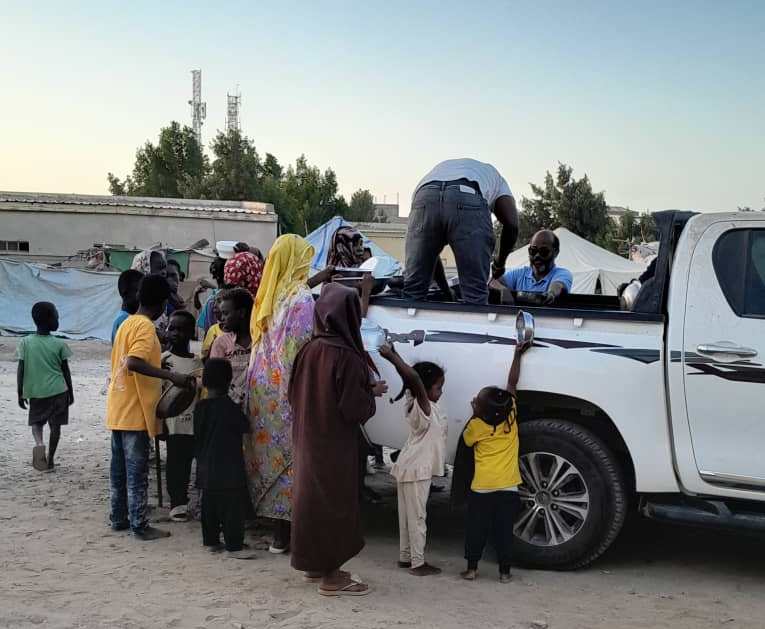
March 5, 2026 (PORT SUDAN) – In the neighbourhoods of Gedaref, Atbara, and Port Sudan, the traditional sounds of the Ramadan season are now mingling with the quiet desperation of a country transformed by conflict.
Once quiet provincial hubs, these cities have become primary sanctuaries for millions fleeing the ongoing war. Populations have doubled, and the sudden demographic shift is rewriting the social and economic scripts of daily life, particularly the sacred rituals of the fasting month.
In Port Sudan’s Al-Thawra Block 11, the city’s silhouette has changed. Tents now sit flush against permanent brick homes. As the sun begins its descent, the air is filled with the scent of woodsmoke and simmering stews as displaced women prepare Iftar, the meal that breaks the day-long fast.
“Ramadan is different this year,” said Um Jiddo, who fled her home in Khartoum North. “Food is limited, but we gather as a family. We try to feel the spirit of the holy month despite everything.”
Sudan is now home to one of the world’s largest internal displacement crises. According to the International Organization for Migration (IOM), millions have been uprooted, forced into overcrowded host cities or makeshift camps in the country’s north and east.
Economic strain in the marketplace
The influx has upended local economies. In Gedaref’s central market, merchants describe a Ramadan season defined by high demand and low purchasing power.
Ali Hassan al-Tom, a food wholesaler, said the surge in residents has increased demand for staples like flour, sugar, and oil. However, the nature of the transactions has shifted.
“Many displaced families are buying in very small quantities just to get through the day,” al-Tom said. “Prices are high and the challenge for these families is immense.”
The pressure is felt even by those whose home regions have seen a change in military control. Fatima Mohammed, who fled Gezira State for Port Sudan, chose not to return despite the army regaining control of her home region. For her, the challenge is maintaining the specific cultural traditions of Gezira in a strange city.
United Nations humanitarian officials (OCHA) warn that this demographic pressure is pushing basic services to a breaking point, making international aid a vital lifeline for those competing for dwindling resources.
Solidarity in the streets
Despite the hardship, the war has fostered a new kind of communal bond. In the hour before the Maghrib prayer, communal Iftar tables—a long-standing Sudanese tradition known as Barsh—have taken on a deeper significance.
In Atbara, volunteers and local residents pool their resources to provide free meals for the most vulnerable.
“These tables are a symbol of solidarity,” said Mohammed Ibrahim, a local volunteer. “We feel Ramadan is an opportunity to show the displaced that they are supported by their neighbours.”
The World Food Programme (WFP) notes that these grassroots initiatives are essential. With millions now reliant on humanitarian assistance, local charities often fill the gap where formal aid cannot reach.
The struggle for normalcy
For many, clinging to these traditions is a form of psychological survival.
Youssef al-Tayeb, a young man from Gezira, spends his afternoons organizing games for children in the camps and exchanging small portions of food with nearby tents. “We do this to feel we are not alone,” he said.
However, the strain on infrastructure is visible. Long lines for water and overcrowded health clinics are now the norm in Atbara and Port Sudan. UNICEF has raised alarms regarding the impact on children, who are the most vulnerable to the lack of clean water and rising malnutrition.
As the month progresses, the markets remain a battleground of affordability. The WFP emphasizes that maintaining human dignity during the holy month requires a sustained combination of local initiative and international support.
For the displaced, the essence of the month remains unchanged even if the setting is unrecognizable.
“We gather around the table every evening,” al-Tayeb said. “Even in these difficult circumstances, it feels closer to the heart.”