
Wadi Halfa residents protest housing plan over fears of demographic change
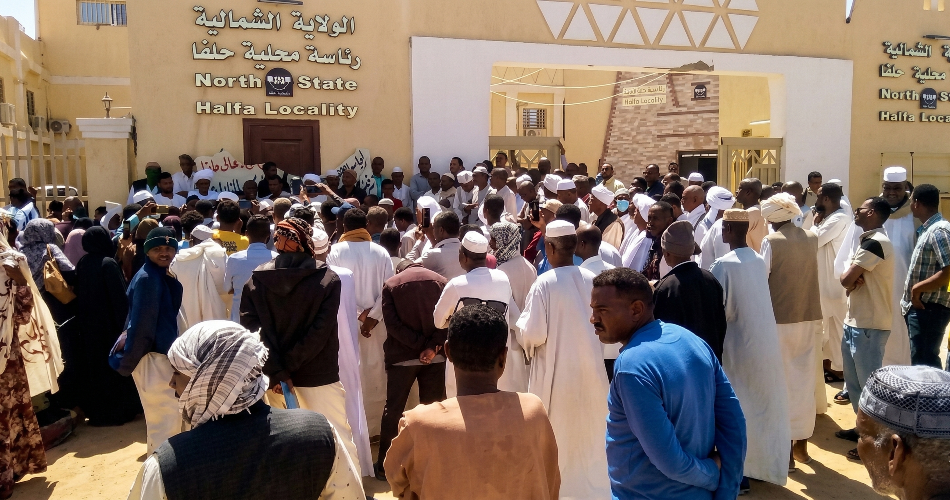
March 8, 2026 (WADI HALFA) – Dozens of activists and residents in the northern border city of Wadi Halfa staged a protest on Sunday outside local government offices to voice their rejection of a newly announced housing plan.
The protesters argued that the local authorities’ scheme overlooks ancestral land rights and poses a direct threat to the area’s regional identity.
Land ownership and urban planning initiatives in Wadi Halfa are fraught with historical sensitivity.
This sensitivity is deeply rooted in the mass displacement of the population following the construction of the Aswan High Dam in the 1960s.
Since that upheaval, the local community has maintained a continuous struggle to secure formal recognition of its rights and to protect the city’s cultural heritage.
During the demonstration, a formal memorandum was submitted to the locality’s executive director demanding the immediate cancellation of the project.
The document warned that proceeding with the plan without community consultation or regard for the legal standing of long-term residents would lead to significant unrest.
Mohamed Ali, a participant in the protest, told Sudan Tribune that the demonstrators are specifically calling for the repeal of the new scheme.
He noted that a previous housing plan from 2010 was only implemented five months ago and is already plagued by administrative irregularities.
The protesters expressed profound concern over the speed with which the government is attempting to finalize the new project.
They asserted that the region currently has no urgent need for additional residential expansion.
In their memorandum, the residents described Wadi Halfa as more than a set of geographical coordinates.
They characterized it instead as a symbol of the endurance of a people who painstakingly rebuilt their lives after the original displacement.
The demonstrators also highlighted a pattern of administrative opacity regarding the land department’s previous denials that such a plan existed.
The community views these actions as a “systematic demographic change” intended to erase the city’s unique historical character.
The local executive director stated that he understood the gravity of the situation and indicated that the plan should be suspended while the objections are reviewed.
He noted that the concerns had been referred to the director general of the Ministry of Urban Planning and the acting minister.
He further clarified that the legal authority to officially cancel the housing plan rests with the state-level ministry of urban planning.