
War transforms Sudan’s breadbasket into a barren battlefield
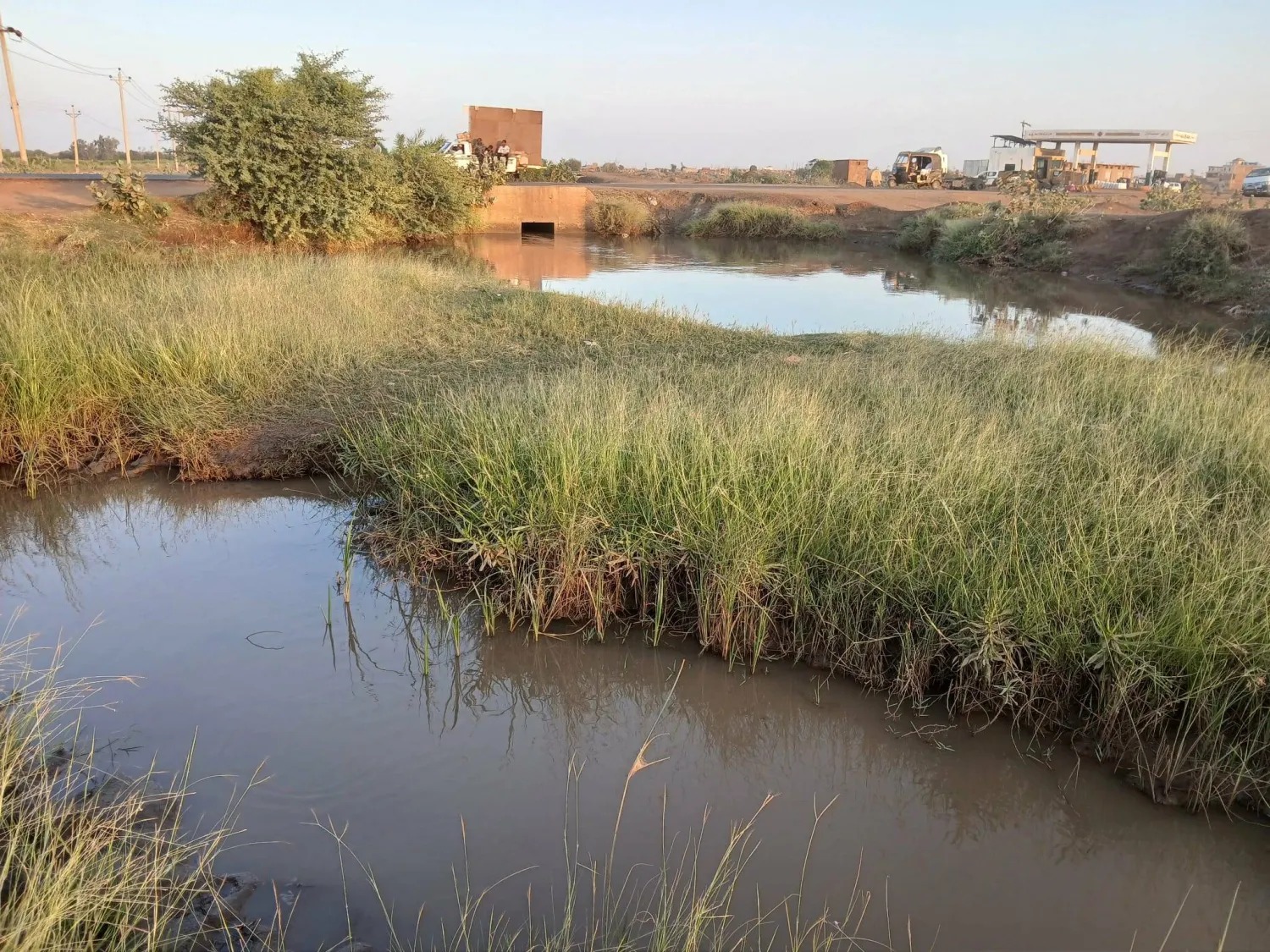
March 13 2026 (KHARTOUM) – The irrigation canals that once fed the Al Jazirah Scheme, once the world’s largest unified farming project, are now choked with silt and debris. What was once the green heart of Sudan is rapidly fading to a dusty brown, a casualty of a conflict that has halved the nation’s food production.
Recent government data paints a grim picture of an agricultural collapse. Across the country, crop yields have plummeted by more than 50%, leaving a nation already teetering on the edge of famine with a staggering 2.5-million-ton grain deficit.
The Food and Agriculture Organization (FAO) describes the situation as “terrifying.” With 60% to 80% of Sudanese relying on the land to survive, the systematic destruction of livelihoods has left 18 million people facing acute hunger.
The death of the “Great Scheme”
In the Al Jazirah and Managil schemes, the scale of the retreat is stark. Before the war, farmers cultivated 800,000 acres of wheat and maize. Today, that footprint has shrunk to 300,000 acres, yielding a mere 150,000 tons.
The mechanics of farming have been deliberately dismantled. Reports indicate that 81% of automated irrigation systems are destroyed, while organized looting has emptied state seed stores and private warehouses.
Further south in the Rahad Agricultural Project, the hum of irrigation pumps has largely gone silent, with 84% of the machinery out of service. In the Suki project, the collapse is near total; production has withered from 150,000 tons of maize to just 20,000 tons.
A landscape of abandoned fields
The crisis is not confined to the active battlefields of the south and west. In Northern State, where the land is usually insulated by distance, the skyrocketing costs of fuel and electricity have led to a 40% drop in wheat production.
To the east, in the rain-fed plains of Gedaref, the harvest of sorghum and millet, the staple diet for millions, has crashed from two million tons to fewer than 900,000.
“This isn’t a climate crisis,” said Badr al-Din Ahmed Saleh, a former advisor to the Ministry of Agriculture. “It is the deliberate paralysis of the backbone of the Sudanese economy.”
Saleh warns that as the war nears its fourth year, Sudan’s “green spaces” are becoming isolated islands or abandoned ghost lands.
The toll of a fragmented nation
The collapse is being driven by a pincer movement of military action and economic strangulation. Beyond the direct shelling of infrastructure, farmers are being squeezed by exorbitant “transit fees” and taxes imposed by various armed groups at checkpoints that now litter the internal trade routes.
With the Kordofan and Darfur regions effectively removed from the national production cycle and thousands of farmers displaced, the risk is no longer just a bad harvest.
“The danger that no one is noticing is the total cessation of the irrigated sector,” Saleh told Sudan Tribune. “Targeting seed stores and irrigation works has turned wheat farming in the heart of Sudan into a gamble that most can no longer afford to take.”
Sudan Agricultural Production Comparison (2026)
| Agricultural Project / Region | Pre-War Production / Area | Current Production / Area | Key Metrics & Infrastructure Impact |
| Al Jazirah & Managil | 800,000 acres | 300,000 acres | 150,000 tons produced; 81% of automated irrigation destroyed. |
| Suki Project | 150,000 tons (Maize) | 20,000 tons (Maize) | Represents the most significant destruction of productivity. |
| Gedaref (Rain-fed) | 2,000,000 tons | < 900,000 tons | Sorghum and millet output halved by conflict and transit fees. |
| Northern State | 300,000 tons (Wheat) | 180,000 tons (Wheat) | Decline driven by soaring fuel and electricity costs. |
| Rahad Project | Baseline | 16% Decrease | 84% of irrigation pumps are currently out of service. |