
Sudanese children face hungry Ramadan as war enters third year
Produced by Sudan Tribune, this report is distributed through the Sudan Media Forum’s collaborative network of independent press groups.
March 18, 2026 (PORT SUDAN/MADANI) – Amna Mohamed never imagined she would spend the holy month of Ramadan trying to convince her children that a handful of food is enough for Iftar.
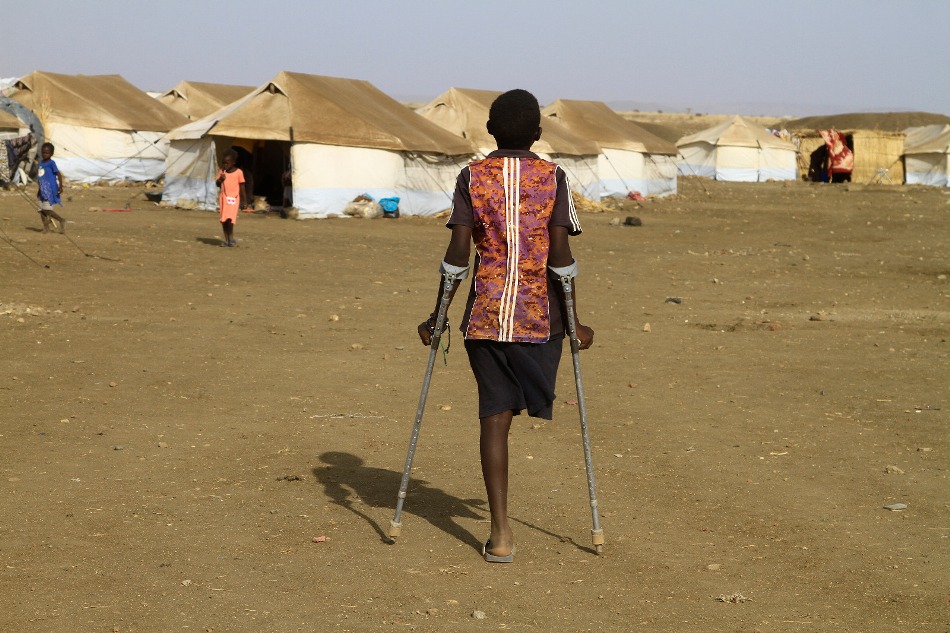
Amna and her three children fled their home in Khartoum three years ago as fighting intensified between the Sudanese army and the Rapid Support Forces (RSF). They now live in a crowded displacement centre in Port Sudan.
The traditions of the month have vanished. Her children, who once looked forward to new clothes and colourful lanterns, now face a reality defined by scarcity and the sound of distant shelling.
“My children used to wait for Ramadan every year to buy lanterns and new clothes, but this year we only think about providing food,” Amna said, her voice heavy with fatigue. “Sometimes, we do not even find enough for the sunset meal.”
Faded traditions
Amna’s story is a window into the lives of millions of Sudanese families displaced since April 2023. What was once a season of communal joy has been replaced by a daily struggle for survival in displacement camps and makeshift shelters.
In normal times, Sudanese neighbourhoods come alive during Ramadan with shared street banquets and children playing after evening prayers. Those scenes have disappeared for those living in areas lacking basic services.
In Gezira State, Fatima Abdallah told Sudan Tribune that her two children are struggling to adapt. Before the war, they would play with friends after Taraweeh prayers. Now, they spend their days idle in a shelter with no school or activities.
The suffering is compounded by a collapsing food system. The World Food Programme has warned that millions of Sudanese face acute food insecurity, leaving children particularly vulnerable to malnutrition, especially in camps suffering from supply shortages.
In Darfur, Mohamed Adam, a father of four, says providing food during Ramadan is now a daily challenge. He says his children often ask why there is not enough food like there used to be.
A generation at risk
Abdul Qader Abu, Secretary-General of the National Council for Child Welfare (NCCW), told Sudan Tribune that the humanitarian situation for children has reached a breaking point.
He said medical and food supplies are frequently blocked from reaching RSF-controlled areas due to road closures and disrupted supply lines between states.
The Council’s data suggests the war has devastated the education sector. More than 85% of children have seen their schooling suspended, with educational losses affecting approximately 3 million children.
The human cost is staggering. The NCCW has recorded over 1 million deaths among children linked to malnutrition since the conflict began, in addition to about a thousand deaths specifically from hunger.
Recruitment and displacement
Beyond hunger, the conflict has exposed children to systemic violence. The Council reports that approximately 1.16 million children have been recruited into armed groups in RSF-controlled territories.
The war has also led to mass displacement. There are currently an estimated 2 million internally displaced children, while another 1.115 million have fled to neighbouring countries as refugees.
Authorities are working with the International Committee of the Red Cross and UNICEF to find foster homes for children who have lost their parents. Hundreds have been integrated into families in states like Kassala and River Nile.
The government has also launched health insurance initiatives for these foster families to ensure children receive medical care, though resources remain stretched thin across the country.
Long-term trauma
Social experts warn that physical hunger is only part of the damage. Dr Najla Abdel Mahmoud Ahmed, a social affairs expert, said the loss of a stable social environment is creating a sense of deep isolation among the youth.
She noted that the absence of Ramadan rituals and family gatherings affects psychological development. The familiar world of school and home has been replaced by an environment of constant instability.
While Sudanese families continue to fast under these exceptional conditions, the hope remains for a permanent ceasefire. For Amna and millions like her, the goal is for their children to return to a life where Ramadan means celebration rather than survival.