
Donors pledge 1.5 bln euros for Sudan at Berlin humanitarian summit
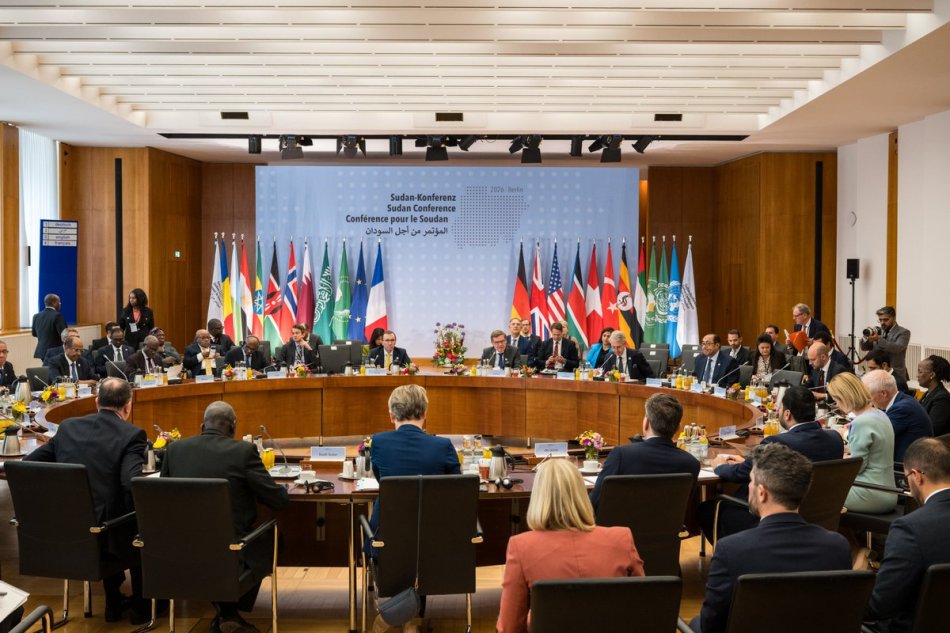
April 15, 2026 (BERLIN) – International donors pledged 1.5 billion euros ($1.6 billion) on Wednesday to address the humanitarian crisis in Sudan, as participating nations backed a five-party mechanism to seek a political end to the conflict.
The high-level conference in Berlin, co-hosted by Germany, France, Britain, the United States, the African Union, and the European Union, brought together ministers from 55 countries and representatives from 38 international and Sudanese organizations.
In a final statement, participants said that about half of the pledged funds came from the EU and its member states. The aid is intended to meet humanitarian needs within Sudan and in neighbouring countries hosting millions of refugees.
The five-party mechanism—comprising the African Union, IGAD, the United Nations, the Arab League, and the EU—aims to bridge the gap between Sudan’s political forces to pave the way for a transition to civilian rule.
In Khartoum, Sudan’s Prime Minister Kamil Idriss struck a defiant tone during a press conference. He said the Berlin conference did not represent the government or people of Sudan, and therefore its outcomes were irrelevant to them.
The Berlin gathering, held on the third anniversary of the war, follows previous donor conferences in Paris and London. Participants called on the warring factions to cease hostilities and ensure access to aid, regardless of whether a formal ceasefire is in place.
The conference also provided a platform for Sudanese civilians to discuss a political dialogue. Organizers said this process is essential to ensure a democratic and inclusive future for the country once a permanent ceasefire is achieved.
Sudan currently faces the world’s most severe humanitarian crisis. More than 13 million people have been forcibly displaced, including seven million internally and over four million who have fled to neighbouring states.
The scale of need continues to grow, with an estimated 33.7 million people requiring assistance. Famine has been confirmed in several regions, while nearly 30 million people face acute food insecurity.
Donors urged the warring parties to remove all obstacles to life-saving aid and ensure the safety of humanitarian workers. They also called on the factions to facilitate national examinations for students nationwide.
The conference sought to maintain international pressure on the parties to return to the negotiating table and achieve a lasting settlement to the conflict.