
Sudan war enters fourth year leaving trail of ruin and divided rule

April 15, 2026 (KHARTOUM) – As the war in Sudan enters its fourth year, the country is no longer merely a battlefield for military conflict. It has transformed into a “surrealist painting” of comprehensive destruction and ruin, where the features of life have vanished amid collapsed infrastructure and international neglect.
Between the world’s largest displacement crisis, a famine forcing some to eat tree leaves, and an unprecedented economic collapse, Sudanese people face a tragic reality that has surpassed all expectations. This conflict threatens to tear the country’s unity apart forever amid a suspicious international silence.
The ongoing war between the Sudanese army and the Rapid Support Forces (RSF)—which some bet would end in hours or weeks—has shredded the Sudanese social fabric. While it began as a political and military struggle, its toxins have seeped into community relations, threatening the nation’s future.
Shocking figures
The war that erupted on April 15, 2023, has resulted in the deaths of more than 20,000 people and displaced over 10 million, according to the United Nations. While death tolls in Sudan cannot be precisely verified, some humanitarian organizations, such as the International Rescue Committee (IRC), estimate that the actual number of fatalities may exceed 150,000.
UN Humanitarian Coordinator in Sudan, Denise Brown, previously stated that the Human Rights Commission documented mass atrocities near Ed Damazin and El Fasher, where 6,000 people were killed in just three days. Meanwhile, statistics regarding military casualties remain entirely absent due to deliberate concealment by the warring parties.
UN High Commissioner for Human Rights Volker Türk noted during a session last February that more than 500 victims of sexual violence were recorded during 2025, including cases of rape, sexual torture, and enslavement.
Doctors and specialists told Sudan Tribune that war-related illnesses and chronic diseases, such as diabetes, hypertension, and heart disease, have affected at least 2 million Sudanese. Experts say these conditions, combined with acute malnutrition among children and other diseases like blindness, kidney failure, digestive issues, malaria, dysentery, and dengue fever, have multiplied significantly.
The International Committee of the Red Cross (ICRC) announced this week that at least 11,000 people have gone missing in Sudan since the war began three years ago, pointing to the deep and ongoing psychological suffering of families. International and local statistics also indicate widespread cases of enforced disappearance and detention by the conflicting parties.
Both sides have established courts and procedures lacking justice under various labels, including “collaboration” with the enemy. These courts have handed down death sentences, life imprisonment, and long-term jail sentences against the accused.
World’s largest displacement map
Sudan has recorded the highest displacement figures globally. The number of internally displaced persons (IDPs) has surpassed 11 million, spread across safer states including River Nile, Northern, Gedaref, Kassala, and Red Sea, according to the UN and IOM.
Conversely, at least 3.5 million Sudanese have fled to neighbouring countries, including Chad, Egypt, South Sudan, Ethiopia, the Central African Republic, and Libya. Others have reached Uganda, Kenya, the Gulf states, Europe, and the Americas.
International reports confirm that more than 14.5 million Sudanese have left their homes since the conflict between the army and the RSF broke out on April 15, 2023.
Economic collapse
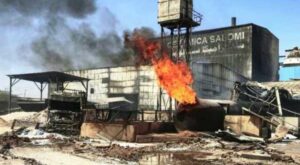
The Sudanese pound has lost value at an unprecedented rate, with annual inflation exceeding 450%, making basic commodities out of reach for the majority. During this month of April, the exchange rate of the Sudanese pound against the dollar crossed the 4,000 mark in the parallel market, with all foreign currencies rising accordingly.
The Sudanese government, formed by the army after the outbreak of war, has changed the currency, issuing new denominations circulating in several states, while the old currency remains in use in others. Meanwhile, the RSF has established a new banking system in areas under its control in Darfur and is moving toward issuing its own currency, according to statements by its leaders.
According to the 2026 Humanitarian Needs and Response Plan, approximately 61.7% of Sudan’s population, equivalent to 28.9 million people, suffer from acute food insecurity. The 2025 response plan received only 35% of its required funding, while only 16% of the 2026 requirements, totalling $2.9 billion, have been secured.
Comprehensive destruction
Statistics indicate that the war in Sudan has caused record-breaking infrastructure damage estimated at over $120 billion. Reports from the IMF and World Bank describe the destruction of power plants, water networks, roads, airports, bridges, hospitals, schools, private homes, and various buildings.
Sudan has also lost a vast historical heritage with the disappearance of thousands of artefacts from its museums. Thousands of historical documents and personal belongings passed down through generations have also been destroyed. In March 2025, Ghalia Jar al-Nabi, director of Sudan’s National Corporation for Antiquities and Museums, told Sudan Tribune that the RSF had looted all the archaeological gold from the National Museum in Khartoum.
Barren land
The war has turned Sudan, once one of the greenest nations and a potential “breadbasket of the world”, into a barren land in many regions. International, regional, and local organizations report that agricultural activities have ceased due to the conflict.
Cultivated areas have shrunk by more than 60% in traditional production zones and irrigated schemes like the Gezira Scheme, pushing 25 million people into acute hunger. Mohamed Badr al-Din, a former official at the Sudanese Ministry of Agriculture, previously told Sudan Tribune that roughly 60% of pre-war agricultural land has fallen out of production due to the conflict.
Systematic targeting of life
The warring parties have carried out horrific attacks on hospitals and health institutions, with over 80% completely out of service, according to World Health Organization (WHO) reports. Across Sudan’s 18 states, 37% of health facilities remain non-functional.
Health facilities, ambulances, patients, and medical staff have faced repeated attacks, significantly reducing access to healthcare, particularly in conflict-affected areas. The WHO confirmed this week that hospitals have either closed or are operating only partially due to the destruction of facilities and equipment. Since April 15, 2023, the organization has verified 217 attacks on the healthcare sector, resulting in 2,052 deaths and 810 injuries.
Generation crisis
The ongoing war between the army and the RSF has deprived more than 18 million children of education for the third consecutive year, according to reports from UNICEF and other organizations.
The reports confirmed the destruction and closure of more than 19,000 schools, many of which have been converted into shelters for displaced persons. While the government organizes exams for various levels in areas under its control, education remains halted in RSF-controlled territories.
Ruins of poverty
Poverty rates in Sudan have doubled since the outbreak of war three years ago, with 70% of the population now living below the poverty line, according to Luca Renda, the United Nations Development Programme (UNDP) Resident Representative in Sudan.
Renda told AFP that poverty rates have effectively doubled compared to pre-war levels, rising from approximately 38% to the current estimate of 70%. He added that one in four Sudanese people lives in extreme poverty, surviving on less than two dollars a day.
Animal feed
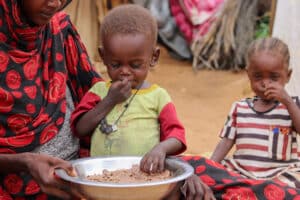
A group of international NGOs recently published a shocking report on the nutritional situation in Sudan. The report involved Action Against Hunger, CARE International, the International Rescue Committee (IRC), Mercy Corps, and the Norwegian Refugee Council (NRC).
The report confirms that millions of Sudanese are surviving on just one meal per day, with North Darfur and South Kordofan suffering the highest hunger rates in the country. Many families are forced to go entire days without food, and some citizens have resorted to eating tree leaves to survive. Furthermore, animal feed has become a primary food source for some displaced persons in these regions.
Two governments against the odds
Despite the lack of recognition from international institutions and foreign governments for the administration declared by the RSF in its controlled areas—in alliance with other groups, most notably the SPLM-N led by Abdelaziz al-Hilu—the de facto reality is that these regions are being managed independently.
Last June, the Sudan Founding Alliance, known as “Tasees,” announced the formation of a presidential council for a transitional government headed by RSF commander Mohamed Hamdan Dagalo, “Hemedti.” During a meeting in Nyala, the capital of South Darfur, the alliance chose Mohamed al-Taayshi as the prime minister of the transitional government. Following the fall of El Fasher to the RSF on October 26, the group seized control of the entire region and vast parts of Kordofan and the Western Desert.
Executions and continuous terror

Special investigations by Sudan Tribune in mid-May 2024 revealed that RSF forces carried out extrajudicial killings by hanging inside detention centres and execution chambers set up in the capital, Khartoum. The findings caused international and local shock after video footage obtained by Sudan Tribune showed professionally constructed gallows inside a home in the Wad al-Bashir area of Omdurman and other locations.
In April 2025, UN High Commissioner for Human Rights Volker Türk expressed horror at reports of widespread extrajudicial killings of civilians in Khartoum following the Sudanese Armed Forces’ recapture of the city on March 26.
The executions carried out by elements of the Sudanese army and its allied groups on one side, and the RSF and its allies on the other, represent some of the worst human rights violations in recent history. International organizations, led by the UN Human Rights Council, have confirmed atrocities and war crimes across Khartoum, Al Jazirah, the Darfur region, and vast areas of Kordofan and Sennar.
Military shifts and transformations
Military dynamics and areas of control have undergone continuous shifts as the war enters its fourth year. While the Sudanese army regained control of the capital, Khartoum, in March 2025, the RSF’s capture of the entire western region has created a complex strategic equation.
The involvement of various armed movements and paramilitary groups has marked a different turning point in the conflict, altering the battlefield landscape according to military experts. Groups linked to the warring parties, such as the Al-Baraa bin Malik Battalion, allied with the army, have been classified as terrorist groups. Meanwhile, the Sudanese government continues its prominent efforts to have the RSF officially designated as a “terrorist organization.”
Politically, Sudan’s membership in the African Union remains suspended. Both parties to the conflict face consistent international criticism, and many foreign governments refuse to recognize the competing authorities in the country.
The export of displacement
As the war continuously forces people from their homes, the ongoing displacement has reached tragic proportions. Reports estimate that more than 522,000 children have died due to malnutrition.
Data shows that at least 21 million Sudanese are in urgent need of health assistance. Over 115,000 people have been infected with various epidemics, particularly cholera and dengue fever.
Sudanese displaced persons have faced a range of hardships both internally and abroad. This includes the forced deportation of refugees from Egypt and complicated residency procedures in countries like Libya and Ethiopia.
A “reverse migration” has also been recorded; many individuals returned to Khartoum or to army-controlled states after finding a complete lack of services and security elsewhere. Conversely, some refugees have fled back into exile after returning to Sudan and facing bitter realities, while the majority prefer not to return in the near future, given the dark shadow cast by the ongoing war.
War profiteers and mercenaries
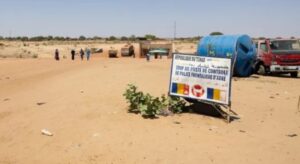
The involvement of foreign states and groups in the Sudanese war has been confirmed by UN reports, with some governments implicated in providing direct or indirect support.
Successive reports by the UN Panel of Experts, including those from January 2024 (S/2024/65) and subsequent updates in 2025, revealed “credible” evidence of violations regarding the Darfur arms embargo. These reports uncovered military supply lines for the RSF running through Chad, Libya (areas under Haftar’s control), and the Central African Republic. UN monitors tracked cargo planes landing at Amdjarass airport in Chad; while claimed to be carrying humanitarian aid, UN reports confirmed they held weapons shipments. UN documents and Security Council correspondence—most recently in April 2025—have cited Emirati involvement as a primary supporter of the RSF through logistical networks in neighbouring countries.
In contrast, Amnesty International documented the arrival of recently manufactured weapons and military equipment from China, Russia, Serbia, and Turkey for the Sudanese army. There have also been confirmed reports of significant Iranian support for the military.
Impunity
As the conflict enters year four, two prominent fact-finding missions have warned of a persisting state of impunity amid escalating widespread and grave human rights violations.
In a joint statement issued yesterday, the International Independent Fact-Finding Mission for Sudan and the African Union’s Joint Fact-Finding Mission on the Human Rights Situation in Sudan emphasized that the conflict is characterized by systematic brutality and a flagrant disregard for the basic standards of international law.
The missions held both the RSF and the Sudanese Armed Forces responsible for serious violations of international humanitarian and human rights law. These include killings, arbitrary detentions, torture, and the widespread use of indiscriminate attacks that have also targeted humanitarian operations and medical personnel.