
Arman urges aid priority as international mediation shifts
April 18, 2026 (BERLIN) – Yasir Arman, leader of the Revolutionary Democratic Current, has called for a fundamental shift in the international approach to the Sudanese conflict, arguing that addressing the humanitarian catastrophe must be the primary gateway to any political process.
In an assessment of the recent Berlin conference held on April 15, Arman criticized the current trend of prioritizing political frameworks over the urgent needs of millions of Sudanese. He asserted that the humanitarian disaster involves the basic right to life, including safety, food, and shelter.
These rights must take precedence over power-sharing and civil rights negotiations, Arman said. The veteran politician expressed concern that the “Joint Call” emerging from Berlin and the influence of the African Union’s “Pentilateral” mechanism are effectively replacing the “Quad” declaration.
The Quad framework was more aligned with the demands of the Sudanese people and civil democratic forces, he noted. Arman argued that the new path risks rewarding those who obstructed the transition.
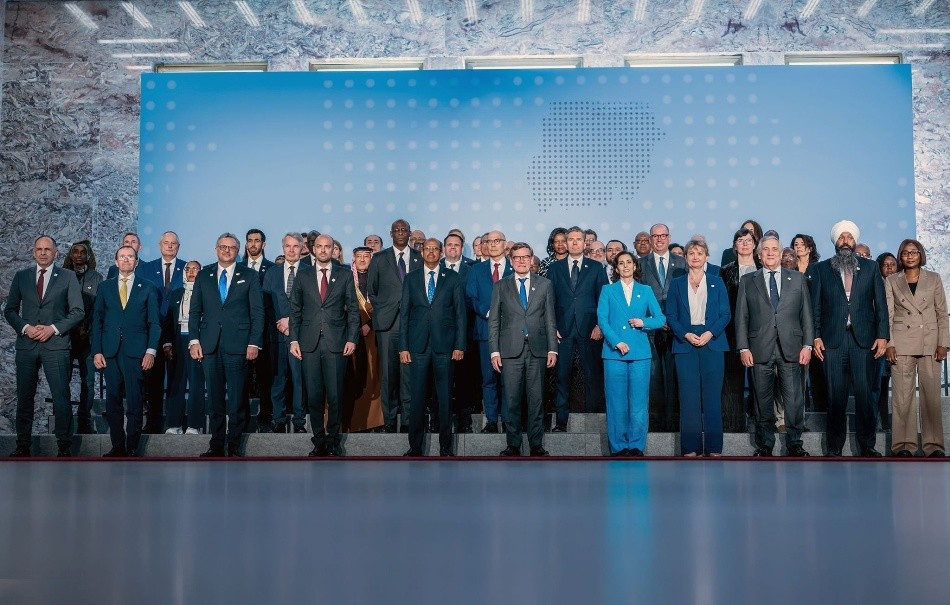
The Berlin Conference on Sudan, held on April 15, was convened by Germany and international partners to address the worsening crisis. It aimed to mobilize humanitarian funding and coordinate diplomatic efforts to end the fighting between the Sudanese Armed Forces and the Rapid Support Forces.
While the conference secured more than 1.5 billion euros in financial pledges, Arman suggested that international mediation has become imbalanced. He argued that the African Union and the European Union have designed a political process in the absence of Sudanese democratic civil forces.
This shift focuses on political optics while remaining incapable of moving the humanitarian track or exerting actual pressure on the warring parties to reach a ceasefire, he said. Arman’s argument for an aid-first approach is rooted in the belief that a humanitarian truce is the only way to expand civic space.
A truce would allow displaced persons to return to their homes, he added. He warned that jumping into political agendas without an effective humanitarian foundation weakens civil forces and ignores the primary stakeholders of the revolution.
Drawing on Sudanese history, Arman cautioned that political negotiations have historically been the rock upon which political alliances are shattered. He cited the experiences of 1976 and the 2019 revolutionary forces as evidence of how premature processes can lead to fragmentation.
To avoid these pitfalls, Arman called for a sober dialogue among revolutionary forces to link the agenda of ending the war with the goals of the Sudanese revolution. He proposed a conference to establish a roadmap that treats the humanitarian and political processes as an inseparable package.
Arman concluded that no political process can succeed without a decisive commitment from the warring parties to a binding humanitarian truce. This is the only way to create a suitable climate for stakeholders to engage in meaningful dialogue about the country’s future, he said.